
Precision CNC turning, milling and trimming for tight-tolerance metal components — finishing and inspection managed in house.
Aunov machines parts for customers who cannot accept a catalog compromise. Send us a STEP or DWG file and we cut it from bar, billet or your own casting — threads, seal faces, bores and secondary holes held to the drawing dimension. Because the same factory stamps and draws the blank, we can finish a formed part to final print in one setup wherever the geometry allows, and inspect it on the same datum it was made on. One supplier, one quality system, one accountable team from raw material to packed carton.
How We Machine
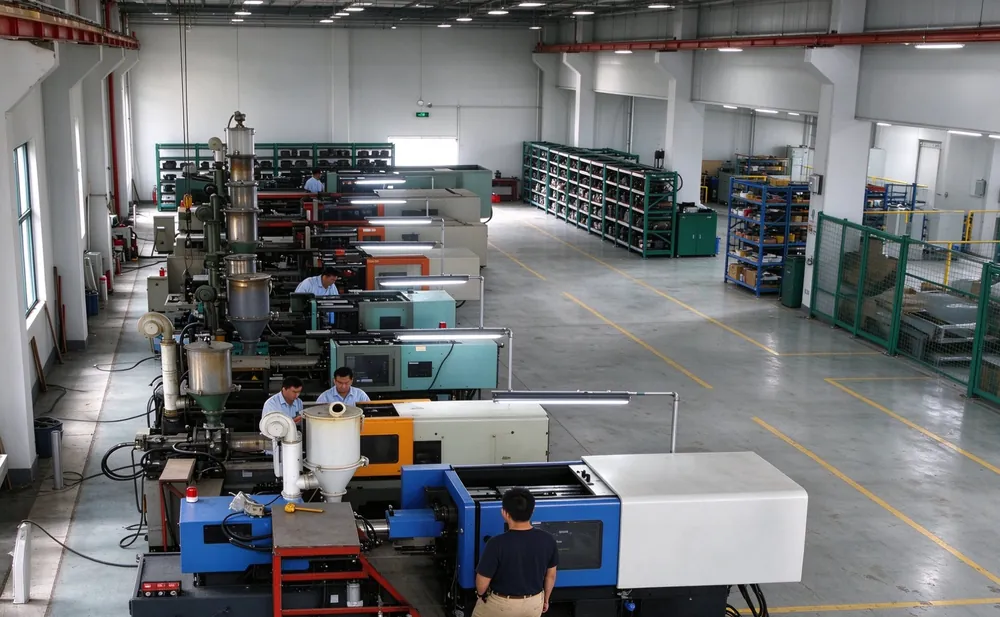
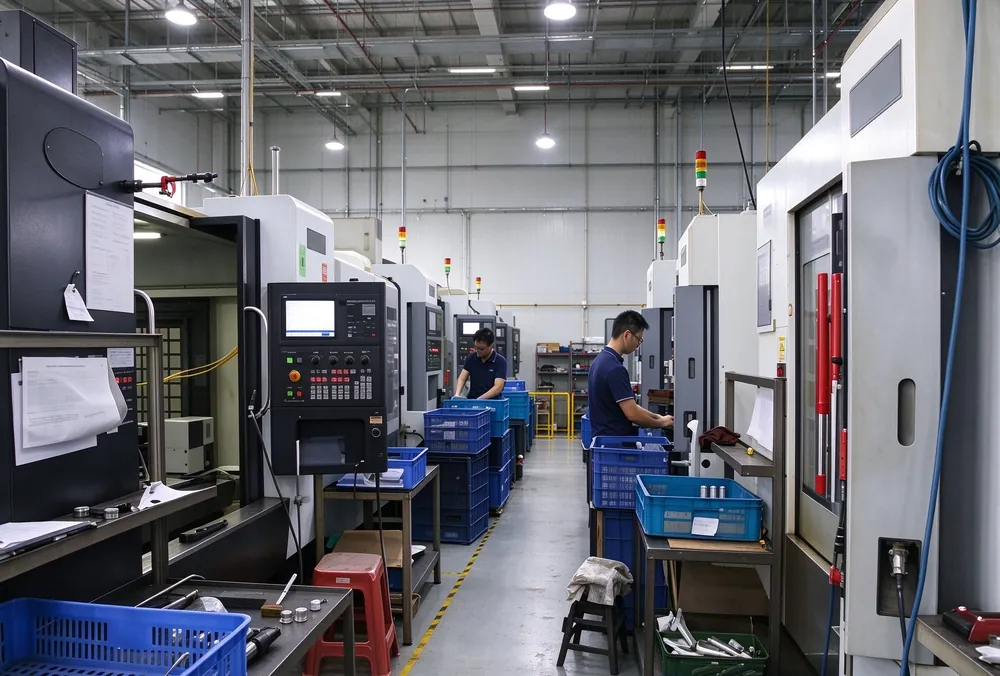
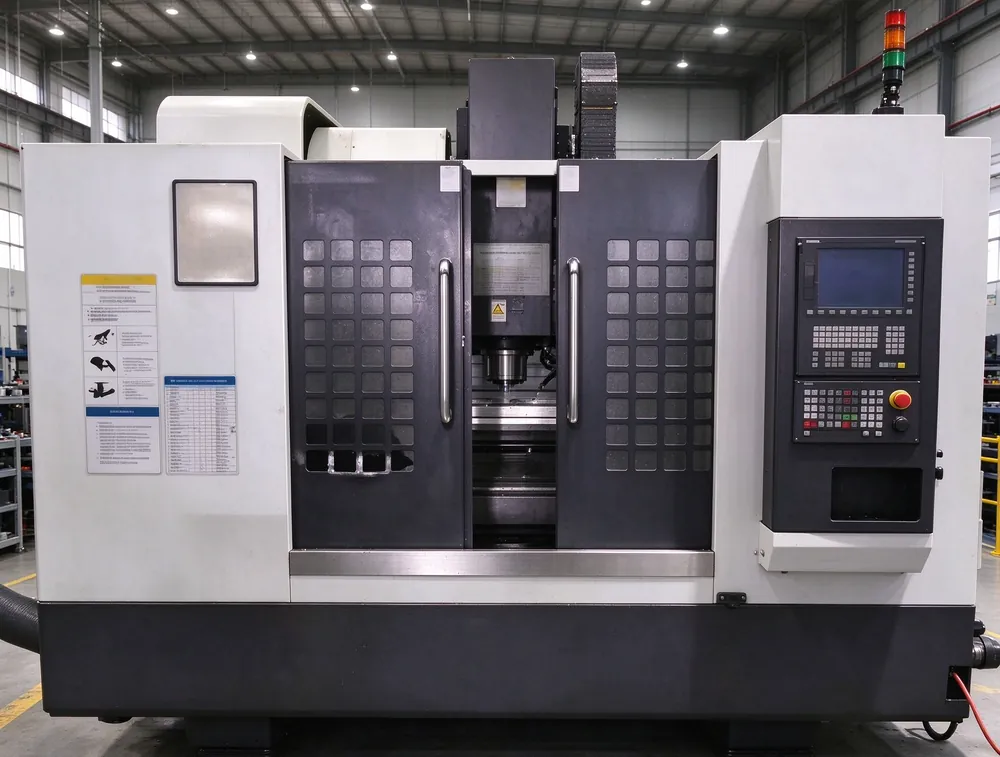
CNC Machining Services & Parts
Cut from bar, billet, casting or a blank we form ourselves — the routes below cover the machining work we run most often. Open any of them to see the parts, tolerances and finishes for that route.
-

Assorted Brass and Steel CNC Turned Small Parts
-

Brass and Bronze CNC Turned Fittings and Plugs Assortment
-

Aluminum CNC Machined Impellers and Gearbox Housings
-

Assorted CNC Machined Fittings with Plastic Caps and Pins
-

Mixed CNC Machined Plates Brackets and Plastic Parts
-

Brass CNC Machined Hex Hose Fittings with Stems
-

Assorted CNC Machined Parts with Plastic Gears and Clips
-

Aluminum CNC Machined Bodies with Anodized Accent Rings
-

Stainless Steel CNC Machined Knurled Threaded Plugs
-

Assorted CNC Machined Plates Pins and Punch Components
-

Stainless Steel CNC Machined Hex Dome Cap Nut
-

Stainless Steel CNC Machined Dome Nozzle Housing
-

Precision CNC Machined Stainless Steel Seal Ring
-

Stainless Steel CNC Machined Cylinders with Threaded Ports
-

Stainless Steel CNC Machined Threaded Shafts
-

Stainless Steel CNC Machined Couplings and Ring Fittings
-

Stainless Steel CNC Machined Impeller Gear and Flanges
-

Anodized Aluminum CNC Machined Open-Top Square Enclosure
-

Assorted CNC Machined Parts with Red Anodized Bodies
-

Anodized Aluminum CNC Machined Device Enclosure Shell
-
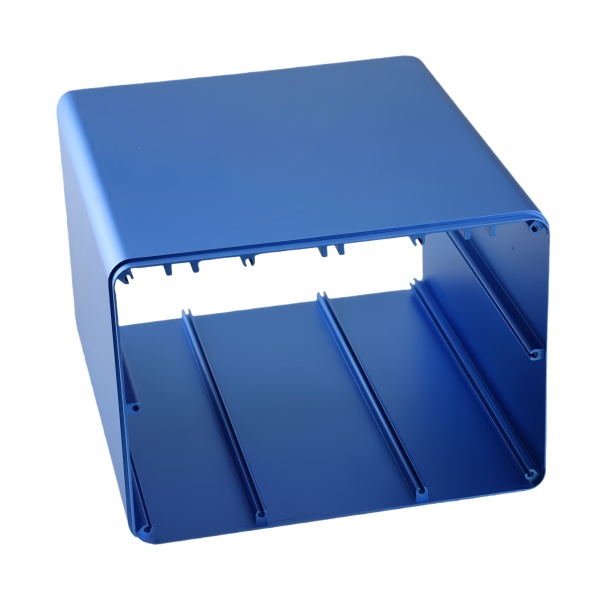
Anodized Aluminum CNC Machined U-Shaped Cover Case
-

Stainless Steel CNC Machined Dome Caps and Cones
-

Stainless Steel Small Machined Clips Washers and Plates
-

Stainless Steel CNC Machined Nozzles and Conical Fittings
Full Specification
Frequently asked questions
What tolerance can you hold?
No tolerance is assumed. The dimensional band is agreed with the customer before tooling starts, and any feature not specified on the drawing is produced to the documented in-house standard. The first article and the production parts are measured against one shared definition rather than two different interpretations.
Do you provide tooling, and who owns it?
Yes. Press and drawing tooling is designed and built in house, and the route for each part is decided at quotation stage by comparing tooling cost against annual volume. Tooling can be quoted with the parts or as a separate line item — ownership and retention terms are agreed with the customer before the project starts.
What is the typical lead time?
Lead time depends on whether new tooling is required and on the finishing route. Prototype and pilot quantities are typically the fastest to ship because they can be cut from bar or billet without waiting for a die. Production volumes follow first-article approval. Send your drawing and annual volume and we will quote a schedule with the offer.
Which industries do you supply?
Automotive, sensor and instrumentation, pump and fluid handling, electrical and general industrial equipment. All of them share the same requirement: a part that fits without hand adjustment when it reaches the assembly line.
Related Manufacturing Resources
Request a quote
Related Manufacturing Resources
Send us a STEP or DWG file, the material and the annual volume, and we will come back with a route, a tooling position and a quoted schedule — whether the part is cut from bar or finished from a blank we form ourselves.
What Is CNC Machining?
CNC (computer numerical control) machining removes material from a solid block with programmed cutting tools to make a precise part. Where deep drawing and stamping form parts from sheet, CNC starts from bar, plate, or billet and cuts to shape. It is the right process when volumes are low, geometry is complex, or tolerances are tight enough that forming can’t reach them.
3-Axis, 4-Axis & 5-Axis
3-axis
The tool moves in X, Y, Z. Most parts with features on one or two faces are cut here economically.
4-axis
Adds a rotary index (usually A) so we can machine around a cylinder or reach side features without refixturing.
5-axis
Two rotary axes let the tool approach from almost any angle in one setup. Best for impellers, angled holes, and parts where multiple setups would lose accuracy.
Materials We Machine
| Material | Notes |
|---|---|
| Aluminum 6061 / 7075 | Fast, good finish, common for prototypes |
| 304 / 316L stainless steel | Work-hardens; needs sharp tools, rigid setup |
| Brass & copper | Excellent machinability, conductive parts |
| Mild & alloy steel | Structural, heat-treated after if needed |
| Engineering plastics | Delrin, PEEK, nylon for insulators |
Tolerances & Surface Finish
| Capability | Typical range |
|---|---|
| Position tolerance | ±0.01 mm achievable |
| Hole & bore | H7 / H8 standard |
| Surface roughness | Ra 0.8 µm as-machined, lower after polish |
| Flatness / parallelism | 0.02 mm over 100 mm |
When to Choose CNC vs. Stamping vs. Drawing
- CNC: low volume, complex 3D, tight tolerance, many internal features.
- Stamping: flat/light-formed parts at high volume.
- Deep drawing: cup/can shapes from sheet at volume.
For a part needed in tens or hundreds now and millions later, we often CNC the prototype, then move to stamping or drawing once the design freezes.
Secondary Operations
- Deburr, tumble, or brush for safe edges.
- Anodize (aluminum), passivate (stainless steel), plate, or powder-coat.
- Thread tapping, helicoil insertion.
- Laser marking for traceability.
- CMM inspection with a full report.
Industries We Serve
- Automotive: prototype housings, brackets, test fixtures.
- Medical: instrument bodies, fixtures (316L stainless steel).
- Electrical: heatsinks, insulators, terminal blocks.
- Industrial: tooling, replacement parts, low-volume spares.
Quality & Inspection
We run first-article inspection and CMM reporting on critical parts. For production we sample by an agreed AQL and keep the report with the lot. Material certificates are available on request so your incoming inspection matches our shipped data.
Design for CNC (DFM)
- Standardize hole sizes to reduce tool changes.
- Avoid features smaller than the smallest practical end mill (≈ 1 mm).
- Keep wall thickness ≥ 1 mm on thin aluminum, more on stainless steel.
- Design for 3-axis where possible; reserve 5-axis for what needs it.
- Call out only the tolerances that affect function to cut cost.
CNC Machining Questions
What is the minimum order quantity?
We routinely run one-piece prototypes and low batches; there is no rigid minimum, though unit price drops as quantity rises. This answer covers machined parts only; for deep drawn parts the threshold starts at 1,000 pieces and is explained on the capacity page.
Can you machine 316L stainless steel to tight tolerance?
Yes. 316L stainless steel work-hardens, so we use rigid setups and sharp tooling, but H7 bores and ±0.01 mm positions are standard.
Do you offer rapid prototyping?
Yes — CNC is our fastest route from CAD to a real metal part, typically days rather than weeks, before any forming tool is cut.
Can CNC parts later convert to stamping or drawing?
Often. We design the prototype with the production process in mind so the transition to high-volume forming is smooth and the print stays stable.
What file formats do you accept?
STEP and IGES for solids, plus PDF drawings for critical dimensions and tolerances. A 2D drawing is required where tolerances are called out.
How do you protect machined surfaces?
Parts are deburred, then packed with interleaving or caps on critical bores; anti-tarnish paper is used for brass and copper when specified.
CNC Process Walkthrough
A typical order runs: review drawing → choose stock → program toolpaths → first-article on CMM → production with in-process checks → finish → inspect → pack. We keep the program so repeat orders are consistent.
Tolerance Capability Detail
| Feature | CNC capability |
|---|---|
| Bore diameter | H7 (≈ +0.021/0 on 50 mm) |
| Position of holes | ±0.01 mm |
| Slot width | ±0.02 mm |
| Surface roughness | Ra 0.8 µm as-machined |
Common CNC Defects & Prevention
- Burr: sharp tools, correct feed, deburr pass.
- Chatter marks: rigid setup, right speeds/feeds.
- Dimensional drift: tool-wear compensation, in-process gauge.
- Heat warp on thin parts: climb milling, minimal passes.
Finishing Options
- Anodize (Type II/III) for aluminum.
- Passivate for 304 and 316L stainless steel.
- Zinc or electroless nickel plate.
- Bead-blast or brush for a uniform look.
- Tumble or vibratory deburr.
From Prototype to Volume
CNC is the natural prototype path. When volume rises, we transition the proven design to stamping or deep drawing, keeping the CNC parts for low-run variants. This staged approach avoids committing die cost before the design settles.
Quoting CNC Work
Send the STEP model and a 2D drawing with tolerances, material, quantity, and finish. The biggest cost drivers are setup time, tolerance, and how many unique tools the part needs.
More CNC Questions
What is the largest part you can machine?
Our envelope covers typical brackets, housings, and fixtures; send the bounding dimensions and we will confirm fit on the machine table.
Can you hold tight tolerance on 316L stainless steel?
Yes. 316L stainless steel is routine; we use rigid fixturing and sharp tooling, and verify on CMM.
Do you machine plastics?
Yes — Delrin, PEEK, nylon, and other engineering plastics for insulators and prototypes.
How do you ensure lot-to-lot consistency?
We keep the program and tool list, and run first-article plus periodic CMM checks so repeat orders match.
Can CNC parts be welded or assembled with drawn parts?
Yes. We often deliver a kit of CNC-machined and drawn/stamped parts that mate in your assembly, with dimensions coordinated across processes.
Worked Example: A Prototype Sensor Housing on CNC
A customer needs 50 sensor housings to validate a new design before committing to drawing tooling. We machine them from 316L stainless steel bar: turn the outside, bore the inside, mill the flange features, and tap the port. Tolerances are held to ±0.02 mm so the prototype tests are meaningful. Once the design is frozen, the same geometry moves to deep drawing for volume, and the CNC parts cover only the low-run variants.
How Toolpaths Affect Cost
Every unique tool and setup adds time. A part that can be made with three tools in one fixture costs far less than one needing five tools and two setups. When we review your drawing we often propose combining features or adjusting depths so the part runs faster without changing function.
Machining 316L Stainless Steel Well
316L stainless steel work-hardens, so the cutting edge must stay sharp and the feed must keep the tool in fresh material rather than rubbing. We use rigid fixturing, appropriate speeds, and coolant so the surface finishes clean and tolerances hold. This is standard practice, not a specialty.
Plastics Machining Notes
Engineering plastics machine differently from metal: they can melt at the edge if feeds are wrong, and they relax after cutting. We account for that with sharp tools and, where needed, a stress-relief step so the finished part holds dimension.
Specifying a CNC Part
| Field | What to write |
|---|---|
| Model | STEP or IGES |
| Drawing | PDF with tolerances |
| Material | Full grade, e.g. 316L stainless steel |
| Finish | Ra target, coating if any |
| Quantity | Prototype vs. production band |
More CNC Questions
Can you hold a press-fit tolerance on a bore?
Yes, H7 bores are standard; tell us the mating shaft grade and we will set the limits so the fit is correct.
Do you keep my program for reorders?
Yes. We archive the program and tool list so repeat orders are consistent with the first article.
Can CNC parts be black-oxide or anodized?
Yes, we arrange finishing in-house or with a qualified partner and report it on the inspection record.
What is the smallest feature you can cut?
Around 1 mm with standard tooling; smaller is possible with micro-tooling, which we quote per case.
How fast is a typical prototype?
From approved drawing to finished parts is usually days, not weeks, because no tooling build is involved.
The CNC Machining Sequence
A CNC order follows a predictable path: we review the drawing, choose the stock, write the toolpaths, prove the first article on a CMM, then run production with in-process checks. The program and tool list are archived so the next order is identical to the first. This repeatability is why CNC is trusted for low-volume critical parts where every piece must match.
Why 5-Axis Pays Off
On a 3-axis machine, a part with features on five faces needs five setups, each a chance for error. A 5-axis machine reaches those faces in one or two setups, improving accuracy and cutting handling. We reserve 5-axis for parts that genuinely need it, because the machine time costs more; for simpler parts 3-axis is the economical choice.
Tolerance Strategy
Not every dimension needs a tight tolerance. We call out tight limits only on features that affect fit or function, and relax the rest. This is the single biggest cost lever after volume: a part with three tight dims runs far cheaper than one with thirty. Our DFM feedback usually proposes these relaxations before we quote.
Surface Finish and Why It Matters
As-machined aluminum can reach a good finish; stainless steel needs sharp tools and coolant to avoid work-hardening at the edge. When a seal or bearing rides on a surface, we specify the Ra and verify it, because a rough seat leaks or wears. For appearance parts we add bead-blast or brush for a uniform look.
Prototype to Volume, Done Right
CNC shines at prototype because no tooling is cut. When volume rises we transition the proven geometry to stamping or deep drawing, keeping CNC for the low-run variants. This staged approach avoids betting die cost on a design that may still move.
More CNC Questions
Can you hold a tight flatness on a thin plate?
Yes, by careful fixturing and minimal-pass milling; we verify flatness on the CMM and report it.
Do you machine from my bar stock?
We can use customer-furnished material where the spec requires it, with the certificate tracked for traceability.
Can complex 3D surfaces be machined?
Yes, on 5-axis; impellers, curved housings, and angled features are routine.
What lead time for a production batch?
After first-article approval, production lead time depends on quantity and machine load; we quote it with the order.
Do you inspect 100% or sample?
Critical features are gauged every part or per an agreed AQL; we keep the report with the lot for your incoming check.
How to Choose a CNC Machining Supplier
For CNC work the supplier’s ability to hold tolerance and repeat it matters most. Ask whether they archive programs for reorder consistency, what inspection they provide (CMM vs. gauge), and how they handle 316L stainless steel work-hardening. A supplier who returns a first-article report and keeps the program is one you can reorder without re-qualifying. Also confirm they will write the material grade in full on the record — 316L stainless steel, not “SS”.
Pitfalls to Avoid
- Tolerancing every dimension tightly; it raises cost with no function gain.
- Designing features smaller than the smallest practical tool.
- Choosing 5-axis when 3-axis would do; pay for what the part needs.
- Forgetting that plastics relax after cutting; allow for stress relief.
- Sending only a 3D model with no 2D drawing where tolerances matter.
Documentation You Should Expect
For production you should receive a first-article report, the CMM data on critical dims, material certificate, and finish verification. The report should travel with the lot so your incoming inspection matches our shipped values.
More CNC Questions
Can you hold a tight position tolerance across a large part?
Yes, with proper fixturing and a calibrated machine; we verify on CMM and report the actual values.
Do you support rapid iteration during design?
Yes; CNC is ideal for iterating because no tooling is cut, so each revision is a new program run.
Can you machine and then weld to a stamped part?
Yes; we often deliver a kit where a CNC-machined part mates to a stamped or drawn one, with dimensions coordinated.
What finishes can you hold on aluminum?
From as-machined through bead-blast and anodize; tell us the Ra and appearance target.
How do you quote a one-off vs. a batch?
Setup and programming dominate a one-off; per-piece cost drops sharply as quantity rises, which is why we discuss volume up front.
CAD/CAM and the Programming Path
Between your model and the first chip is a chain of software decisions that decides how good the part comes out. We read your STEP or IGES into CAM, pick the tool, the strategy and the feed, then post the G-code for the specific control on the machine that will run it. A five-axis job and a three-axis job are posted differently, and a careless post is where a good model turns into a scrapped bar.
For repeat work we archive the program with the fixture and the setup sheet, so a reorder six months later comes back as the same part rather than a close approximation. That archive is the quiet reason a second lot matches the first.
Aluminum 6061 vs. 7075, Brass and the Non-Steel Grades
Steel is not the only metal on our spindles, and the non-ferrous grades each bring a habit of their own. 6061 aluminum machines easily and anodizes cleanly, so it is the default for housings and brackets where weight matters. 7075 is the strong one — it carries more edge load, wears tools faster, and still holds a tight tolerance if you respect the tool life instead of pushing through it. Brass is the free-cutting favorite for small turned and milled parts, giving a near-burrless edge that saves a secondary operation.
We treat each grade as its own discipline. A feed that sails through 6061 will smoke a 7075 cutter, and a rake that works on brass will tear the edge off a tough plastic. The material decides the parameters; we just listen to it.
A CNC Cost Example in Real Numbers
Cost follows a simple logic, and seeing it once makes every future quote make sense. Say a small 316L housing takes nine minutes of spindle time on a machined-feature-dense geometry. Roughly, the material is a modest slice, the programming and fixture are fixed costs you pay once, and the machine time repeats on every part. Run one prototype and that fixed cost dominates; run five hundred and it disappears into the per-part price.
That is why volume changes the number so much, and why we always ask before quoting. The geometry sets the cycle; the quantity sets the economics. When a customer sends a print with one feature that quietly adds a whole operation — a tolerance nothing uses, a finish nobody asked for — cutting it drops the part a tier in cost with no loss in function.
GD&T and Datum Design
Tight tolerance is a system, not a setting, and the system starts with the datums. We pick a datum scheme that matches how the part actually seats in your assembly, call out GD&T only where function needs it, and verify on a CMM at first article and on a cadence through the run. A position callout means nothing if the CMM cannot reach the feature, so we design the inspection into the fixture from the start.
The honest rule we give customers is this: tell us which two features must never drift relative to each other, and we will protect that relationship first. Everything else can live inside its band, and a part that is only tight where it needs to be is cheaper to make and easier to prove.
Can you machine 7075 aluminum as tightly as 6061?
Yes, but we plan for the difference. 7075 is stronger and harder on the edge, so we adjust feeds and tool changes to hold the same tolerance instead of pushing a 6061 parameter into a 7075 part. The capability is there; the recipe is not the same.
Do you machine titanium or exotic alloys?
Yes, in addition to stainless steel, aluminum, brass and engineering plastics. Exotic alloys run with their own feeds and tooling, and we quote them from the supplied model with the machining difficulty priced in, so there are no surprises at the first article.