
Deep drawn cans, cell housings, battery shells and pressure-boundary enclosures for energy storage — drawn seamless in aluminium and stainless steel, formed to hold pressure and seal against electrolyte for the life of the pack.
A battery is only as reliable as the metal that wraps it. Cell cans, module housings and the shells around a power supply are pressure boundaries — they have to hold their shape under charge and discharge, resist the chemistry inside, and stay sealed for thousands of cycles. Welded or machined assemblies put seams and joints exactly where failure likes to start. Deep drawing gives you a single, seamless shell in one press line: no weld seam to creep, no joint to weep, and a wall thickness the die controls from the base to the open end.
Electrification did not replace the drawn can — it multiplied it. Consumer cells, EV modules, backup power supplies and industrial storage all lean on the same drawn geometry, scaled from a coin cell to a traction shell. We draw those parts in aluminium 5xxx — EN AW-5052 and 5754 — for lightweight packs and in stainless steel 304 and 316L where corrosion and cycle life demand more, holding the flange geometry that lets the lid seal on the first try.
How We Draw for Battery & Energy Storage
Wall uniformity across the shell. A battery can carries internal pressure and cycles it every charge. The press has to leave the wall even from base to rim, because a thin spot becomes the bulge point and eventually the leak. We model material flow, then confirm with sectioned parts and wall gauges before the tool is signed off.
Flange and weld-prep geometry. Most battery shells close with a crimp, a weld or a sealed lid. That makes the flange the most important feature on the part — flat, square and repeatable, so the seal lands evenly around the whole perimeter. We form the flange in the die and control its height and squareness to a tolerance the sealing step can rely on.
Clean forming for sealed parts. A can that will be welded shut has to start clean — no lubricant film, no tooling witness mark at the weld land. We draw, then clean and prep the weld area as a sequenced operation so the seam forms without porosity.
Press capability and wall control.
Battery shells are drawn on press lines rated from 5 to 500 T, in stock from 0.15 to 3.0 mm and in the grades that hold electrolyte — 304 and 316L stainless, EN AW-5052 aluminium, nickel-plated steel. The wall is the part: a single-draw ratio of 1.80–1.95 for 5052 and 1.85–2.05 for 304, redrawn in 20%–30% steps where the shell is deeper than one hit allows. Where the can is ironed, wall thickness comes out at ±0.05 mm — ±0.02 mm on fine-drawn walls — with the minimum-wall position marked on the drawing rather than left to argument at first-article.
Leak integrity is verified per part number, not claimed per catalogue: we run helium leak testing or pressure-decay checks to the rate your specification names, and report the measured value with the certificate package. Material certificates come with every lot, and dimensions are reported against the first-article, so the shell you approve is the shell that ships.
Battery & Energy Parts We Make
Cell cans, module and pack housings, battery trays, pressure-boundary vessels and the sealed shells that sit inside a power supply — drawn in aluminium and stainless steel. Open any part to see the material, form and finishing route.
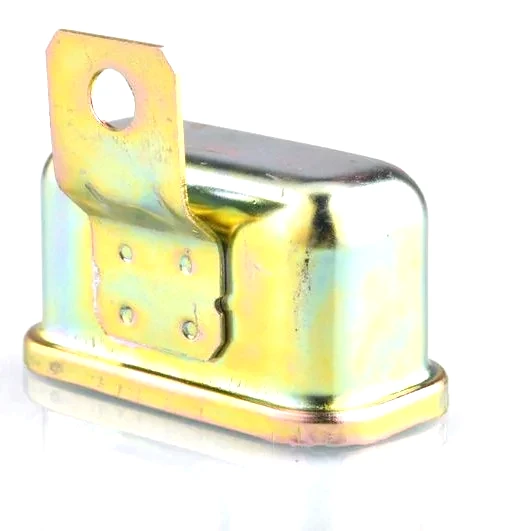 Deep Drawn Aluminum Battery HousingView details →
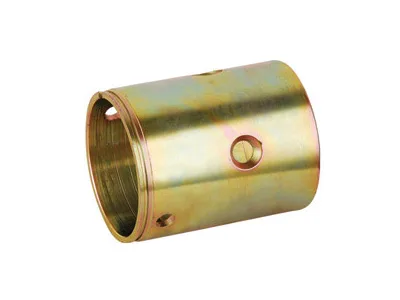 Precision sheet metal deep draw stainless steel battery canView details →
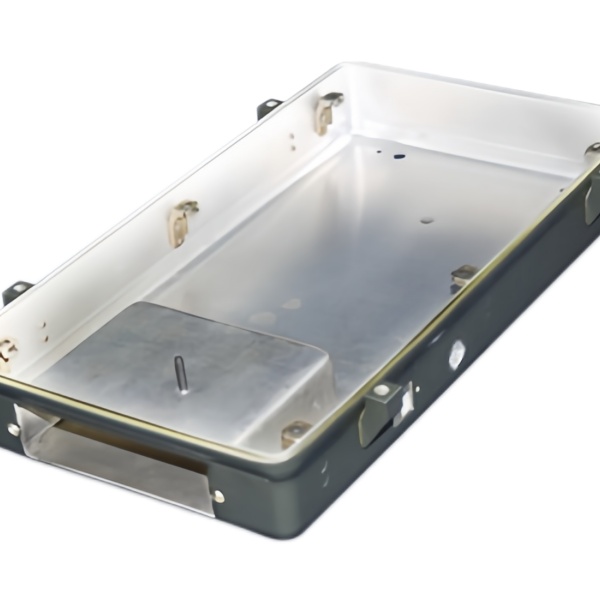 Steel Deep Drawn Battery Tray with Mounting RailsView details →
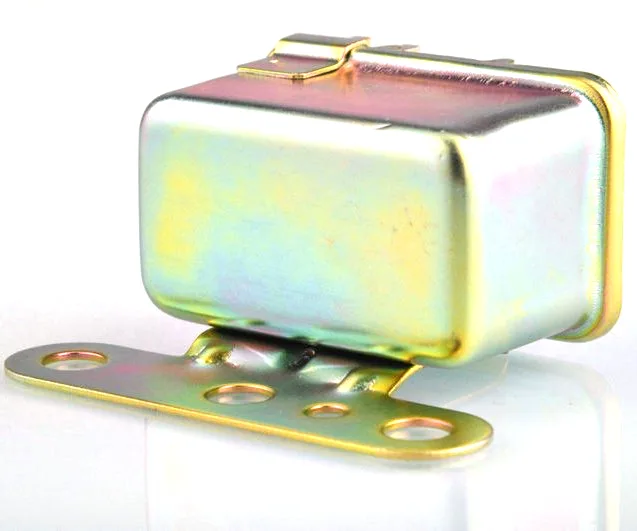 Drawn Medical Battery Housing with Base FlangeView details →
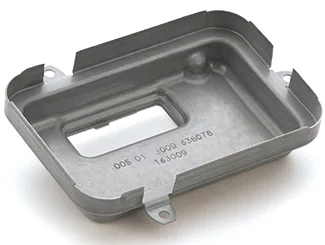 Deep Drawn Power Supply Chassis TrayView details →
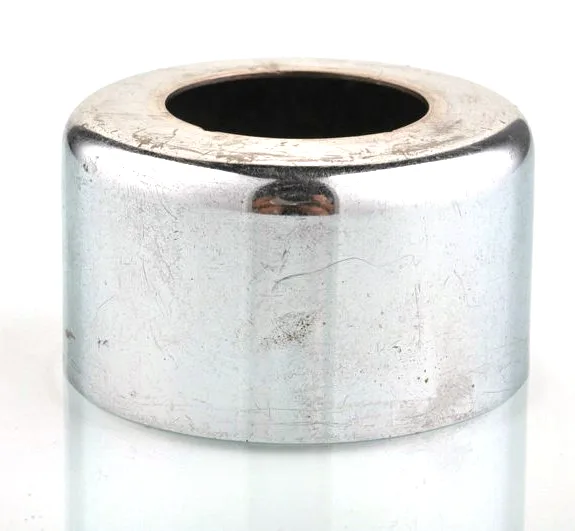 Nickel-Plated Deep Drawn Pressure Vessel CanView details →
Materials for Battery & Energy Storage
Aluminium 5xxx — EN AW-5052 and 5754. The lightweighting choice for pack and module housings, quoted at a limiting draw ratio of 1.80–1.95. It sheds grams where every gram is pack weight, forms cleanly for larger shells, and takes an anodised finish or an e-coat that insulates the outside. 6xxx stays out of the deep-draw portfolio — 6061-T6 is too low in elongation — so strength-critical shells go to stainless or are aged to T6 after forming. We tune the die so the fast work-hardening metal draws without tearing at the shoulder.
Stainless steel 304 and 316L. Where the part sees electrolyte, humidity or a long cycle life, stainless steel is the default. 304 draws cleanly for most cans; 316L steps in where chloride resistance and weldability at the seal matter. We draw the full grade and never a bare abbreviation.
Nickel-plated steel. For cans and vessels that combine pressure service with a need for corrosion resistance and easy welding, nickel plating over drawn steel gives both. The plate also improves the ground path where the shell doubles as an electrical return.
Sealing, Flanges and Leak-Tightness
The battery shell is a sealed boundary, so the seal is the whole game. We form the flange flat and square in the die so a crimp, a laser weld or a gasketed lid lands evenly all the way around — the single biggest driver of a hermetic seal. Where the part closes by welding, we clean and prep the weld land so the seam forms without porosity, and where it closes with a gasket we hold the flange height so compression stays uniform.
Leak integrity is verified, not assumed. On request we run helium leak testing or pressure-decay checks on sample parts and first-articles, and we hold in-process gauging on wall thickness and flange squareness so drift is caught before it reaches your line. A battery can that draws correctly on the first hit draws the same on the hundred-thousandth.
What to Send Us for a Battery Component
The drawing and the critical dimensions. Open-end diameter, draw depth, wall thickness and the tolerance that actually carries the seal. A 3D model helps us confirm the draw ratio before we quote tooling.
The chemistry and the environment. Electrolyte type, charge/discharge profile, temperature range and whether the interior is pressurised. That decides the alloy, the wall and the finishing.
How it closes and the leak spec. Crimp, weld or gasket — and the leak rate or pressure you need to hold. We match the flange geometry to the sealing method from the start.
Volume and program horizon. Cell, module and pack parts run in very different volumes. Tell us the run rate and years so we build the right die and press plan.
Frequently Asked Questions
Which material is better for a battery can — aluminium or stainless steel?
Aluminium 5xxx — EN AW-5052 and 5754 — wins on weight and cost for larger pack and module housings; stainless steel 304 or 316L wins on corrosion resistance and cycle life for cells and vessels that live inside electrolyte. The choice comes down to pack weight targets and the chemistry, which we confirm from your spec.
Can a deep drawn battery shell hold internal pressure?
Yes. The seamless wall and the controlled thickness give a drawn shell good pressure behaviour, and we can validate it with pressure-decay or helium leak testing on sample parts. Where the part is a true pressure vessel we draw and test to the rating you specify.
How do you make the seal land repeatable on every shell?
The flange is formed in the die, not in a secondary step, so its height and squareness are set by the tool and repeat hit after hit. We gauge flange flatness in-process and confirm the seal on first-articles before volume.
Is a drawn can better than a welded one for a battery?
For the shell body, usually yes — a drawn can removes the longitudinal weld seam that a formed-and-welded shell carries, cutting a common leak path and collapsing several operations into one press hit. Welding still closes the lid; the drawn body just makes that joint the only seam.
Can you supply small cell cans as well as large pack housings?
Yes. The same draw discipline scales from small cell cans to large traction and module housings. Tell us the size and volume and we match the press and tooling to the part.
Do battery parts need special cleaning before sealing?
Where the shell will be welded or closed hermetically, yes — the weld land and interior have to be free of lubricant and tooling witness. We sequence cleaning and prep so the part arrives ready to seal, and we can document it on request.
Explore More
See how we draw for other industries: electrical & electronic enclosures · industrial enclosures & vessels · automotive · sensor & probe housings. Back to all deep drawn parts, or read about the deep drawing process and tool & die design.
Sealing a battery or energy part? Send us the drawing.