
Seamless deep drawn housings, reflector cones, heat-sink cups and driver enclosures for LED luminaires — drawn in aluminium and steel, made to print.
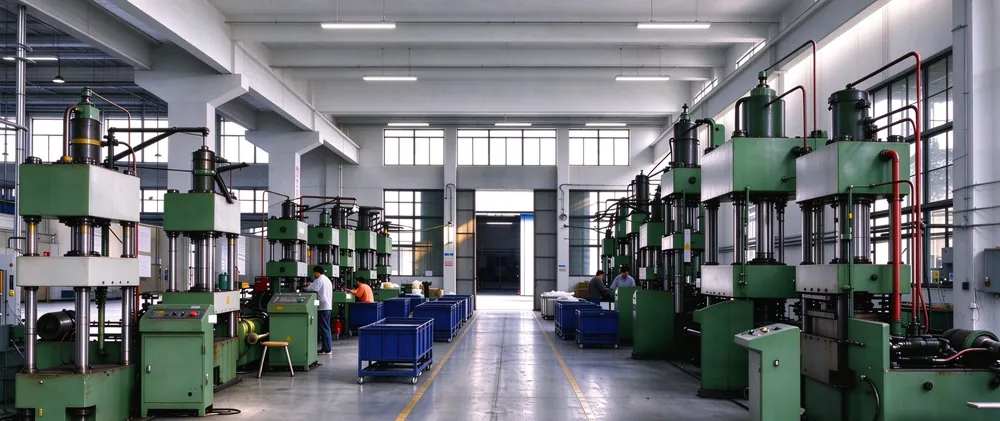
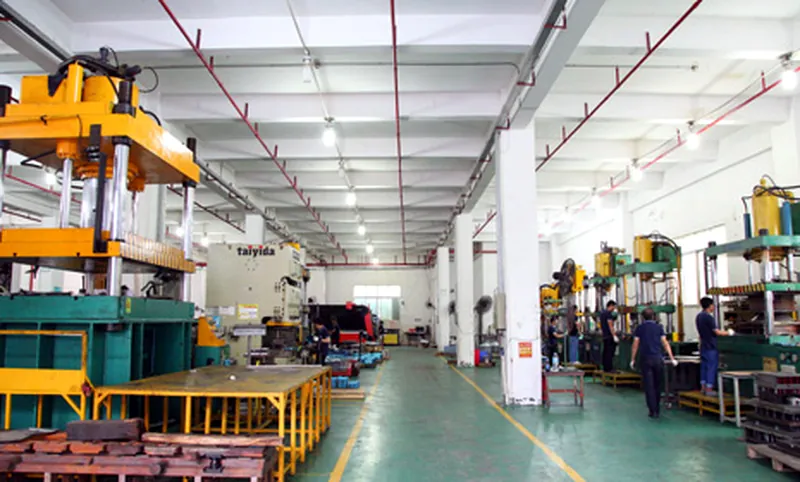
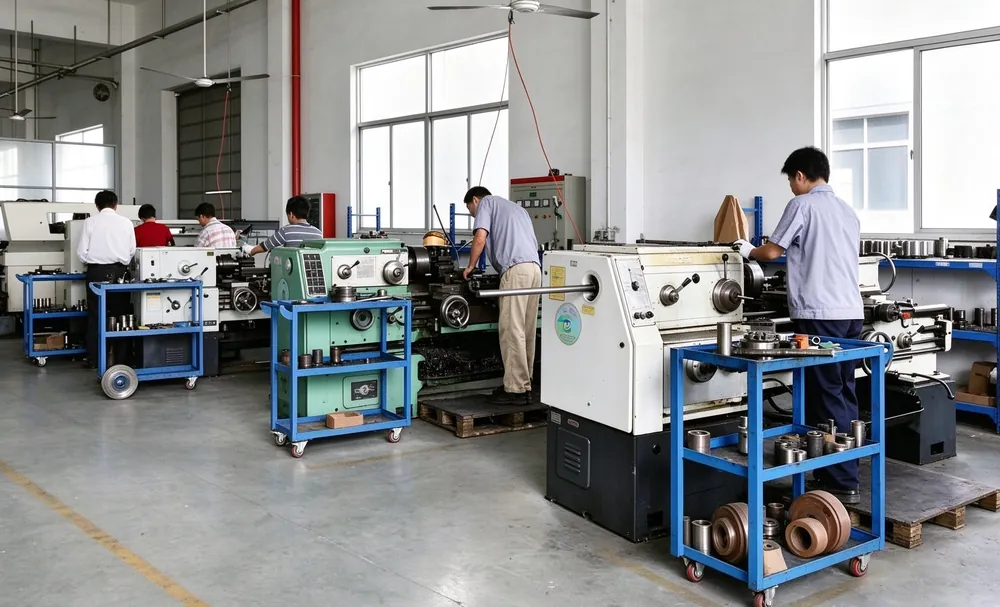
An LED luminaire asks a lot of its metal parts: they have to carry heat away from the board, define the optical shape, and still look right on a finished product. Deep drawing delivers all three in one piece of metal — no weld seam to fail, no joint to leak light, and a single continuous surface that anodises or powder-coats evenly. We draw reflector cones, downlight cans, lamp housings and heat-sink cups on mechanical and hydraulic press lines, hold wall thickness and roundness through multi-stage draws, and deliver parts ready for anodising or coating.
Aluminium is the harder metal to draw: it work-hardens quickly, tears at the shoulder and springs back when the punch releases. Drawing AL1050–AL6061 repeatably, run after run, is what separates a lighting supplier from a general stamper — and it is a capability we exercise every day.
How We Draw for Lighting
Lighting Parts We Make
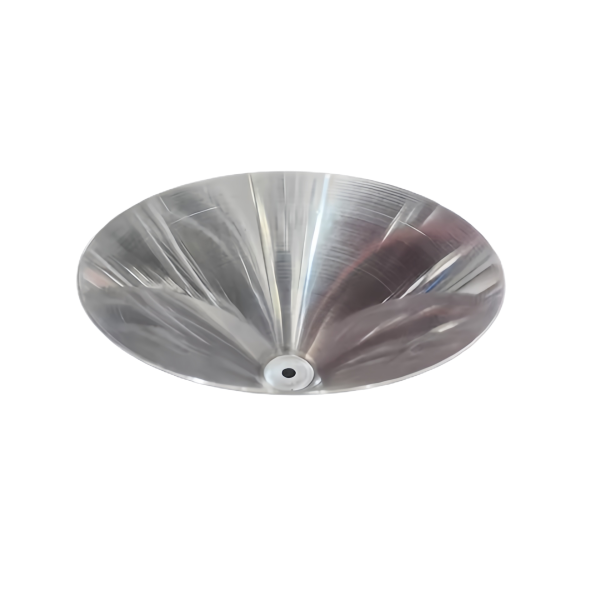 Aluminum Spun Parabolic Reflector DishView details →
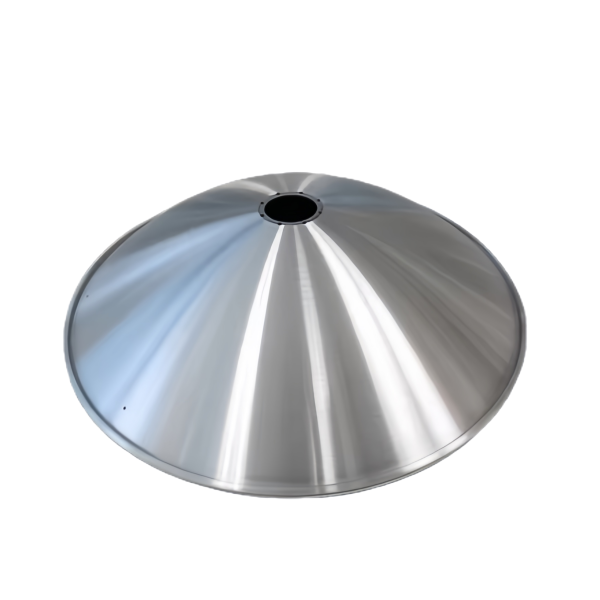 Aluminum Deep Drawn Cone Shade with Top HoleView details →
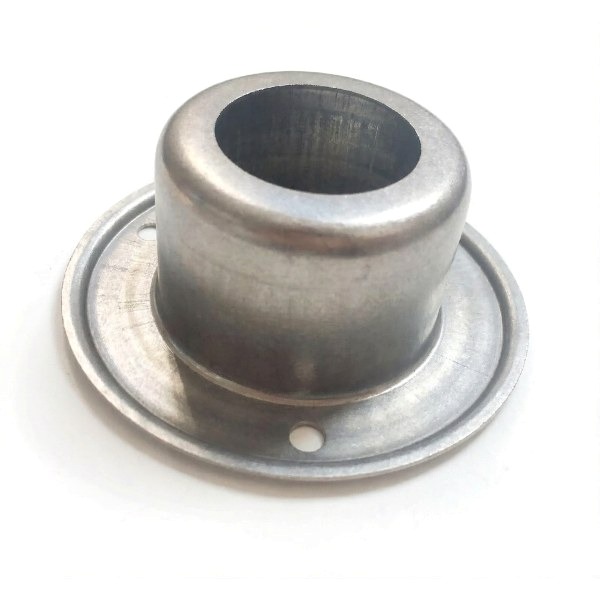 Aluminum Deep Drawn Reflector Cone ShadeView details →
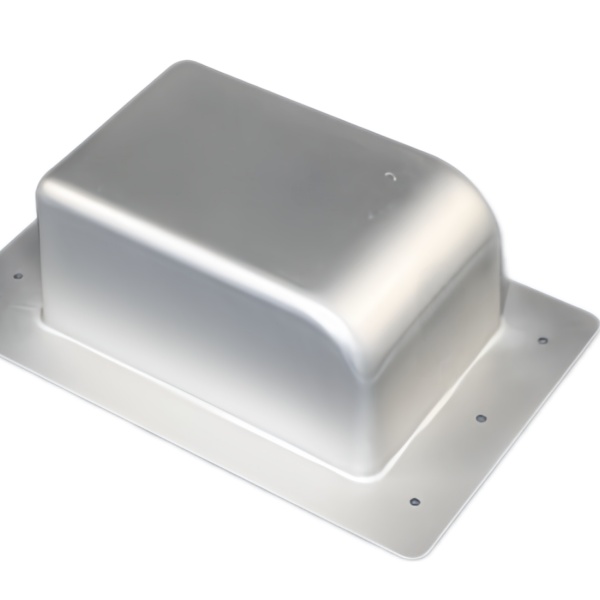 Aluminum Deep Drawn Dome Cover with Flange BaseView details →
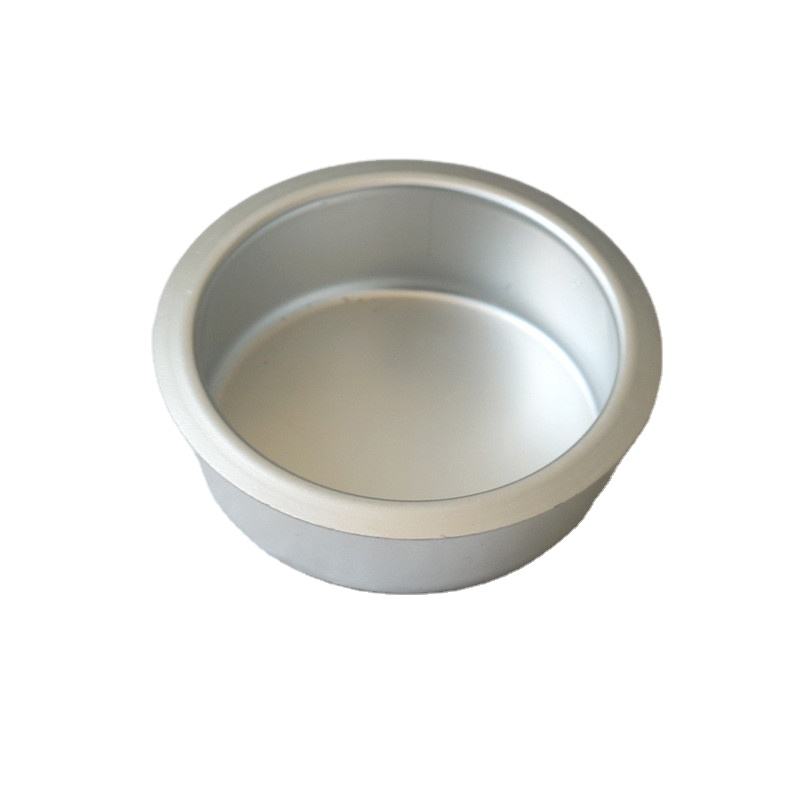 Aluminum Deep Drawn Round Cup with Rolled RimView details →
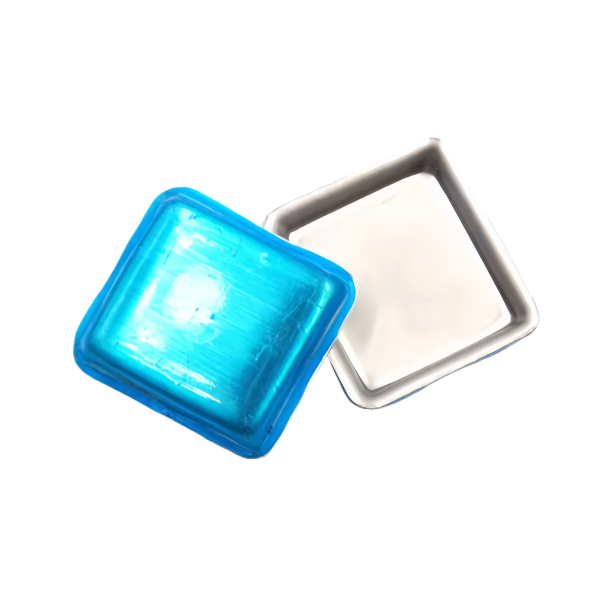 Aluminum Deep Drawn Square Dishes AnodizedView details →
Also drawn for lighting: driver and power-supply shells, lamp end caps, diffuser rings and sensor covers. Every part is made to your drawing in the same plant that cuts the die.
Materials & Finishes
Aluminium AL1050 / 1060 / 3003 / 5052 / 6061; stainless steel SUS304 for outdoor and coastal fixtures; SPCC and galvanised steel where cost leads. Surfaces are supplied ready for anodising, powder coating, wet paint or zinc / nickel plating, with the finish stock allowance built into the die.
Reflectors, Housings and Heat Management
A luminaire has to solve two problems at once: direct the light where the designer wants it, and carry heat away from the LED package fast enough to protect the driver. Deep drawing serves both, because the seamless shell that forms the reflective cavity is also the conduction path to the outside air.
Reflectors are the most geometry-sensitive parts in the assembly. A parabolic reflector has to hold its focal point within a few tenths of a millimetre, or the beam spreads and centre intensity collapses. Drawing gives a continuous surface with no weld seam and no fastener heads to interrupt the optical curve, and because the surface is generated by polished tooling, the as-drawn finish is already close to specular. For wide-angle fixtures we form conical and truncated profiles, where the wall angle sets the beam spread — a shallow cone throws a wide wash, a deep one a tight spot. Narrow cones with a pierced top hole for the LED module or cable gland are a common request; see this aluminum deep drawn cone shade with top hole.
Spinning and drawing are complementary here rather than competing. Shallow dishes and reflectors above roughly 400 mm in diameter are usually cheaper to spin; deep, steep-walled reflectors with a small base need the controlled material flow of a draw die. We run both processes, so the choice follows the geometry. This aluminum spun parabolic reflector dish sits at the shallow, large-diameter end of the range.
On the thermal side, the housing is the heat sink in most mid-power designs. Aluminum is used for that reason: 1050 and 1060 grades conduct at roughly 220–230 W/m·K and draw well, while 3003 adds manganese for strength. Where a driver board is potted into the can, wall thickness matters more than alloy. Ventilation slots near the top of the housing let convection move air through the cavity; we pierce or laser-cut them after drawing, so one die serves several product variants. This steel deep drawn cubic housing with top slots shows the approach applied to a driver compartment.
Finishes That Affect Light Output
Finish selection on a lighting part is an optical decision before it is a cosmetic one. The wrong surface can cost more lumens than a bin upgrade on the LED would have bought.
- Bright dip and chemical brightening. Removes the thin oxide and fine draw lines from aluminum and lifts total reflectance. It is the baseline for specular reflectors and is done before anodising, not after.
- Clear anodising. A hard, non-conductive surface that resists handling damage, but the anodic layer is slightly absorptive, so thick coatings on a reflector cost output.
- Specular versus semi-specular. Specular surfaces image the source and give a defined beam; semi-specular and facetted surfaces scatter lightly and hide the multi-die pattern of COB arrays.
- White and matte black powder coat. White interiors in the 85–92% reflectance range suit indirect and troffer fixtures; black is used for baffles and trim rings where the fixture must disappear into a dark ceiling.
Two practical cautions. The finish coming out of the die sets the ceiling for everything downstream: polishing a scratched surface costs more than controlling die polish and lubricant in the first place. Coating thickness also interacts with fit — anodising adds roughly 5–25 µm per surface and powder coat 60–120 µm, both of which close threaded holes and slip fits. We mask threads and grounding pads as routine.
For outdoor and wet-location fixtures, corrosion protection drives the choice instead of optics. 304 stainless steel is the common specification for exterior and wash-down duty, and 316 stainless steel where chlorides or de-icing salt are present. Settling that at design stage avoids a costly reformulation later; our page on material selection for deep drawing covers the drawability trade-offs, and deep drawn versus machined versus welded housings explains when a seamless shell beats a fabricated box on both cost and sealing.
What to Send Us for a Lighting Part
Lighting programmes move quickly. The more of the following that arrives with the first enquiry, the shorter the quoting cycle:
- A STEP or IGES model plus a PDF drawing with critical dimensions flagged. On reflectors, mark the focal length and the aperture — those are the dimensions we inspect first.
- The optical requirement: target beam angle, specular or diffuse surface, and minimum acceptable reflectance.
- The LED module or COB datasheet with the thermal pad limit and driver wattage, which together set wall thickness and whether passive convection is sufficient.
- Annual volume and order pattern. Below a few thousand pieces, spun or folded construction usually wins; above ten thousand, a draw die pays for itself quickly.
- Finish specification and any rating required — IP rating, salt spray hours for coastal sites, and RoHS or REACH declarations for your market.
We quote tooling and piece price separately, and we build the die so non-critical features — slot patterns, cable entries, mounting ears — are added in secondary operations, keeping a product family on one tool set. Prototypes normally run on soft tooling or by spinning, so optical performance can be measured before hard tooling is committed.
Frequently Asked Questions
Can you match a reflector to our photometric target?
Yes. Beam angle is set by the drawn profile, so we iterate the die geometry against your target until the measured distribution matches. Send the target beam angle and candela plot with the enquiry and we will confirm feasibility before tooling.
Which aluminum grade do you recommend for an LED heat sink housing?
1050 or 1060 aluminum for maximum thermal conductivity, 3003 aluminum where the part needs more strength, and 5052 aluminum where it also carries structural load. The choice is usually settled by the potting and mounting method rather than by conductivity alone.
Do drawn lighting parts need machining after forming?
Often yes, but only for secondary features: trimming the flange, piercing cable entries, tapping mounting holes or milling a flat for a thermal pad. The cavity itself leaves the die at finished size, which is why drawing is cheaper than machining the whole body.
What tolerances can you hold on a deep drawn reflector?
Diameter and depth typically hold to ±0.1–0.2 mm depending on size and wall thickness, and profile variation is controlled by the die rather than by the operator. Focal length is verified on the first article and then sampled through the critical height dimension in production.
Are drawn housings suitable for wet or coastal locations?
Yes, with the right material and finish. We use 304 stainless steel for general exterior work and 316 stainless steel for coastal or chloride exposure, combined with a sealed gasket and a powder coat or passivation appropriate to the rating you need.
Reflector geometry and surface finish start with the draw. The material selection guide covers aluminium grades and how each behaves under a punch, and the LDR reference shows how depth per stage is limited.
Explore More
Other industries we draw for: HVAC & refrigeration · electrical & electronic enclosures · automotive motor components · automotive · battery & energy storage · medical & healthcare · defense & optics · industrial enclosures · sensor & probe housings. See how we work in deep drawing, tool & die design and quality control.
Need a custom drawn lighting component? Send your drawing — quotation within 24 hours.
Request a Quote for This Part
Send a drawing or sketch — get material advice, tooling cost and a per-piece price within 24 hours (working days).