
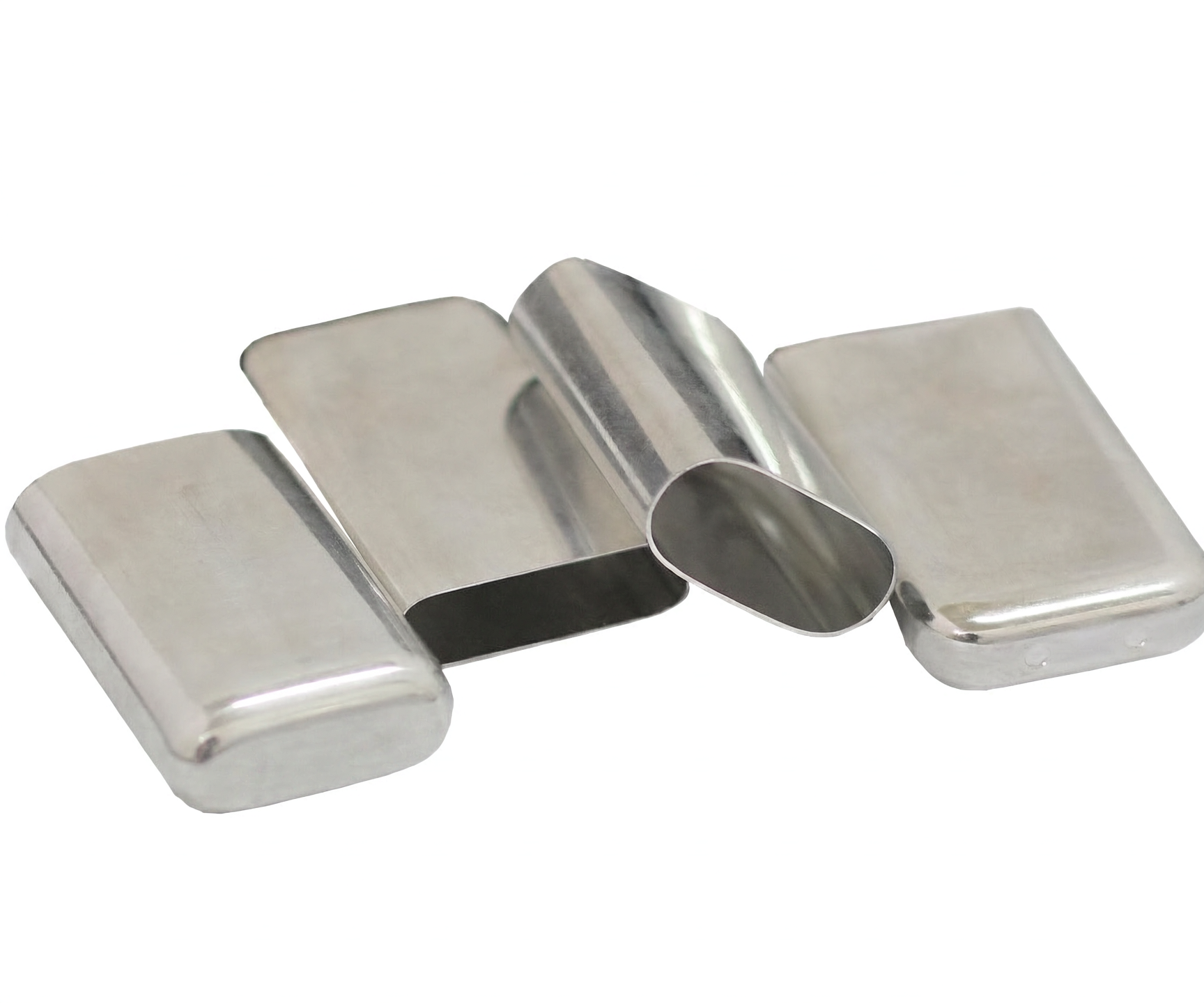
A battery housing is a safety part, and safety parts need different drawing habits
A deep drawn battery housing is one of the small number of parts in this family where a mistake is a fire rather than a return. A cell can vent, can short, can swell, and a housing that fits a cell too loosely or seals it too tightly creates conditions that a robust design would not. That does not change how the part is stamped – it changes what has to be written on the drawing, and it is worth being clear about the difference.
We coil-blank and progressively draw, coining on the final station where the print calls for it, and every stage is logged against your part number, on 5-250 T mechanical presses, 250-500 T hydraulic presses and annealing furnaces in line, backed by CNC turning centres and a climate-controlled inspection room. Tolerance runs +/-0.05 mm to +/-0.1 mm across the part with wall thickness held to print, and dimensional reports accompany the first article. Stock runs to carbon steel in SPCC and DC01 grades, 304 and 316 stainless steel, aluminium and brass, with mill certificates and heat numbers accompanying the first article. Surface treatment is matched to the duty, with finish thickness and adhesion checked on the first article. This page is about the four requirements that make a battery housing different from a general drawn case.
Requirement 1: the cell must be held without being crushed
A battery housing holds a cell, and the cell is often a cylindrical or a prismatic lithium cell that can swell with age. The housing’s fit is therefore a two-sided requirement with a life cycle attached to it, and it is not a normal interference fit:
- At assembly, the cell must enter the housing. Lithium cells are not round – a prismatic cell is a stack with a definite thickness, and pouch cells swell – so the housing’s internal dimensions are a fit against a part that will change.
- Over life, a cell that swells must not be crushed. Pouch and prismatic cells can expand several percent across their thickness. A housing with a tight interference fit will squeeze the cell, and a squeezed pouch cell is a mechanically damaged cell.
- A venting cell must be able to vent safely. A lithium cell that goes into thermal runaway vents gas. A housing that fully encloses the cell gives that gas nowhere to go, which raises pressure and can turn a vent into a rupture. If the design seals the cell, it needs a defined vent path.
- Contact pressure matters for the terminals. Many cells need a defined compressive load on their terminals to make a reliable connection. A housing that holds the cell too loosely produces a high-resistance connection that gets warm.
Requirement 2: insulation, and the current state of the art
A bare metal housing in contact with a cell is a problem in three ways, and the drawing should state which are being addressed:
- Electrical isolation. The cell’s terminals are close to the housing, and in a design where the housing is metal and the terminals are exposed, there needs to be a defined insulation path. This is a design requirement, not a material preference.
- Short circuit risk. A metal housing that can contact a cell’s tab or terminal – through movement, through a manufacturing defect, or because the cell is assembled wrongly – is a short circuit waiting to happen.
- Thermal propagation. A metal housing conducts heat from a venting cell to its neighbours, which is exactly what a battery pack’s design is trying to prevent. A thermally insulating barrier around a cell is often as important as the electrical one.
Requirement 3: flame and thermal behaviour, which is a material question
Materials hold a thermal barrier better than thin metal, and on a battery housing the choice of material is a safety decision, not a cost one:
| Steel, SPCC or DC01 | Strong, economical, and a good heat conductor – which is a disadvantage where it matters. A coated or lined steel housing is the common solution where a steel structure is needed and a thermal barrier is not. |
|---|---|
| Aluminium | Light, formable, and it conducts heat about twenty times better than steel, which is worse for propagation. A thicker or insulated aluminium wall is the usual mitigation, and a cell-level insulating sleeve inside the housing is common. |
| Polymer, moulded | Excellent thermal and electrical insulation, and the standard answer for a single-cell holder in a consumer pack. Where a drawn metal part is specified, it is usually because a metal case gives mechanical protection, EMI shielding, or a mounting interface that a moulded part would need hardware to achieve. |
| Stainless Steel 304 or 316 | Used where corrosion resistance or a hermetic joint dominates, and it is a poorer thermal insulator than aluminium and similar to steel. 316 for a salt or moisture exposure. |
On a drawn metal housing specifically, the answer is usually a metal case plus a separate insulating barrier, and the drawing should make that clear rather than implying the case itself provides isolation.
Requirement 4: the terminals and their geometry
Where the housing carries the cell’s terminal connections, the terminals are a mechanical and electrical feature, and they are where most of the design’s difficulty sits:
- Terminal contact type. A solder tab, a rivet, a crimp, or a spring contact. Each has different requirements for the housing’s material and thickness, and a spring contact needs a defined force and travel.
- Current capacity. A housing carrying a cell’s terminals is carrying its current, and the terminal’s cross-section and its joint’s contact resistance determine the heat generated. A poorly made joint gets hot, and heat next to a lithium cell is a safety issue.
- Insulation between terminals. Where two terminals are close, the spacing and any insulation between them is a requirement.
- Assembly sequence and access. A tab that has to be welded or crimped after the cell is inside the housing needs room for the tool. A housing with no assembly access is a housing that cannot be assembled reliably.
Drawing a housing that works
Eight things, and this is one of the few parts in the family where most of the list is not dimensional:
- The cell it holds, by part number and revision, or at minimum its dimensions including the maximum swollen dimension. This is the single most important item on the drawing and it is the one most often missing.
- The fit at assembly and the fit at end of life, stated as a range, because a cell changes.
- The vent path, either defined or explicitly stated as not required – and if the housing is sealed, the reason.
- Insulation requirements, electrical and thermal, and whether the case provides them or a separate barrier does.
- Terminal type and rating, with the current it carries.
- Assembly access, for whatever process attaches the terminals.
- Wall thickness, held to print, and where the minimum is – on a drawn case that is at the punch nose and at the corners.
- Which surfaces are masked from the finish, and whether dimensions apply before or after it.
Manufacturing detail that matters here
The stated tolerance of +/-0.05 mm to +/-0.1 mm across the part with wall thickness held to print is appropriate, and two points are worth making about how it is achieved and verified:
- Wall thickness held to print is the right call on this part, because the wall is a safety-relevant dimension and a general band would not catch a thin region. A drawn case’s wall is thinnest at the punch nose and at the corners, so those are the places a wall check should look at – and a check that only measures the wall at the rim will pass a part with a thin corner.
- Dimensional reports accompany the first article, and mill certificates and heat numbers accompany it too. On a safety-relevant part the material’s traceability is not administrative – it is what makes a failure investigable and what lets a customer demonstrate compliance.
And one process note worth flagging: coining on the final station, where the print calls for it, is likely on this part. A battery case benefits from coining because a flat, stiff wall improves heat spreading and stiffens the case against deformation – and a case that deforms under a cell’s swelling can pinch the cell, which is the failure this whole page is about.
Inspection: the four checks that matter on this part
A battery housing is inspected more than a general drawn case, and the extra inspection is not fussiness – each of these checks catches a failure that dimensional inspection alone would miss.
- Fit verification against a real cell, or against a master that represents one. A cell’s dimensions vary between suppliers and between batches, and a housing that fits the sample cell may not fit the production cell. A go/no-go fixture built around a master cell – including its maximum swollen condition – is worth more than a dimensional report here.
- Wall thickness at the corners and at the punch nose, not at the rim. On a drawn case those are the thinnest and most stressed regions, and a wall check on a straight wall will pass a part with a thin corner.
- Insulation verification if the case is part of an insulation scheme – a resistance measurement or a visual check that the isolating barrier is present and undamaged, since a barrier omitted on one part in a hundred is invisible on a dimensional report.
- A functional check where one is possible – a vent path test, a terminal retention check, or an insulation resistance measurement. On a part with a safety role, this is worth more than another dimension.
Traceability, and why it is not administrative
Mill certificates and heat numbers accompany the first article, and every stage is logged against your part number. On this part that paper has a specific purpose: if a field failure occurs, the material’s traceability is what lets the failure be investigated rather than guessed at. It is also what allows a customer to demonstrate compliance to whoever is asking them about the pack’s safety – which, for a lithium battery, is a question that gets asked.
Dimensional reports accompany the first article for the same reason. On a safety-relevant part, the approved first article is not a formality; it is the reference that every later batch is checked against, and the record of what was actually approved when the design was released to production.
And one habit worth building in for this part type: state the cell’s part number and revision on the housing drawing, and require confirmation that it matches before a production order is released. A housing designed around one cell and fitted with a different revision of that cell is a change that is invisible on the part and obvious in service – and it is prevented by a single line on the drawing that is easy to add and easy to check.
Drawing, machining and welding each win on different geometries; the guide to deep drawn covers works through those boundaries, and the full Precision Deep Drawn Parts range is reachable from the overview page.
Specifications
| Item | Deep Drawn Aluminum Battery Housing |
|---|---|
| Brand | AUNOV |
| Designing | Made to your 2D/3D drawings (PDF, DWG, STEP, IGS) – unusual walls, threads or tolerances are feasibility-checked first; changes are priced before they are made. |
| Tooling | Tooling is built and held under your part number, so a die can be re-cut against the approved drawing, and maintenance is tracked against the part number. |
| Samples | Approval is in writing, and the signed sample is kept as the reference for repeats. |
| Materials | Stock runs to carbon steel, 304 / 316 stainless steel, aluminium and brass; mill certificates and heat numbers accompany the first article. |
| Surface finish | Surface treatment matched to the duty: plating, coating or polishing; finish thickness and adhesion checked on the first article. |
| Processing | Coil blanking and progressive drawing, coining on the final station where the print calls for it; every stage is logged against your part number. |
| Equipment | 5-250 T mechanical presses, 250-500 T hydraulic presses and annealing furnaces in line, backed by CNC turning centres and a climate-controlled inspection room. |
| Tolerance | +/-0.05 mm to +/-0.1 mm across the part, wall thickness held to print; dimensional reports accompany the first article. |
| Delivery terms | CIF or DDP, with FOB available, T/T with deposit and L/C for larger runs; price breaks tie to annual volume. |
Frequently Asked Questions
Why is a battery housing drawn from aluminium rather than steel?
Aluminium carries the cell with far less weight and conducts heat away from it, which matters because a battery housing is a safety part whose mistake is a fire rather than a return. The grade is matched to the duty, and a drawn aluminium shell gives the stiffness and the shape the cell needs without the mass of a steel case.
How is the cell held without being crushed in a drawn battery housing?
The drawn shape sets a two-sided fit with a life cycle attached – the cell swells with age, so the housing must hold it without squeezing it – and that fit is written on the drawing rather than left to the trim. The wall and the locating features are held to print and measured on the first article so the same clearance repeats across the run.
What does a deep drawn aluminium battery housing have to survive?
The part has to contain a cell that can vent, short, or swell, keep the terminals where they belong, and stay electrically isolated, so insulation and the terminal geometry are named on the drawing. The housing is built to a safety bar a general case is not, and the traceability behind it is part of the product.
What traceability comes with a deep drawn battery housing?
Every stage is logged against your part number, from the coil through the draw to the clean and pack, with mill certificates and heat numbers on the first article. Because the housing sits in a safety-critical device, that chain is what an audit asks for, and it is built into the route rather than added afterwards.
Related Products


Request a Quote for This Part
Send a drawing or sketch — get material advice, tooling cost and a per-piece price within 24 hours (working days).