
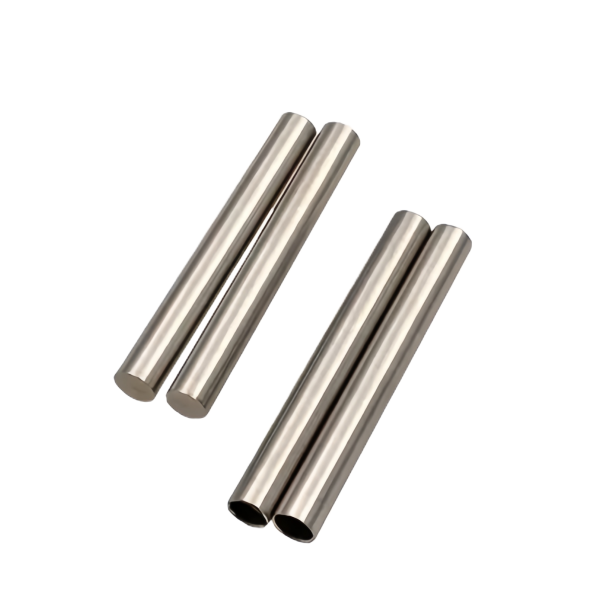
The reason to put a sensor inside a closed-end tube rather than directly in the process is that most processes are hostile to sensors. The tube is a barrier: it lets heat through and keeps everything else out. That single function explains nearly every specification on this part.
A barrier that has to pass heat and stop everything else
A closed-end tube has to do two things that pull against each other. It must let temperature through fast enough that the reading is useful, which argues for a thin wall and a close-fitting sensor. And it must keep the medium out, which argues for a sound wall and a sound closure. The compromise is set by what is on the outside: a clean dry gas lets the wall be optimised for response, while a pressurised or corrosive liquid pushes the design toward containment first.
The sensor can be replaced without opening the process
This is the practical reason plants specify a closed tube. Because the tube is sealed at the far end and open only at the top, the sensor withdraws and is replaced without breaching the vessel. On a line that cannot be shut down for a sensor change, that is worth more than the measurement accuracy the tube costs. It also means the tube is a permanent installation and the sensor is a consumable, which is worth knowing before specifying either.
Corrosion allowance is part of the wall, not extra
Where the medium attacks stainless steel, the tube is specified with more than the pressure needs. The pressure calculation gives a minimum wall; the corrosion allowance is added on top of it, because a tube that is exactly strong enough on day one is under-strength later. Chlorides, acids and high-temperature steam each point at a different grade, and the grade and the wall are chosen together rather than the wall being thickened to compensate for a grade that is wrong for the medium.
Fouling costs accuracy before it causes failure
A closed tube in a dirty or scaling medium will coat, and a coating insulates: the sensor still works but it now reads through a layer, and the reading lags and drifts low long before the tube fails. Where the process fouls, the tube geometry and its finish are chosen to shed deposit, and the maintenance interval is part of the specification conversation. A tube that can be withdrawn for cleaning is a different design from one that cannot.
How the barrier is verified
The closure and the wall are inspected for soundness, and the bore is checked to the fit the sensor needs, because a tube that holds pressure but will not accept its sensor has not done its job.
First articles and retention samples are kept for the programme, so a reorder is produced to the same wall, the same bore and the same closure. On a part that exists to keep the process away from the sensor, that is what keeps the second batch protecting like the first.
You will find this part in our Sensor Housings range. Process notes, common materials and inspection points for every product in the family are collected across the sensor housings pages.
Where this part is used
Closed-end tubes for temperature sensors hold the sensing element inside a sealed tube, which is how most immersion temperature measurement is actually built. HVAC and refrigeration probes, appliance and automotive coolant sensing, and food equipment all use the same construction: a drawn tube, one end closed, the element inside, the leads out of the other.
The closed end is the functional surface. It has to be thin enough to let heat through quickly and flat enough to sit against whatever is being measured, and it has to stay that way after the tube is drawn, trimmed and packed.
What we need to quote it
Send the closed-end wall thickness and the flatness you need on it, the element dimensions, and tell us whether the tube is welded, crimped or filled downstream. Add the response-time target if you have one, because that is what actually sets the wall rather than the drawing.
Specifications
| Item | Stainless Steel Closed-End Tubes for Temperature Sensors |
|---|---|
| Brand | AUNOV |
| Designing | Send us your 2D drawing, or mail a sample for measurement, DFM feedback is returned with the quote. |
| Tooling | Tooling designed and cut in house, each die held against your part number. |
| Samples | The first-article set ships with a dimensional report and material certificate. |
| Materials | 304 / 316 stainless steel leads the stock list for this part, alongside carbon steel (SPCC / DC01), aluminium, brass and copper, with grade selection confirmed at drawing review. |
| Surface finish | Finish options: plating, e-coat, powder coating, anodising or passivation, fixed at the drawing review. |
| Processing | Deep drawing in stages, in-line annealing where needed, pierced and machined on the same floor. |
| Equipment | Mechanical presses 5-250 T, hydraulic presses 250-500 T, CNC turning centres and a climate-controlled CMM room. |
| Tolerance | +/-0.1 mm on as-drawn features, +/-0.03 mm on machined surfaces. |
| Delivery terms | FOB as standard, DDP available for EU and US destinations, T/T and L/C accepted, D/P for established customers, call-off schedules supported. |
Related Products


Frequently Asked Questions
Why put the sensor in a closed-end tube?
Most processes are hostile to sensors; the tube is a barrier that lets heat through and keeps everything else out, which drives nearly every specification.
What is the core compromise?
A thin wall and close-fitting sensor speed the reading, while a sound wall and closure keep the medium out – set by what is outside, from clean dry gas to pressurised corrosive liquid.
How is the closure made sound?
The closed end is formed so the wall stays continuous at the tip, holding pressure while the wall is optimised for response where the process allows.
Which stainless steel grade is used?
304 or 316 drawn then finished for the sensor fit, with the grade chosen for the process the tube sits in.
Request a Quote for This Part
Send a drawing or sketch — get material advice, tooling cost and a per-piece price within 24 hours (working days).