
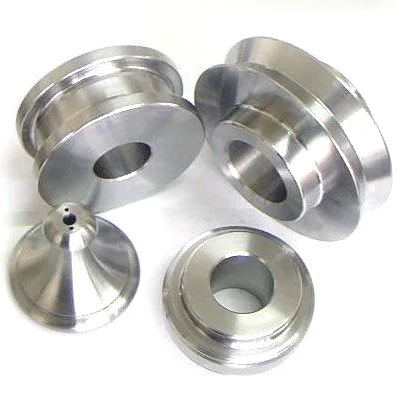
Brass turned components are the quiet majority of small metal parts, and they are chosen for a combination of reasons that no other material offers at once: it machines to a fine detail cheaply, it resists corrosion on its own, it conducts, it is non-sparking, and it deforms rather than cracks when something has to give. That combination is why brass appears in instrumentation, in fluid control, in electrical, and in mechanism work, usually without being discussed.
Which is also why brass’s specific weaknesses matter, because they appear in exactly the applications where brass is chosen.
The four reasons brass gets chosen, and each one’s cost
Because it machines beautifully
Brass cuts fast, produces short chips, holds a fine detail, and takes a good surface finish without hard finishing. On a small turned part with a thread, a fine bore, and a knurl, this is a genuine productivity advantage, and it is why brass is the default for small instrument and control parts.
- The cost: lead-containing free-machining grades machine fastest, and the lead is exactly what you do not want in some applications. See the section on this below, because it is the one place where brass’s advantages and brass’s weaknesses are directly in tension.
Because it corrodes well on its own
Brass resists ordinary atmospheric and moisture attack without any coating. For a part in a humid environment that will not be serviced, that is a real advantage: no plating to chip, no coating to fail at an edge, and the corrosion product is a stable patina rather than a destructive rust.
- The cost: dezincification. In acidic or saline water, a high-zinc brass leaches zinc and becomes porous and brittle. This is a real failure mode and it happens without visible warning until the part suddenly fractures. The grade choice is the mitigation, and the environment has to be known.
Because it conducts
Brass is a good electrical conductor – considerably better than steel, comparable with copper at a small scale – and it is easy to machine into an electrical contact or a terminal. Where a part is both a mechanical and an electrical feature, brass is often the material that does both.
- The cost: brass’s conductivity drops as its zinc content rises, so a high-strength high-zinc brass is a worse conductor. Where a specific conductivity is required it has to be stated, and the alloy chosen for it – which is often a lower-zinc grade than the mechanical requirement alone would suggest.
- The other cost: contact resistance on a brass contact oxidises, and brass oxide is a poor conductor. So a brass electrical contact that looks clean may have a higher resistance than expected, and it needs a plating to be a good contact. This is one of the cases where a plating is a functional specification rather than a cosmetic one.
Because it deforms rather than cracks
Brass is ductile. That means it will take a small interference, it will conform to a mating surface, it will seal by deformation, and it will not crack at a sharp corner. On a part where something has to give – a thread that has to accommodate variation, a seal that has to conform, a clip that has to flex – this is a genuine property.
- The cost: brass will not hold a sharp edge, it will deform under a bolt’s bearing load rather than failing, and in a wear application it will smear rather than wear cleanly. A brass thread that is overtightened will deform rather than strip, which means it fails by loss of fit rather than by obvious breakage.
Lead, and the honest answer
Brass’s free-machining grades include lead, and the lead is what makes them machine fast and cut cleanly. It is also the reason brass is restricted in food-contact, drinking-water, medical, and electrical-contact applications, and it is regulated in most markets.
- Lead-containing free-machining brass is the right choice for an ordinary mechanical part with no contact with food, water, or a medical fluid, and it is materially cheaper and faster to machine than the lead-free equivalent. On a small turned part this is often a significant cost difference.
- Lead-free brass is the right choice where the part touches drinking water, food, a bodily fluid, or where a regulation requires it, and it is also the right choice for an electrical contact. It machines less well and it is more expensive.
- And the honest engineering point: the lead-free question is not a detail to be resolved by the shop. It has to be established at the enquiry, because it changes the material and therefore the price and the lead time, and because a part that was quoted without it and then found to need it is a scrapped batch or a re-quote. It is worth stating explicitly on the enquiry even when the answer seems obvious, because “brass” on a drawing does not carry the information.
H62 versus H65, and the specific choice
Both are copper-zinc alloys and both are widely used. On this part the difference is short and specific.
- H62 – higher zinc, harder, stronger, better wear resistance, better for threads and for mechanical duty. The default for a mechanical component.
- H65 – lower zinc, more ductile, more corrosion-resistant and notably more resistant to dezincification. The right choice in a wet environment, in a marine application, or anywhere the water might be slightly acidic or saline.
- Neither is automatically dezincification-proof, and the environment is what decides. Where the water is genuinely aggressive, neither grade is the right answer and a different alloy – a bronze, or a dezincification-resistant brass – is needed.
Turned features, and where brass is easy and where it is not
CNC turning from bar or billet with concentricity held across the operations, on machines with bar feeders, with first articles and batch samples checked on the CMM. The route is right. Five features on a brass part each have a specific note.
- Threads. Brass takes a fine thread and it is a good material for one – it is self-lubricating enough to resist seizure and it deforms rather than strips. The specific brass advantage is that a thread will seat rather than jam if there is a small mismatch, which makes a brass threaded joint tolerant of variation. On an external thread where the mating part is steel, brass galls, and a galled brass thread on a steel bolt is the standard wear problem – the remedy is a plating, a lubricant, or an anti-seize, and the choice should be made deliberately.
- Bores. Brass bores are easy to hold accurately and take a good finish. Where the bore is a fluid path, brass’s smoothness is an advantage. Where the bore is a running fit for a steel pin, brass will pick up and smear over time, and a bore that is meant to be a precision fit will drift as it wears.
- Knurling. Brass knurls cleanly because it cuts rather than smears, and it is the best of the common metals for a knurl that has to look precise. The knurl’s effect on the dimension is the same as on any other material – material displaced outward – and on a brass part the displaced material is easy to see because it is unoxidised.
- Press and interference fits. Brass’s ductility is what makes this work, and it is also the hazard: a brass part in an interference fit will deform to accommodate the fit and then stay deformed, so it will not return to size if the fit is disturbed. On a part that has to be removed and refitted, this matters.
- Very small features. Brass is the material that makes very small turned features practical – a small pin, a fine sleeve, a tiny lever – because it cuts fast and holds detail. This is where brass’s machining advantage is most decisive and it is the strongest argument for the material on a small component.
Surface finish, and the electrical contact case
Plating, powder coating, anodising or polishing per the print, with alternatives quoted with the quotation and samples approved in writing. Four specific cases on brass.
- Where the part is an electrical contact, the plating is functional and the requirement is a low and stable contact resistance with a defined wear life. Here the choice of plating is a system decision – tin, gold, silver, or a specialty contact plating – and it needs to be specified against the mating material and the contact force, not chosen for appearance. A tin-plated brass contact has a limited life because tin wears and then the base metal oxidises; a gold-plated one has a long life and a high cost.
- Where the part is a decorative or identification item, the finish is conventional and the approved sample is the specification. Brass takes a polish, a lacquer, and a plating well and it is usually chosen for its appearance.
- Where the part is in a wet environment, the choice is usually to leave it bare. Brass’s corrosion resistance is one of the reasons it was chosen and a coating is often unnecessary. If it is plated, the plating’s purpose is appearance or solderability, and it should not be relied on for corrosion protection where the substrate is dezincification-prone.
- Where the part is soldered, solder wicking is the specific problem: a brass body can draw solder into itself by capillary action and be weakened. A non-wicking plating exists for exactly this, and it is a different requirement from a decorative plating.
On a brass turned part the flagged dimensions are the ones that mate
+/-0.01 mm on machined faces and +/-0.05 mm on formed details, GD&T per drawing, PPAP-style reports on request. On a brass turned part the flagged dimensions are the ones that mate.
- Thread class and pitch diameter, gauged, per the mating part’s standard.
- Bore diameter, roundness and fit – and where the bore is a fluid path, the roundness and the surface finish, both of which affect the flow and the cleanability of an internal passage.
- Concentricity of the bore to the OD and to any external feature – on a small brass part, held by the one-setup machining rather than by a general tolerance.
- The height or length of a press-fit feature, since brass’s ductility means the fit is set by this dimension and it is the dimension that determines whether the part goes in.
- Flatness and perpendicularity of any face that seats or seals.
- General dimensions and diameters at a general band, post-finish where the finish is on a face.
A brass press fit is verified by assembling it, not by measuring it
- Thread gauging, per part on a functional thread.
- Bore size, roundness and, where relevant, surface finish.
- A functional assembly check – the part fitted to its mating part, or a gauge, confirming it goes in and seats. On a small brass part with a press fit this takes seconds and it tests the dimension that matters.
- Contact resistance, where the part is an electrical contact and the finish is functional. This is a functional test on a functional specification and it is worth doing on a first article.
- Finishing thickness and adhesion on the first article, with masked areas verified, and the finish’s condition recorded as part of the part’s identity – because a brass part’s corrosion behaviour depends on whether it is bare or plated.
- PPAP-style reports on request – and on a small brass part in a safety-related or audited assembly this is worth asking for, since the material’s lead content in particular is a question that will be asked eventually.
Food, drinking water or a bodily fluid, and electrical contact
Does this part touch food, drinking water, or a bodily fluid – and does it make an electrical contact? Those two questions decide the alloy, because they are what force a lead-free grade and a specific contact plating. Without them, “brass” is an under-determined specification: there are free-machining grades that cut several times faster and grades with better corrosion resistance, and the gap between them is both a price difference and a lead time difference. It is worth asking at enquiry because it is the cheapest question on this page and it is the one that cannot be resolved later without re-quoting the part and possibly scrapping material. It is also worth asking whether the part needs to be conductive at all, because a large fraction of brass components are chosen for their machining and corrosion properties alone and would be better off in a different material – though honestly, brass is usually still the right answer for a small turned part even when the other properties are not being used.
The CNC Machining Parts range is the parent for parts like this one; tooling logic, finishing options and tolerance notes for the whole family are gathered on its overview page.
Specifications
| Item | Brass CNC Turned Components |
|---|---|
| Brand | AUNOV |
| Designing | Made to your 2D/3D drawings (PDF, DWG, STEP, IGS) – a manufacturability review comes back with the quotation; the agreed version governs every later batch. |
| Tooling | Dies, fixtures and gauges are made in our own toolroom, so a die can be re-cut against the approved drawing, and first-article timing is measured from the tooling start date. |
| Samples | Sample parts are measured and reported before submission, so any deviation is corrected at sample stage, and later batches are gauged back to the signed sample. |
| Materials | H62 / H65 brass, 0.8-4.0 mm, selected for conductivity, fine surface detail and corrosion resistance on this component. |
| Surface finish | Plating, powder coating, anodising or polishing, per the print; alternatives quoted with the quotation, samples approved in writing. |
| Processing | CNC turning from bar or billet, concentricity held across operations; every stage is logged against your part number. |
| Equipment | 12 CNC turning centres with automatic bar feeders; first articles and batch samples are checked on the CMM. |
| Tolerance | +/-0.01 mm on machined faces, +/-0.05 mm on formed details; GD&T per drawing, PPAP-style reports on request. |
| Delivery terms | CIF or DDP, with FOB available, T/T or L/C, with D/P accepted on repeat business; call-off schedules are supported. |
Related Products


Request a Quote for This Part
Send a drawing or sketch — get material advice, tooling cost and a per-piece price within 24 hours (working days).