
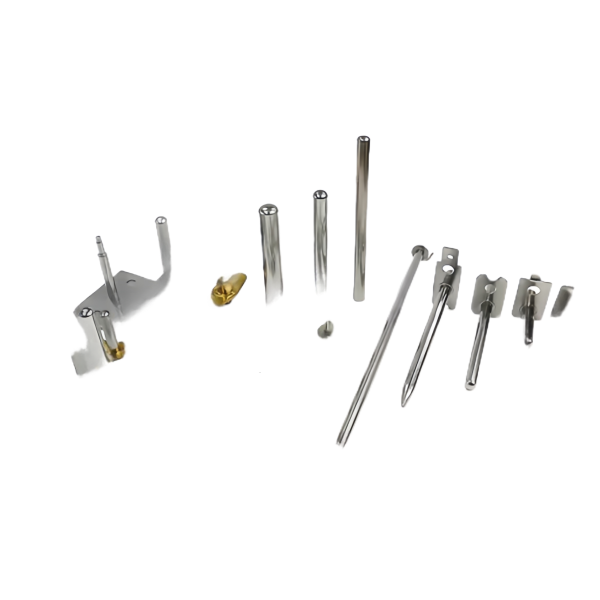
An assorted display of temperature sensor probe parts and fittings – sleeves, wells, hex nuts and housings from our sensor-hardware range. Use it to shortlist the pieces your assembly needs; every item here is available as a production part, not just a sample.
Function and Design
The temperature sensor probe manufacturing record is archived together with the drawing revision that produced it. The approved temperature sensor probe sample governs later runs, and any grade change is agreed in writing first.
What Makes It Work
- Because the set runs from matched tooling, the variants hold together dimensionally.
- Packing follows deburring and cleaning, so no bench work is needed at your end.
- Family page: your print sets dimensions, features and tolerances.
- Material: Stock flexibility is the point: temperature sensor probe orders have run in carbon steel, stainless, aluminium and brass.
- Process: deep drawn temperature sensor probe body with in-die piercing, sealing faces finished by turning.
- Finish: The temperature sensor probe is finished per print – passivation, plating and coating are all run in house or by audited partners.
- Size: To your print, family covers the standard size range; dimensioned sketches can be advised before the temperature sensor probe is quoted.
- Custom: Custom temperature sensor probe builds to your drawing, with small trial lots possible before committing to volume.
Where It Is Used
In service you will find this part in industrial process instrumentation, HVAC and refrigeration sensors, NTC and PT100 probe assemblies.
Factory-Direct Advantage
Drawn shells are stress-relieved before critical faces are machined. Any deviation on a sealing face is corrected at the machine, not after plating.
Contact us for OEM pricing and free samples of the temperature sensor probe; engineers review manufacturability before quoting.