
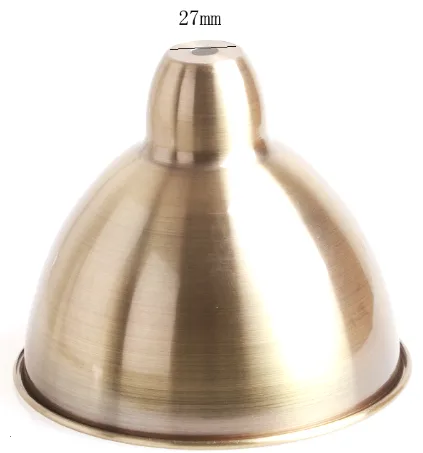
Spun and drawn are often the same answer, and the honest question is which one the volume justifies
Sheet metal fabrication in drawn and spun parts describes a family that spans both processes, and the interesting question on such a part is not which process to use but why. Spinning and drawing produce overlapping capabilities, and on a surprising number of parts both are technically viable. The choice is then an economic one, and it is worth making deliberately, because the two processes have genuinely different cost curves and the crossover point is not where people assume it is.
We draw these progressively through several stages, annealed between draws, then trim and pierce, and batch records are filed so a repeat order starts from approved data, on 5-250 T mechanical presses and 250-500 T hydraulic presses and annealing furnaces in line, with first articles and batch samples checked on the CMM. Turned secondary features to +/-0.03 mm and as-drawn walls to +/-0.1 mm, with finer bands confirmed from capability data before quoting. Carbon steel in SPCC and DC01 grades, 304 and 316 stainless steel, aluminium and brass are held on site, with the final grade fixed at the drawing review. Surface treatment is matched to the duty – plating, coating or polishing – with masking and laser marking available where needed. This page is about the crossover, the four questions that settle it, and what each process is genuinely better at.
The cost curves, and where they cross
Both processes have a fixed tooling cost and a variable per-part cost, and the fixed costs are very different in scale:
- A progressive die is expensive – a multi-stage die for a complex drawn part is a significant asset – and then produces parts at a few cents of machine time each, running unattended at hundreds of strokes a minute. The break-even on a progressive die is reached surprisingly early: on a small part at a few hundred pieces a day, a die-stamped part is usually already cheaper than a spun one.
- Spinning has a cheap tool by comparison – a shaped mandrel, which for a complex axisymmetric shape is a fraction of a die’s cost – but a slow cycle. A spun part takes seconds to minutes against milliseconds for a stroke. The break-even is much further out, and where the crossover actually falls depends on the part’s size and the complexity of its geometry.
So the practical rule is: the smaller the part and the higher the volume, the more clearly drawing wins; the more complex the axisymmetric geometry and the lower the volume, the more clearly spinning wins. And the middle ground – a complex part at a moderate volume – is where the answer is genuinely open and worth discussing.
Where each process is genuinely better, and it is not symmetric
| Spinning is better when | The part is axisymmetric and complex – a dome, a bowl, a cone, a profile with varying radii. The part is seamless, and the seam would be a defect. The wall uniformity matters, and spinning gives a more uniform wall than a directional draw. The volume is low enough that a die would not amortise. The wall is thin and the shape is delicate, because a progressive die on a thin delicate part is a difficult tool to make and maintain. |
|---|---|
| Drawing is better when | The part is a simple round cup or shell, where a draw is straightforward and a die is the natural tool. The volume is high enough to amortise the die. The part is small, where a spinning cycle is a disproportionate fraction of the cost. The part has features that are naturally piercing operations – holes, slots, cutouts – because a progressive die does them in the flat, accurately and fast. The part needs to be formed from strip with no machining. |
| Neither, and a third route is right | Where the geometry is not axisymmetric and not a simple cup – a box, an L-shape, a mounting bracket. There, stamping and forming, or fabricated sheet with welding, is usually the right answer and both of these processes are the wrong ones. |
Question 1: what is the volume, and will it be stable
The cost comparison above only holds if the volume is known, and on many of these parts it is not known precisely at the design stage. Three things worth establishing:
- The expected annual volume, and it is worth distinguishing a first year of a hundred parts from a hundred a month, because the die’s break-even is usually crossed in the second case within a year.
- Whether the volume will be stable or grow. A progressive die is an asset that gets cheaper per part with every order. A spinning tool is a tool that stays cheap. If the volume will grow, the die’s economics improve and spinning’s do not – so a growing programme argues for the die.
- Whether the design will change. This is the one that gets missed. A die is a large investment tied to one geometry, and a design revision means new tooling – sometimes a whole new die. A spinning tool is cheaper to change, and a part that will be revised twice is better made by a process that is cheap to revise. This is a genuine argument for spinning that has nothing to do with cost per part.
Question 2: what is the real shape requirement
Most parts that get described as “drawn or spun” are one or the other, and the description is ambiguous because the part’s shape is not fully defined. Three questions that resolve it:
- Is the part axisymmetric? If not, spinning is out and the choice is between drawing and stamping.
- Does the part have a hole pattern, slots, or cutouts? These are piercing operations, and a progressive die does them in the flat where they are accurate and free of forming distortion. On a part whose mounting pattern matters, this is a strong argument for drawing and stamping even if the shape is nominally axisymmetric.
- Does the part have to be seamless? A drawn part has a seam; a spun part does not. If the seam is in a pressure boundary, a weldment, or a visible surface, that alone settles the question.
Question 3: which features are machined, and that is a real cost on both
Turned secondary features to +/-0.03 mm is the stated structure, and on this part family it is worth asking how much of the part is machined, because machining is a per-part cost on either process and it changes the economics:
- On a spun part, any off-axis feature is machined, so a spun part with a hole pattern is a spinning operation followed by a drilling operation, and the spinning is arguably making a blank.
- On a drawn part, any feature needing a tight band is machined, and the tight band is genuinely needed on a bore, a sealing face, or a locating feature.
- On either, the machining is often the part that determines the piece cost, and it is worth knowing what it is before choosing the forming process – because if the machining dominates, the forming choice matters much less.
Question 4: what is the wall doing, and how even does it have to be
As-drawn walls to +/-0.1 mm is the stated band, and the wall is where the two processes genuinely differ in quality rather than in cost:
- A spun wall is more uniform than a drawn wall, because the material is not flowing directionally. On a part where the wall is a pressure boundary, a thermal path, or a stiffness requirement that has to be consistent around the part, that uniformity is worth real money.
- A drawn wall thins predictably – most at the punch nose – and the variation is well understood. On a part where the wall is not functional and only needs to hold its shape, a drawn wall is entirely adequate and much cheaper.
- On a part with a very thin wall and a complex shape, spinning is genuinely better, because a progressive die on a thin delicate part is a hard tool to make and maintain and the part is prone to damage between stations.
Formability constrains the route before the route picks the material
Carbon steel in SPCC and DC01 grades, 304 and 316 stainless steel, aluminium and brass are held on site, with the final grade fixed at the drawing review. On a part where the process is being chosen, the material’s formability is a constraint on both routes: DC01 is a good general choice and its tighter property specification helps where springback affects a formed feature; 304 and 316 stainless steel draw and spin acceptably but spring back more and work-harden faster, and a stainless steel part that is precision-formed has a tighter material specification worth considering; aluminium in 3003 or 1050 is the most formable and is the usual choice where either process is being used on a thin wall; and brass forms and spins well and is used where a specific corrosion behaviour or a fine surface applies.
What to settle before the process is chosen
Eight things, and the first four are the ones that decide the process:
- Annual volume, and whether it will grow. This decides the die’s break-even.
- Whether the part is genuinely axisymmetric, and whether it has a hole pattern. This decides whether spinning is available and whether a draw is the right forming route.
- Whether the part must be seamless, and where the seam would be if it is drawn.
- Whether the design will change, and how often. This decides whether the tooling’s flexibility has value.
- Which features are machined, and whether the machining dominates the piece cost.
- What the wall has to do – hold shape, carry pressure, conduct heat, or provide stiffness – and therefore how even it needs to be.
- Formed features at the stated band, with capability data, and turned features at the tight band, with the split made explicit.
- Material grade, confirmed at the drawing review, since the formability is a constraint on the process choice.
Whether the process is already decided
Is the process already decided, or is it still open? This part family is described as “drawn and spun”, which often means the drawing was made assuming one process and the customer is checking whether the other would be cheaper. The answer is usually that the process is a consequence of the shape and the volume rather than a free choice – and the useful output of the review is therefore not a recommendation between two processes but a clear statement of which processes are technically viable for this geometry, and what each one’s economics depend on. That framing turns a vague question into a usable one, and it is the difference between a review that answers a question and one that starts an argument.
The design decisions behind a part like this — draw ratio, wall thinning, radii and trim — are worked through with numbers in our deep drawn covers guide, and the Precision Deep Drawn Parts pages collect the rest of the family.
Specifications
| Item | Spun Brass Bell-Shaped Cone Cover |
|---|---|
| Brand | AUNOV |
| Designing | Driven by your drawing or a physical sample – DFM notes are returned before any tooling is cut; revisions are re-quoted once rather than silently absorbed. |
| Tooling | Tooling is built and held under your part number, so no tooling step is outsourced, and the charge is refundable against agreed volumes. |
| Samples | Samples are issued for approval before the run, so the sample is retained as the master, and production starts only after your written sign-off. |
| Materials | Carbon steel (SPCC / DC01), 304 / 316 stainless steel, aluminium and brass are held on site; the final grade is fixed with the drawing review. |
| Surface finish | Surface treatment matched to the duty: plating, coating or polishing; masking and laser marking available where needed. |
| Processing | Progressive drawing through several stages, annealed between draws, then trim and pierce; batch records are filed so a repeat order starts from approved data. |
| Equipment | 5-250 T mechanical presses, 250-500 T hydraulic presses and annealing furnaces in line; first articles and batch samples are checked on the CMM. |
| Tolerance | +/-0.03 mm on turned secondary features, +/-0.1 mm on as-drawn walls; finer bands confirmed from capability data before quoting. |
| Delivery terms | FOB, with DDP offered for EU and US addresses, payment by T/T or L/C, quoted in USD or EUR; repeat orders reuse the approved first article. |
Frequently Asked Questions
Is this cover spun or deep drawn, and does it matter?
For a bell-shaped cone the part is spun, because spinning follows the rotating form and suits the shallow, symmetrical profile better than a draw die would. The choice matters for tooling cost and lead time: spinning needs a simpler form, so prototypes and short runs are in hand faster than a drawn alternative.
Why is brass chosen for a bell shaped cone cover?
Brass spins cleanly, takes a fine finish, and resists corrosion in the service environment, which is why it is specified for covers where appearance and a stable surface both count. The grade is picked for spinnability and duty together, not by habit.
What tolerance holds the symmetry of a spun brass cover?
Symmetry around the axis is set by the spinning form and verified on the CMM, because a cone that runs out will not seat or align. Critical diameters and the seating face are held to their own bands, and the first article is measured before the run repeats.
How is a spun brass cover finished?
Finish runs from a bright spun look to plating or lacquer depending on the duty, applied so it does not hide a dimension the part depends on. The finish is chosen for the environment and the appearance together, and it is specified on the drawing before the run.
Related Products


Request a Quote for This Part
Send a drawing or sketch — get material advice, tooling cost and a per-piece price within 24 hours (working days).