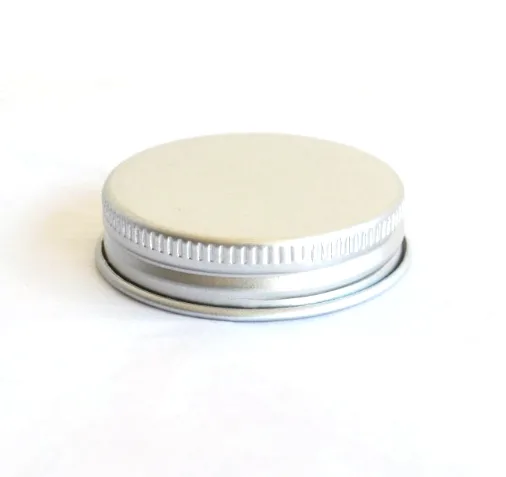
A knurled edge is a grip and a wear surface, and those are different jobs
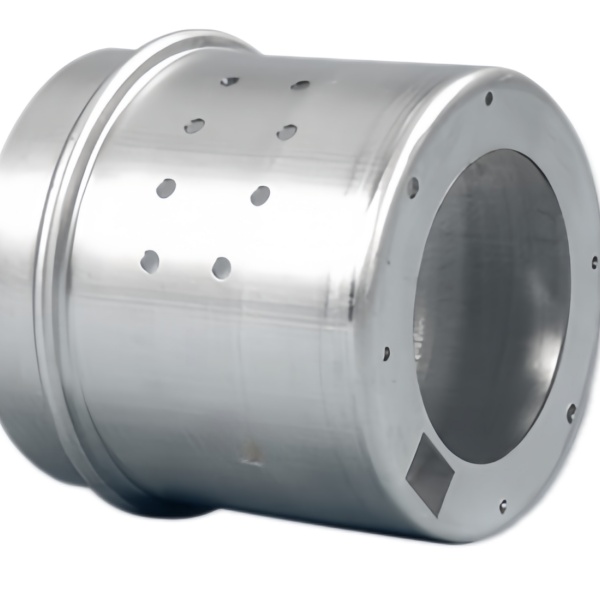
A knurled-edge stainless steel drawn lid combines three features that pull in different directions: a drawn lid, a knurled edge, and a stainless steel material chosen for corrosion resistance. The knurl is the interesting one, because a knurled edge is usually drawn from sheet in a single operation that forms the lid and cuts the knurl at the same time – which means the knurl is created by the same tool motion that forms the part, and that has real consequences for what the knurl can be and how it wears.
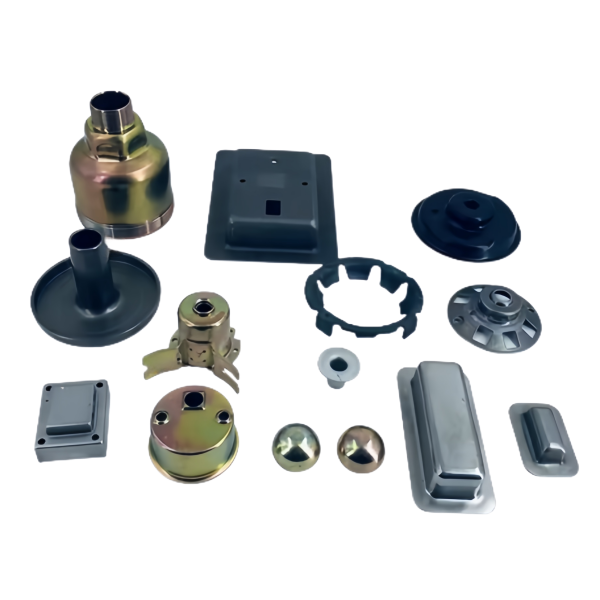
We deep draw on maintained presses with blank size and lubrication logged per run, every stage logged against your part number, on mechanical presses 5 to 250 T and hydraulic presses 250-500 T with in-line annealing furnaces, and first articles and batch samples checked on the CMM. Turned secondary features to +/-0.03 mm and as-drawn walls to +/-0.1 mm, with finer bands confirmed from capability data before quoting. Standard stock is carbon steel in SPCC and DC01 grades, 304 and 316 stainless steel, aluminium and brass, with grade and temper confirmed in writing before tooling. Natural, plated or coated per the print, with the agreed finish logged and finish thickness and adhesion checked on the first article. This page is about what happens when a knurl and a draw happen at once, and about the four decisions on this part that are not obvious.
A knurl in a draw is a cutting operation, not a texture
On a machined part a knurl is rolled or cut as a separate operation. On a drawn lid with a knurled edge, the knurl is formed during the draw – the blank’s edge is deformed and the knurl pattern is cut into it as the material flows. Three consequences:
- The knurl cannot be any pattern. A formed knurl is limited to patterns that can be generated by the material’s flow through the die. Knurling that is cut into the edge as it draws is a knurl in the edge’s face, and a knurl on the outer circumference of a rim has to come from a different tool motion. Which is wanted is a drawing decision and it needs to be stated.
- Knurl depth is limited by the material’s ductility. A formed knurl displaces material, and a knurl deeper than the material can accommodate will crack at the pattern’s peaks. On a thin drawn edge this is a hard limit, and it means the knurl’s depth is a function of the edge’s thickness – which is a very small number on a lid.
- The knurl’s pattern direction relates to the draw’s flow direction. A knurl formed in the draw will run in the direction the material moved, and a knurl that should run circumferentially for grip cannot be formed in a radial draw. This is a genuine geometric limitation and it is worth establishing at review rather than after a die is cut.
What the knurl is for, and it is usually one of three things
| Grip for hand operation | Something is twisted or pulled by hand – a lid that has to be unscrewed, a cap that has to be prised off. Needs a coarse, pronounced pattern and a defined contact angle. Decays with wear, so a hard material or a deeper knurl extends its life. |
|---|---|
| A positive stop | The knurl provides a hard shoulder that something bears against. Needs the knurl’s height as a dimension, and the height is what determines where the stop sits – so the knurl’s height tolerance is a positional requirement. |
| Surface finish for grip in the hand | A jar lid or a cap that is held rather than twisted. Needs a fine texture that gives purchase without cutting the fingers, and this is a case where an aggressive knurl is the wrong answer. |
Which of these it is decides everything else, because a grip needs a pattern, a stop needs a height, and a hand-hold needs a texture. A drawing that says “knurled” without saying which of these it is has not specified a knurl.
Stainless Steel and knurling: work hardening cuts both ways
Stainless Steel is a good choice for a knurled lid for understandable reasons – corrosion resistance, cleanability, appearance, food-service suitability. It also brings three specific problems to the knurl:
- The knurl work-hardens as it forms. A formed knurl in stainless steel is harder than the surrounding material and less ductile. This is good for wear life and bad for anything that would have to re-form it.
- Stainless Steel does not relieve stress by yielding. When a formed knurl’s peaks are loaded, mild steel would yield locally and redistribute; stainless steel will not, so a stress peak at a knurl’s root becomes a crack rather than a dimple. This means knurl root radii matter more in stainless steel than in steel – and formed knurls tend to have sharp roots.
- Galling at the contact. A knurled stainless steel surface in contact with another stainless steel surface – a mating knurl, a threaded neck – will gall, and the galling will be on the knurl’s peaks where the contact pressure is highest. On a lid that is screwed on and off repeatedly this is a real wear mechanism.
Where the lid’s function meets the knurl
A drawn lid has a sealing rim, a locating feature, and often a hinge or a tab. The knurl has to live with all of them:
- The knurl must not interfere with the seal. A knurl that runs onto the sealing rim leaves a textured surface where a flat gasket or a lip seal has to seat, and a seal on a knurled surface leaks. The knurl has to stop short of the sealing face, and where it stops should be a specified feature rather than wherever the tool happens to end it.
- The knurl must not interfere with the lid’s fit. Where the lid fits over a body, the knurl adds to the outer diameter. If the lid has to fit inside a recess, a knurl on the fitting diameter is a problem – and if the knurl is on the outer diameter, it improves the fit into a knurled body which is a common and effective combination.
- The knurl changes the lid’s grip on its body. A knurled outer surface gripping a knurled or smooth body changes the friction, and therefore the torque needed to seat the seal. On a pressure seal that is a functional change and the torque requirement should be stated.
- The knurl on a stamping is a sheared or formed edge, and it is where burrs and tears appear. On a visible or a food-service part this is a quality issue as well as a functional one.
On a lid, the machined hinge and thread features take the tight band
Turned secondary features at +/-0.03 mm and as-drawn walls at +/-0.1 mm is the stated structure, and it maps onto this part as follows:
- Any machined feature – a hinge pin’s hole, a locating boss, a thread – takes the tight band. On a lid, this is usually where the lid has to locate accurately.
- The drawn features – the lid’s diameter, its wall, the knurl’s overall envelope – take the drawn band. This is appropriate because a knurl’s own size is inherently variable.
- The knurl’s height, where it functions as a stop, should be stated as its own dimension with its own tolerance, because it is a locating requirement and not a general feature.
- The sealing rim’s flatness needs its own callout, as always, and it should be measured against a named surface.
- Finer bands are confirmed from capability data, and on a knurled part that is worth asking for specifically – because a formed knurl’s repeatability is a function of the die’s condition and the material’s condition together, and it should be demonstrated rather than assumed.
Finishing, and the knurl’s interaction with it
Natural, plated or coated per the print, with the agreed finish logged, and finish thickness and adhesion checked on the first article. On a knurled edge the finishing options behave very differently:
- Passivation is the best choice for stainless steel, and it is dimensionally neutral – so the knurl keeps its exact geometry. For a part where the knurl’s feel is the specification, this is the answer.
- Electroplating fills a knurl partly. A formed knurl has sharp peaks and deep valleys, and a plated layer builds unevenly – the peaks get more coverage and the valleys less, and the knurl’s effective depth reduces. On a grip feature the knurl becomes less effective and its feel changes.
- Anodising on aluminium preserves the knurl better than plating because the layer grows outward uniformly, but it is only relevant if the part is aluminium.
- A coating on the sealing rim is a functional problem, not a cosmetic one. A compressible film on a sealing face creeps and a hard film under a gasket changes the compression. The rim should be masked or the seal specified accordingly.
- Hiding the knurl is occasionally desirable – a knurl on a visible lid can be deburred or blended at the edge to remove any sharp peaks that would catch a cloth or a hand. That is a real finishing requirement on a cosmetic knurl.
Where the finishing note and the functional note must agree
Seven things, and this is a part where the finishing note and the functional note have to agree with each other:
- What the knurl is for – grip, a stop, or hand-hold. Everything else follows from this.
- Knurl pattern, pitch and depth, as dimensions rather than as a pattern name, because a pattern name covers a range.
- Knurl direction – along the edge, or around the rim – and if around the rim, whether the draw process can achieve it.
- Knurl height tolerance where it is a stop, as a locating dimension.
- Where the knurl ends relative to the sealing rim, so the seal has a flat surface to seat on.
- The edge condition – deburred, and to what burr height – because a formed knurl’s peaks are where burrs and tears appear.
- The finish, and whether it is masked from the knurl, plus whether dimensions apply before or after it.
And the design question worth raising at review: whether the knurl has to be formed in the draw at all. A knurl applied as a separate rolled or machined operation on a lid that is then drawn will be destroyed by the draw – so the sequence is fixed, and that constraint is worth understanding early. If the knurl must be circumferential and the part is drawn radially, the answer may be to machine the knurl after drawing as a secondary operation, which costs more but produces a better and more consistent knurl than a formed one.
Drawing, machining and welding each win on different geometries; the guide to deep drawn covers works through those boundaries, and the full Precision Deep Drawn Parts range is reachable from the overview page.
Specifications
| Item | Knurled Edge Stainless Steel Drawn Lid |
|---|---|
| Brand | AUNOV |
| Designing | Made to your 2D/3D drawings (PDF, DWG, STEP, IGS) – unusual walls, threads or tolerances are feasibility-checked first; changes are priced before they are made. |
| Tooling | Tooling is built and held under your part number, so die cost stays transparent, and the die remains dedicated to your part. |
| Samples | Pre-production samples come with a full inspection report, so the approved first article becomes the gauge reference, and mass production is gated on that approval. |
| Materials | Standard stock: carbon steel (SPCC / DC01), 304 / 316 stainless steel, aluminium, brass; grade and temper are confirmed in writing before tooling. |
| Surface finish | Natural, plated or coated as the print decides; the agreed finish is logged, and thickness and adhesion are checked on the first article. |
| Processing | Deep drawing on maintained presses, blank size and lubrication logged per run; every stage is logged against your part number. |
| Equipment | Mechanical presses from 5 to 250 T and hydraulic presses 250-500 T, with in-line annealing furnaces; first articles and batch samples are checked on the CMM. |
| Tolerance | +/-0.03 mm on turned secondary features, +/-0.1 mm on as-drawn walls; finer bands confirmed from capability data before quoting. |
| Delivery terms | CIF or DDP, with FOB available, payment by T/T or L/C, quoted in USD or EUR; call-off schedules are supported. |