
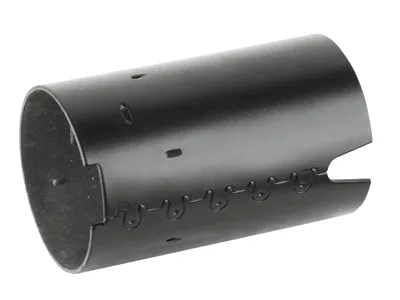
The small parts that decide whether a starter lasts
Car starter electric motor accessories – the shift-lever fork, the engaging bushings, the brush plate, the end cover, the spacers and thrust rings – are the parts nobody designs a starter around, yet they account for a large share of starter failures. A starter that turns over a cold engine thousands of times depends on these small components holding their dimensions and their material properties in a hot, oily, high-current environment.
We produce these accessories as drawn and stamped parts, and this page is about how they wear, how they are made, and how to buy them in the mix of small quantities and many variants that the starter business demands.
What each accessory does, and how it fails
| Shift-lever fork | Converts the solenoid’s axial motion into the pinion’s engagement. Wear and bending at the fork tips are the classic failure; the material must be stiff enough not to flex and hard enough not to wear through the case-hardened lever. |
|---|---|
| Engaging bushings | Guide the pinion and the lever pivot. Wear here causes mis-engagement and a grinding starter; bore clearance and surface finish are the controlling features. |
| Brush plate | Holds the brushes and carries current. It is both a structural and an electrical part, so flatness, hole position, and surface conductivity all matter. |
| End cover | Closes the commutator end, holds the brush springs, and often carries a bearing. Warpage after stamping is the usual defect. |
| Spacers and thrust rings | Set axial clearances. Wrong thickness by 0.1 mm either binds the armature or lets it end-float, and both shorten bearing life. |
Because these parts are small and numerous, a starter program can need a dozen variants of one accessory to cover different models – which is exactly why the supply model matters as much as the part design.
Material choices for high-current and hot conditions
A starter accessory works near a motor that draws hundreds of amperes and gets hot. Material selection follows the function:
- Structural accessories (forks, covers) – low-carbon steel, often with a hardening or plating treatment; stiffness and wear resistance dominate.
- Bushings and thrust rings – bronze, or steel with a bearing coating; the sliding surface needs to resist galling against the pinion shaft.
- Brush plates – copper or brass for the current path, or steel with a conductive coating where strength matters more than conductivity.
- Springs and retainers – spring steel, heat-treated for consistent load over life.
Where an accessory is near the commutator, heat is the enemy: a spring that relaxes at temperature loses brush pressure and the starter performance drops. We specify heat-stable materials for those positions rather than the cheapest spring steel.
Forming and stamping: holding the small tolerances
Accessories are almost always stamped or drawn on progressive tooling, and the challenge is holding tight tolerances on small features at high rate:
- Fork geometry – the fork tips must be parallel and the pivot bore concentric to the tips; a stamped fork with a bent tip mis-engages the pinion.
- Bushing bore – roundness and finish, achieved by a sizing or a light reaming step on the drawn or stamped blank.
- Plate flatness – a brush plate that warps in stamping will not seat, so we control residual stress with a coin or a stress-relief step.
Because these parts are small, the dies are relatively inexpensive and the per-piece cost is low – which means even modest volumes can be tooled, unlike a large drawn housing that needs a big annual volume to justify its die.
The supply reality: many variants, small lots
The starter aftermarket is characterised by many model variants and irregular demand. A supplier who can only run large lots will either refuse the business or force the customer to carry enormous inventory. We handle it by:
- Modular tooling – shared die bases with changeable inserts, so variants of a fork or a spacer can be produced without a full new die each time.
- Batch scheduling – grouping small lots of related variants into a single production run to keep efficiency while supporting the mix.
- Stock programs – holding high-runner accessories against a forecast so the customer gets short lead times without carrying the inventory themselves.
Incoming inspection and what we document
Starter accessories are not safety-critical in the airbag sense, but a failed accessory means a no-start, which is a top-tier customer complaint. Standard supply includes dimensional first-article reports, material certificates, and, for wear-critical parts, hardness or coating-thickness checks. For a bushing or a thrust ring, we can add a functional check on bore and thickness to catch the defects that matter.
A 500-piece first order, and what the tooling does about it
Can you produce a small first order of 500 pieces? Yes – the tooling for these accessories is modest, so a small opening order is realistic where a large housing would not be. We will tell you the volume at which a different route becomes cheaper.
Can you reverse-engineer an obsolete fork or cover? Yes, from a sample or a drawing, provided the material and heat treatment can be established; we measure the sample and specify the material explicitly rather than guessing.
Do you supply complete rebuild kits? We can assemble a kit of the drawn and stamped accessories a rebuild needs; seals and springs are sourced per the customer’s specification.
How do you keep a bushing from wearing? Bore finish plus the right material pairing with the shaft, and, where needed, a coating or a lubricant-retaining surface texture. We specify both sides of the sliding pair.
Specifying a starter accessory
Send the drawing or sample, the material and any heat treatment or coating, the mating part it works against, the temperature and load, and the quantity pattern across the variants you need. With those we can pick a tooling route that suits the mix, choose materials for wear and heat, and quote a program that keeps your service network supplied without burying you in inventory.
The engineering calls behind a part like this — draw ratio, wall thinning, radii and trim — each get worked examples in our deep drawn covers guide; the Precision Deep Drawn Parts pages gather the rest of the family.
Specifications
| Item | Car starter electric motor accessories |
|---|---|
| Brand | AUNOV |
| Designing | Quotation follows the print, not a catalogue – DFM notes are returned before any tooling is cut; the approved drawing is kept as the controlled master. |
| Tooling | Our toolroom covers die design, wire-cut EDM and maintenance, so a die can be re-cut against the approved drawing, and first-article timing is measured from the tooling start date. |
| Samples | Sample lead time is quoted with the order, and the approved sample governs the run. |
| Materials | Stock covers carbon steel (SPCC / DC01), 304 / 316 stainless steel, aluminium and brass; the final grade is fixed with the drawing review. |
| Surface finish | Plating, coating or polishing to suit the drawing; the finish is inspected with the dimensional report on the first article. |
| Processing | Multi-stage deep drawing with interstage annealing, trimmed and pierced in following dies; every stage is logged against your part number. |
| Equipment | Press shop running 5-250 T mechanical and 250-500 T hydraulic presses, annealing ovens on site, backed by CNC turning centres and a climate-controlled inspection room. |
| Tolerance | +/-0.05 mm to +/-0.1 mm across the part, wall thickness held to print; finer bands confirmed from capability data before quoting. |
| Delivery terms | Delivery quoted per Incoterms 2020 – FOB, CIF or DDP – by sea or air, to your address. |
Frequently Asked Questions
Why do small accessories decide whether a starter lasts?
Because they carry the jobs nobody designs from scratch. The engaging bushings, the thrust rings and the brush plate take shock loads, sliding wear and high-current contact, while being treated as catalogue items. The starter rarely fails at the part anyone engineered carefully; it fails at the component nobody had time for.
What fails most often in this group?
Two habits repeat. Wear items – fork faces, thrust faces – gradually lose the clearance that makes the mechanism work. Contact items – brush plates and their interfaces – lose conductivity through oxidation or loss of contact pressure. Neither is dramatic, and both are cheap to control on paper and expensive once they are field failures.
Why is supplying these harder than the parts themselves suggest?
Variety against volume. There are many part numbers, each wanted in modest quantity, so tooling amortises badly and consistency depends on discipline rather than on automation. A supplier holding your set, or the tooling for it, is usually worth more than a marginally lower price from someone starting fresh.
What belongs in an incoming check for a bag of mixed small parts?
Mixing protection first. Dimensional failure is easy to spot and rarely the real risk; the real risk is two visually similar variants in one bag, or the wrong count, either of which stops a line rather than merely causing a rework. Labelling, separation and a functional gauge for the features that carry load come before general measurement.
Related Products


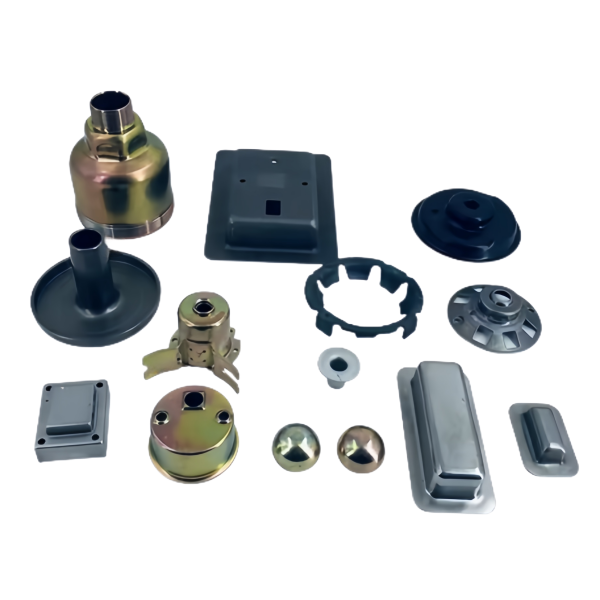

Request a Quote for This Part
Send a drawing or sketch — get material advice, tooling cost and a per-piece price within 24 hours (working days).