
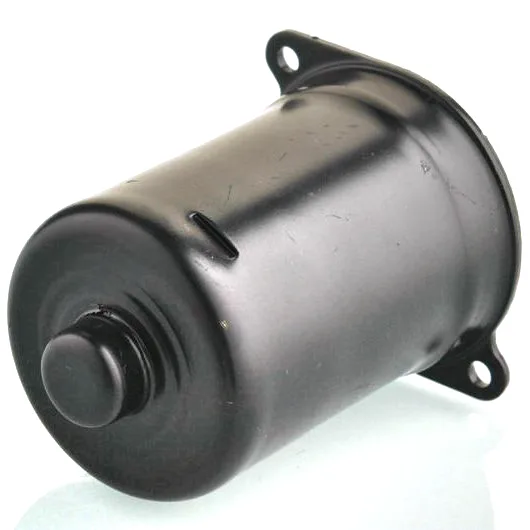
The kit beats the parts list: sourcing wiper motor accessories
Nobody buys wiper motor accessories one at a time on purpose. Mounting brackets, sealing plates, shims, straps, earth tabs and fastener sets arrive at a motor plant as a parts list, each with its own supplier, its own incoming inspection and its own shortage risk – and the line stops when any single line item is missing. The alternative that has quietly won across our customer base: order the accessory set as a kit from the same supplier who makes the drawn parts, matched to the motor programme, delivered as one part number.
What lives in a typical wiper accessory kit
- Mounting brackets – stamped and formed from 1.5-3 mm stock, sized to the vehicle interface, often the heaviest item in the kit and the one worth consolidating into the housing draw where geometry allows.
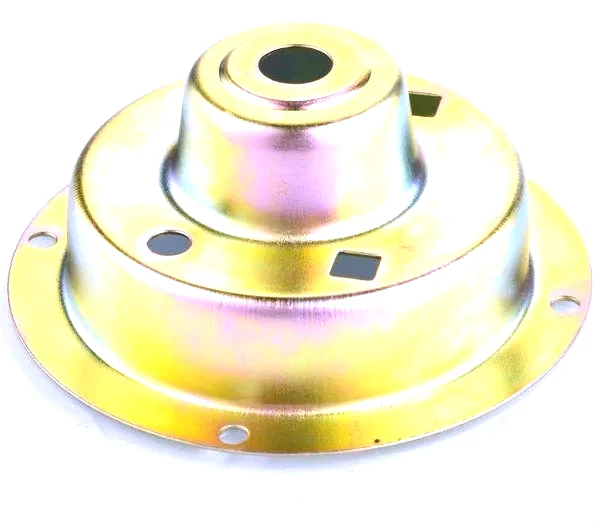
- Sealing and cover plates – shallow drawn discs closing unused apertures, blanked with the gasket compression land already discussed on our sealing pages.
- Shim and washer sets – the assembly line’s adjustment vocabulary, blanked to thickness classes and marked by class so assemblers select by look rather than micrometer.
- Straps and clamps – harness and hose retention, formed with the lead-in radii that prevent chafe.
- Earth tabs and bonding straps – the EMC ground path’s hardware, plated to a conductive spec that deliberately differs from the corrosion spec on the neighbouring parts.
Individually, none is technically interesting. As a managed set, they decide whether a motor line builds smoothly.
Why kit sourcing from the stamped-parts supplier works
Three mechanisms make the consolidation pay. First, inspection consolidation: one incoming inspection with one quality agreement covers the kit, instead of five suppliers with five different AQL philosophies – and our kit deliveries carry a single certificate referencing the set, not five documents to reconcile. Second, shortage immunity: the kit is planned, produced and shipped as a unit, so a missing bracket cannot strand a thousand housings; our production system plans the kit against the motor maker’s build schedule, and the shortage statistics we see from kit customers run an order of magnitude below parts-list sourcing. Third, design coherence: the bracket drawn by the housing’s supplier already knows the housing’s tolerances – the interfaces are engineered together instead of negotiated between suppliers’ sales teams.
Kitting services beyond the parts themselves
On qualifying volumes we take the kit further down the line: sequenced delivery (kits built to the customer’s build sequence, labelled to their line stations), sub-assembly (bracket plus fastener pre-assembled where the customer’s line wants one operation fewer), and packaging in returnable trays that present the kit in pick order. Each service is priced as a visible line item because hidden services are how supply agreements breed resentment. The most requested combination in practice: sub-assembled brackets with shims, delivered in pick-order trays – it deletes two workstations from the customer’s line, which pays for the kit premium several times over.
What we need to quote a kit
The parts list with per-item drawings (or samples of legacy items), the motor build schedule shape (steady volume or sequenced), and which services apply – sub-assembly, sequencing, returnable packaging. We quote the kit as one price with the cost breakdown shown, flag any item where our process is a poor fit (injection-moulded items, for instance, we would source rather than fake), and support a pilot kit run before the supply agreement goes live.
A worked example: what consolidation saved on a real programme
A European motor maker came to us with a twelve-item parts list feeding one wiper motor line: three stamped brackets, two cover plates, four shim classes, a strap set and two earth tabs, sourced from six suppliers. The kit consolidation moved the eight metal items to us, kept the grommets with their specialist as purchased-into-kit items, and deleted two of the shim classes by tightening a housing tolerance that the shims had been compensating for. Net effect after year one: the line’s incoming inspection events on the kit fell to near zero, two assembly workstations were deleted by sub-assembly, and the programme’s piece-cost accounting showed the kit delivering cost-neutral parts with cheaper overhead. The savings were never in the unit prices – they were in the friction the parts list had been quietly generating.
Purchased items in the kit, sourced to your print
Can you include purchased items (fasteners, grommets) in the kit?
Yes – we source to your print from qualified distributors, verify on incoming, and kitting them means your line receives one part number. The commercial transparency is the same: the purchased items appear at their cost in the quote.
What if one accessory design changes mid-programme?
Kits are built from a bill that changes line by line; a bracket revision re-releases only its item, and the kit part number’s revision tracks the set. We manage the change overlap so your line never sees a mixed kit.
Is kit sourcing riskier if one supplier fails?
The honest answer is that concentration carries risk – which is why our kit agreements include a documented pack-out plan: drawings, gauges and process sheets for every item, structured so an alternate shop can be qualified in weeks, not months. We would rather prove the exit exists than pretend the risk does not.
This part belongs to our Automotive Motor Components range. The automotive motor components pages collect the process notes, common materials and inspection points behind every product in the family.
Specifications
| Item | Wiper motor accessories |
|---|---|
| Brand | AUNOV |
| Designing | Quotation follows the print, not a catalogue – unusual walls, threads or tolerances are feasibility-checked first; changes are priced before they are made. |
| Tooling | Die design and toolmaking stay in house, so no tooling step is outsourced, and maintenance is tracked against the part number. |
| Samples | Samples are issued for approval before the run, so the approved first article becomes the gauge reference, and mass production is gated on that approval. |
| Materials | Carbon steel, 304 / 316 stainless steel, aluminium and brass are held in stock; the drawing review fixes the final grade. |
| Surface finish | Zinc / nickel / chrome plating or e-coat, chosen for the environment this housing sees; salt-spray tested to drawing. |
| Processing | Parts are deep drawn from coil or blank with in-process annealing so the walls thin evenly, then trimmed, pierced, formed and finished. |
| Equipment | 5-250 T mechanical presses and 250-500 T hydraulic presses, in-line annealing furnace, CNC turning for secondary work. |
| Tolerance | +/-0.05 mm on controlled dimensions and +/-0.1 mm on general features; capability studies supplied on request. |
| Delivery terms | CIF or DDP, with FOB available, payment by T/T or L/C, quoted in USD or EUR; sea or air freight is quoted to your door. |
Related Products


Request a Quote for This Part
Send a drawing or sketch — get material advice, tooling cost and a per-piece price within 24 hours (working days).