
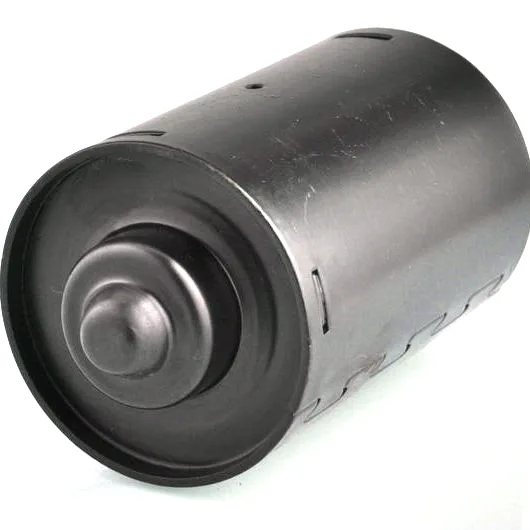
Why metal choice decides how long a wiper motor survives
When a sourcing engineer sends us a metal stamping wiper motor housing for review, the drawing usually fixes the geometry but leaves the material as a range – “SPCC or equivalent, stainless steel optional”. That single line is where the whole lifecycle cost of the part is decided. A wiper motor lives behind the cowl, bathed in salt mist every winter and baked dry every summer, and the housing is its only armour. Pick the wrong sheet and the motor dies of corrosion long before the brushes wear out.
This page lays out the three materials we actually stamp wiper housings from, with the trade-offs measured in salt-spray hours and cents, not adjectives.
The three candidates compared
- DC01 / SPCC cold-rolled steel – the default. Draws beautifully (limiting draw ratio around 1.9 in 1.0 mm), costs the least, and takes zinc plating perfectly. With a standard trivalent zinc finish it delivers 240-360 hours to white rust in neutral salt spray. It is the right answer for markets and mounts where spray exposure is moderate and the motor price point is tight.
- HC260LA / HSLA grades – the strength step-up. Same draw behaviour with slightly tighter bend radii, but 260 MPa yield instead of ~170, meaning thinner walls for the same stiffness. We use it when the customer wants to shave weight or when the housing doubles as a structural bracket. Wall thickness often drops from 1.2 mm to 0.9 mm, which roughly cancels the material premium.
- 1.4016 / 430 stainless steel – the no-finish route. Ferritic, magnetic (important – the housing sits in the motor’s magnetic return path), draws well with a slightly larger radius, and needs no plating at all. Salt-spray life is governed by pitting rather than red rust and comfortably exceeds any test the wiper environment throws at it. The material premium is real – roughly 2.2-2.5x on the blank – but the plating line, its cost and its environmental compliance burden all disappear.
The magnetic point most buyers miss
A wiper motor housing is not a passive box. The yoke section of the housing closes the flux path between the permanent magnets and the armature, and the permeability of that steel directly influences motor torque per amp. Ferritic stainless steel 1.4016 carries this fine. Austenitic 304 does not – it is effectively non-magnetic after forming and makes a poor flux path, so if a customer asks for “stainless steel” we always confirm which family they mean. Drawing 304 work-hardens it further and makes the problem worse. This single question – ferritic or austenitic – has saved several programmes from a silent torque shortfall.
Corrosion testing as we run it
For plated steel housings we test per the customer’s spec, and where none exists we default to the logic of the automotive standard: neutral salt spray per ISO 9227, 8-hour cycles, evaluated to first white rust and first red rust separately. Trivalent zinc typically shows white rust at 240-360 hours and red rust beyond 600. Zinc-nickel pushes white rust past 720 hours and holds fastener-grade ductility, which matters because mounting ears get torqued after plating – a brittle deposit cracks and its protection dies with it.
One practical note: plating after drawing always thins the deposit on the outside corners of the flange and thickens it in the corners of the bore. If a corner of the part is the corrosion-critical face, we specify the test on that corner, not on a flat witness coupon, because the coupon lies.
Cost logic across the three routes
At 100,000 pieces a year for a typical 68 mm housing in 1.2 mm sheet, the ordering is stable: DC01 plus zinc is the cheapest landed part; HC260LA lands 4-7% higher but saves weight and assembly stiffness; 1.4016 lands 25-35% higher but eliminates plating logistics and warranty risk in coastal and Nordic markets. The honest way to choose is to price the failure, not the part: one field recall for corroded motors erases years of plating savings.
Three inputs we cannot quote without
Three inputs firm up a wiper housing quote: the environment spec (salt-spray hours or a named OEM standard), the magnetic requirement (yes/no, and if yes whether flux-path permeability is specified), and the drawing with the gasket face and bushing bore tolerances called out. With those, material selection becomes a two-line decision and samples follow in three to four weeks.
Can we start in steel and switch to stainless steel?
Can we start with steel for development samples and switch to stainless steel for production?
Yes, and it is common – but tell us up front. The draw radii and blank development differ slightly between the families, and a die tuned on DC01 will need a restrike-station adjustment for 1.4016. Better to know at die design than at sample rejection.
Is galvanized (pre-plated) coil an option?
It draws acceptably at shallow depths but the zinc layer flakes at the draw radius once the reduction gets aggressive, creating bare spots exactly where water sits. For drawn wiper housings we recommend post-plating over pre-plated coil nearly every time.
What about aluminium?
It works electrically and for weight, but the flux path argument kills it for the housing itself; we supply aluminium wiper end-covers rather than housings for that reason.
Automotive Motor Components is the parent range for parts like this one; the overview page gathers the tooling logic, finishing options and tolerance notes that apply across the family.
Specifications
| Item | Metal stamping wiper motor housing |
|---|---|
| Brand | AUNOV |
| Designing | Quotation follows the print, not a catalogue – samples are reverse-measured into a controlled drawing; the approved drawing is kept as the controlled master. |
| Tooling | Dies, fixtures and gauges are made in our own toolroom, so die cost stays transparent, and first-article timing is measured from the tooling start date. |
| Samples | Samples are issued for approval before the run, so the approved first article becomes the gauge reference, and mass production is gated on that approval. |
| Materials | Carbon steel (SPCC / DC01), 304 / 316 stainless steel, aluminium, brass and copper – the grade is matched to the duty of this housing. |
| Surface finish | Phosphating for coating adhesion, then powder coating, e-coating or zinc plating; chrome and nickel for visible faces. |
| Processing | Progressive stamping with in-die piercing and forming, followed by deburring, tumbling and surface treatment. |
| Equipment | Mechanical presses 5-250 T, decoilers and coil feeders, vibratory finishing lines and a full in-house toolroom. |
| Tolerance | +/-0.15 mm typical on formed parts, +/-0.3 mm on large covers; the die decides the achievable band. |
| Delivery terms | FOB, with DDP offered for EU and US addresses, payment by T/T, L/C at sight or D/P; each volume tier carries its own quoted price. |
Related Products


Request a Quote for This Part
Send a drawing or sketch — get material advice, tooling cost and a per-piece price within 24 hours (working days).