
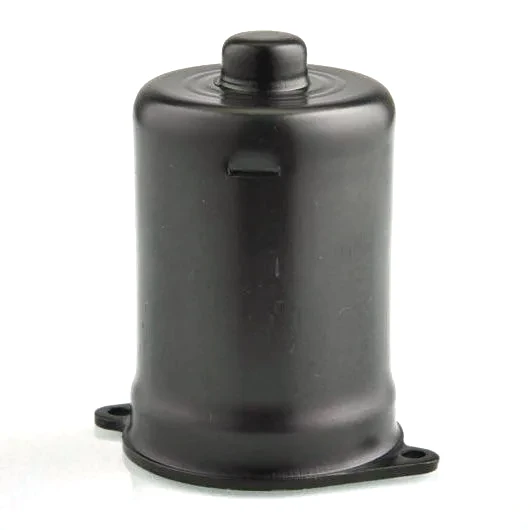
Inside the press shop: the stamping processes behind wiper parts
Buyers evaluate wiper motor stamping parts by drawings and prices, but the parts inherit their character from the machines that made them – which press class, which automation, which die architecture. Understanding the process map helps a sourcing engineer read quotes the way the press shop reads them: as physics scheduled into machine time. This page walks through the equipment behind the wiper family and why the choice of process is also a choice of cost structure.
The press classes and what each is for
- Mechanical presses (5-250 t on our floor) – the workhorses. A flywheel stores energy; the stroke is fast and repeatable. Everything shallow-to-medium draws here: housings, caps, covers, brackets. Their signature is speed – hundreds of strokes a minute on small parts – and their accuracy comes from rigidity rather than servo control.
- Double-action presses – two slides, outer for the blank holder, inner for the punch. Deep draws and canisters run here, where independent blank-holder control is what keeps the flange from wrinkling without tearing the wall. If a quote says “double-action”, it usually means the part needed real depth.
- High-speed presses with progressive dies – the small-part territory. Cups, tabs and small caps run from coil at several strokes per second, the strip stepping through die stations with every hit. These presses make small parts absurdly cheap at volume and are priced out of reality at low volume.
- Servo presses – programmable slide motion: slow through the draw, fast on the return, dwell where the material needs it. They rescue marginal geometries and run difficult stainless steel, at a cycle-time premium that the quote should show honestly.
Automation: where consistency actually comes from
Manual press operation can produce good parts; it cannot produce ten thousand identical ones per shift without heroics. Our wiper-family lines run coil feed into progressive dies (no human hands touch the strip), transfer systems between stations on multi-stroke parts, and robots or chute systems parting finished pieces into graded bins. The automation is not about labour cost – it is about variance: every human handling step adds a damage mode and a variation source, and the parts that arrive without transit scratches and handling dents got that way by never being touched. When a buyer audits a press shop, the automation level predicts the incoming quality data better than any certificate.
Die architecture: progressive, transfer, or single
The same part can run on different die philosophies, and the choice is economic. Progressive dies (strip through stations) win on small-to-medium parts at volume: one setup, in-die feature accuracy, minimum handling. Transfer dies (part carried station-to-station) win on larger parts and deeper draws where the strip would be impractical. Single-operation dies (one station per press) suit prototypes, spares and parts whose volumes never justify a die line. A supplier’s quote should name the architecture, because it predicts the part’s change flexibility and its floor on piece price. Wiper housings at automotive volume run progressive almost universally for this reason; canisters run transfer; spares run single.
Process monitoring: the quiet quality system
Modern stamping lines monitor themselves: tonnage monitors watch every stroke’s force signature and reject the outliers automatically; slug-detection sensors catch a pierced slug failing to fall (the classic die-damage event); and vision systems check presence and orientation on the way out. The tonnage signature deserves a note – a drifting force trace is the earliest warning of die wear, coating breakdown or lubricant failure, days before parts drift out of tolerance. Our lines chart signatures per die and alarm on deviation; customers who tour the shop usually ask about the big machines, and leave impressed by the small screens.
What we need to quote stamping parts
The drawings, volumes, and – usefully – your tolerance priorities, because the process choice bends around what actually matters: a part whose boss tolerance rules will route differently from one whose surface appearance rules. With that, we return a process map per part: press class, die architecture, stroke rate, and the piece price each implies. First articles follow die build on the schedule the architecture sets – weeks, not months, for the wiper family’s size range.
Why visually identical parts get different processes
Why quote different processes for visually identical parts?
Because the process is the cost structure and the risk profile. A progressive-die cap and a single-die cap can both pass incoming inspection; only one of them is priced to run at your volume without a renegotiation in year two.
Can you handle our stainless steel parts on the same lines?
Yes, with dedicated die coatings and lubricant plans – stainless steel draws stiffer and wears tooling faster, which the quote reflects rather than hides.
How quickly can you switch a die between part variants?
Progressive dies change over in tens of minutes with preset shut-heights and quick-change inserts; the changeover schedule is part of the supply agreement for multi-variant programmes.
Automotive Motor Components is the parent range for parts like this one; the overview page gathers the tooling logic, finishing options and tolerance notes that apply across the family.
Specifications
| Item | Wiper motor stamping parts |
|---|---|
| Brand | AUNOV |
| Designing | Send drawings, or send a sample to be measured – DFM notes are returned before any tooling is cut; the approved drawing is kept as the controlled master. |
| Tooling | Progressive and drawing dies are designed and built in house, so a die can be re-cut against the approved drawing, and ownership is confirmed on the quotation. |
| Samples | Prototype and pre-production samples are provided against the drawing, so the approved first article becomes the gauge reference, and mass production is gated on that approval. |
| Materials | Carbon steel, 304 / 316 stainless steel, aluminium and brass are held in stock; the drawing review fixes the final grade. |
| Surface finish | For corrosion, zinc or nickel plating; powder coating or electrophoresis on housings; laser etching on request. |
| Processing | Blanking and progressive forming on automated lines, then secondary tapping, bending and finishing. |
| Equipment | Mechanical presses 5-250 T, decoilers and coil feeders, vibratory finishing lines and a full in-house toolroom. |
| Tolerance | +/-0.05 mm on controlled dimensions and +/-0.1 mm on general features; capability studies supplied on request. |
| Delivery terms | FOB Ningbo or Shanghai, T/T or L/C, with D/P accepted on repeat business; call-off schedules are supported. |
Related Products


Request a Quote for This Part
Send a drawing or sketch — get material advice, tooling cost and a per-piece price within 24 hours (working days).