
Closing the starter: the cabinet’s sealing and pass-through duties
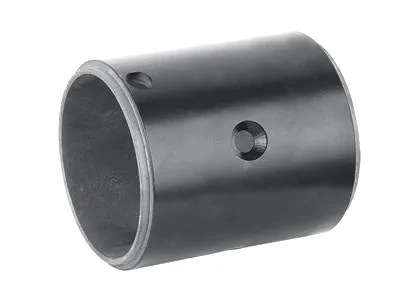
The end of a starter that faces away from the engine is closed by a auto starter motor cabinet – a cover or cap that finishes the housing, passes the electrical connections through, and seals the motor against the engine bay’s oil mist, spray and clutch dust. It is a modest-looking part with an outsized influence on starter reliability, because most starter electrical faults begin at a joint that let contamination in. This page covers the cabinet’s two central duties: sealing, and passing conductors through.
Sealing against oil mist and dust
Engine-bay contamination is not the same as rain spray: oil mist coats surfaces, attracts dust, and creeps into joints by capillary action. A starter cabinet’s seal therefore has to resist a film-forming contaminant rather than a splashing one. The practical design answers mirror our other sealed parts but tuned for this duty: a gasket land coined flat (broad and uniform, so the seal compresses evenly), a cabinet flange stiff enough that bolt clamping does not bow the land, and joint geometry that keeps the seal line out of any pooling or drain path. Where the architecture allows a simple press-fit or snap closure rather than bolts, we size the interference so thermal cycling does not relax it – starters see large temperature swings, and a snap that is tight at 20 C can be loose at soak temperature. The verification is a cyclic thermal and contamination test, not a single sprinkle.
Passing conductors through
Cabinet pass-throughs – the main terminal, solenoid leads, sometimes a sense wire – are the joints most likely to fail, so they get the most engineering. Each pass-through needs an insulator whose seating geometry is dimensioned as a pair with the cabinet hole (the same logic as our electrical terminal page), a compression that holds through thermal cycling, and a mechanical retention that resists the pull of assembly and of a vehicle’s harness. We form the seating features – stepped holes, counterbores, retention lugs – in-strip so their position and depth are tooling-set, and we keep their datum the same as the mounting flange’s. Where a programme fits the terminal during assembly, we will supply the cabinet with the pass-through pre-fitted and leakage-verified, moving the joint to the part level.
Material and coating for a hot, oily environment
Cabinet steel faces under-hood corrosion with the added problem of a coating that oil mist can soften or lift. We select finishes rated for oil contact and cyclic temperature – typically zinc-nickel or e-coat – and we pay attention to the cut edges and pass-through rims, where coatings are thinnest and corrosion starts first. Where the cabinet also touches the electrical ground path, masked bare-metal areas are defined on the drawing so both sides agree which surfaces must conduct. Starter cabinets that redden at the terminal rim after road-testing usually trace to an unspecified edge or a masking ambiguity rather than to the base coating’s quality.
Fitting the mechanism inside
The cabinet often closes near the brush end and sometimes carries a bearing or an end-stop. Its internal features – a boss that backs a bearing, a land that holds a brush holder in place, a formed stop that limits end-float – must hold position relative to the housing’s datum, or the motor’s alignment suffers at the last assembly step. We form these features in the same die sequence that produces the cabinet’s sealing land, so internal and external geometry share a datum. As with every part in this family, the cabinet can be supplied with its sub-components fitted and verified on qualifying volumes.
The rim, where the coating runs thin
The cabinet drawing with the sealing land, the pass-through schedule (which terminals, which insulator prints), any internal bearing or holder features, the under-hood corrosion and thermal specs, the ground-path requirements, and volume. First articles in four to five weeks after die approval, with sealing and pass-through verification included for programmes that specify them.
Starters corrode at the terminal
Our starters corrode at the terminal – is it the cabinet or the terminal?
Usually the rim where the coating is thin and the insulator seats. Send returns; the corrosion pattern points to the specific geometry, and we can quote a revised rim specification or a pre-fitted pass-through.
Can you hold a press-fit seal through thermal cycling?
Yes, by sizing the interference for the hot condition rather than the assembly condition – the classical mistake is designing the fit at room temperature. Our designs state the validation temperature.
Do you supply the cabinet with terminals installed?
On qualifying volumes, yes – installed, leakage-tested and pull-tested to your specification, so the customer’s line receives a sealed, verified sub-assembly.
This part belongs to our Automotive Motor Components range. The automotive motor components pages collect the process notes, common materials and inspection points behind every product in the family.
Where this part is used
The starter motor cabinet is the end of the starter that faces away from the engine, and it does two jobs that decide starter reliability. It closes the housing, and it passes the electrical connections through to the outside world. Almost every starter electrical fault that ends up as a warranty claim begins at a joint that let contamination in, which is why this part gets attention that a plain cover would not.
You will find starter cabinets on passenger cars, on commercial vehicles and heavy equipment where the starter sits deep in an engine bay, and on agricultural and construction machinery where the environment is dust, oil and heat. The duty varies by a lot between them, and the cabinet’s sealing, its pass-through design and its coating all follow from where the starter actually lives.
What we need to quote it
Send the flange dimensions and the sealing land, the number and size of the pass-throughs, and what passes through them – main terminal, solenoid leads, sometimes a sense wire. The fluid and dust environment decides the coating and the seal design, and hot oily environments need a different approach than a dry one. If you have the current cabinet, a sample with a thickness measurement and the coating specification is worth more than a drawing.
Specifications
| Item | Auto starter motor cabinet |
|---|---|
| Brand | AUNOV |
| Designing | Made to your 2D/3D drawings (PDF, DWG, STEP, IGS) – DFM notes are returned before any tooling is cut; the same drawing is used for every repeat order. |
| Tooling | Die design and toolmaking stay in house, so the die charge appears as its own quotation line, and the die remains dedicated to your part. |
| Samples | Prototype and pre-production samples are provided against the drawing, so any deviation is corrected at sample stage, and mass production is gated on that approval. |
| Materials | Carbon steel (SPCC / DC01), 304 / 316 stainless steel, aluminium, brass and copper – the grade is matched to the duty of this component. |
| Surface finish | Zinc or nickel plating guards against corrosion; housings can take powder coating or electrophoresis, and laser etching is available on request. |
| Processing | Coil blanking, progressive drawing through 3-5 stages with anneals between, trim and pierce, then deburr and finish. |
| Equipment | 5-250 T mechanical and 250-500 T hydraulic press lines, in-line annealing furnace, with CNC turning covering secondary work. |
| Tolerance | +/-0.03 mm on machined features, +/-0.1 mm on formed ones, with first-article inspection report. |
| Delivery terms | FOB, with DDP offered for EU and US addresses, T/T with deposit and L/C for larger runs; repeat orders reuse the approved first article. |
Related Products


Request a Quote for This Part
Send a drawing or sketch — get material advice, tooling cost and a per-piece price within 24 hours (working days).