

The body of an oxygen sensor: the joint that keeps gas out of the wiring
An oxygen sensor has two worlds separated by its body: exhaust gas and heat on one side, wiring and electronics on the other. The oxygen sensor body – the structural section between the sensing end and the connector end – is what keeps the two apart, and it must do so through years of thermal cycling, engine vibration and the sensor’s own installation torque. This page covers the body’s sealing and structural duties, and the forming choices that make them reliable.
One part, two seals
The body carries two seals and they face opposite conditions. Exhaust-side, it seals against the sensor’s housing or shell, keeping hot gas away from the interior; the joint here is crimped, welded or formed and must hold at temperature. Connector-side, it seals around the conductors leaving the sensor, keeping water, salt spray and road dirt out of the electrical connection – and that joint faces the outside world rather than the exhaust. Our body designs treat the two seals as a system: the formed features that compress each seal are dimensioned as pairs with the seal or insulator the customer uses, so the compression is controlled rather than left to assembly. We validate both seals by leak testing assembled sensors, exhaust-side against gas pressure and connector-side against water ingress per the customer’s specification, and we repeat the connector-side check after thermal cycling because that is where a relaxed seal shows up first.
The installation torque and the body’s structure
An oxygen sensor installs with a torque applied to its hex or its body, and that torque travels through the body as a torsional load. A body that is too thin or whose hex is poorly attached deforms under installation, which can crack the ceramic inside or damage a seal – a failure that starts at the service bay rather than in the exhaust. Our bodies provide adequate wall thickness through the hex section, formed features that tie the hex to the body’s structure, and, where the design uses a formed hex rather than a machined one, a geometry that holds the wrench flats to their dimensions so the torque goes where it belongs. We verify the hex’s strength by applying the specified installation torque to first-article samples and inspecting for deformation, a test that costs a morning and prevents a whole class of installation damage.
Vibration and the body’s fatigue life
An oxygen sensor is mounted on the exhaust, which is bolted to an engine, which vibrates. The body must survive that vibration for the vehicle’s life without fatigue cracks at its joints and crimps. Generous radii at geometric transitions, formed joints rather than abrupt section changes, and materials matched to the temperature all work toward this, and where the application is severe – a sensor on a manifold close to the engine’s vibration source – we validate by vibration testing the assembled sensor to the customer’s specification. Fatigue failures at sensor bodies typically start at a crimp or a weld’s toe, so the geometry at those features is designed as carefully as the sealing function they also perform.
Materials and finish across two environments
The body’s lower section faces exhaust heat and needs a heat-resisting grade; its upper section faces the engine bay’s corrosion and needs a finish that resists salt spray and road dirt. Where the body is a single drawn piece, the grade must satisfy the hotter end and the finish the colder one – which usually means a single exhaust-grade stainless steel, often with a supplementary coating or plating only on the connector end if the customer’s specification demands it. Where the body is assembled from two pieces, the joint between them becomes a third seal to manage, which is one reason we favour single-piece drawn bodies where the geometry allows. The electrical continuity of the body, if the sensor uses it as a ground path, is defined on the drawing and verified with the same care as the seals.
The connector-side seal is the prime suspect
The body drawing with the hex and installation torque, the two sealing interfaces (exhaust-side and connector-side) with their seal or insulator prints, the joining specification, the sensor’s exhaust position and peak temperature, the vibration and leak requirements, the finish and electrical continuity spec, and volume. First articles in four to five weeks after die approval, with both seals leak-tested, the installation torque verified and vibration testing where specified.
Sensors fail at the connector after a few winters
Our sensors fail at the connector after a couple of winters – is the body’s seal the cause? Likely the connector-side seal relaxing with thermal cycling. Send the failed sensors; our leak check on the connector seal, before and after cycling, distinguishes a relaxed seal from a damaged one and from a connector-side problem outside the body.
Can you form the hex rather than machining it? Yes – a formed hex holds the wrench flats to dimension and ties the torque into the body’s structure, and it avoids the weight and cost of a machined section. We verify the torque capability on first articles.
Do you assemble the body with the element and the connector? On qualifying volumes we can assemble and test to your specification, which keeps the delicate ceramic handling and the seal verification in one controlled process. The element and connector remain your parts and specifications.
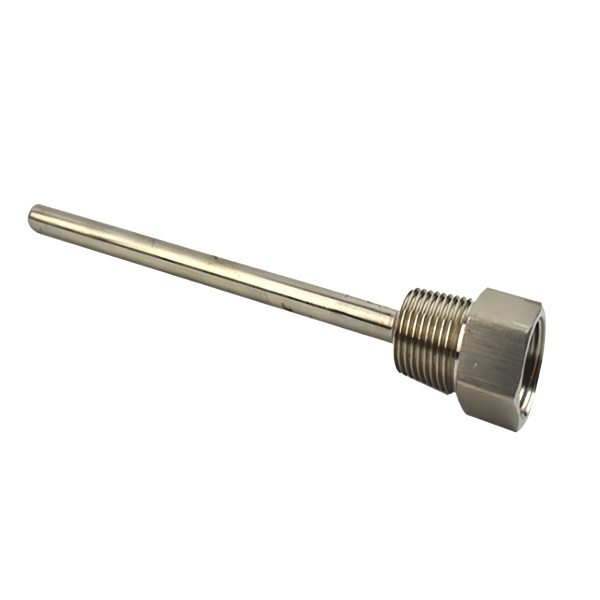
You will find this part in our Sensor Housings range. Process notes, common materials and inspection points for every product in the family are collected across the sensor housings pages.
Specifications
| Item | Oxygen sensor body |
|---|---|
| Brand | AUNOV |
| Designing | Driven by your drawing or a physical sample – unusual walls, threads or tolerances are feasibility-checked first; revisions are re-quoted once rather than silently absorbed. |
| Tooling | The tooling record travels with the part number, so maintenance history is never lost. |
| Samples | The sample you approve becomes the gauge reference for production. |
| Materials | Materials held include carbon steel, 304 / 316 stainless steel, aluminium and brass; mill certificates and heat numbers accompany the first article. |
| Surface finish | Surface treatment is matched to the duty: plating, coating or polishing; alternatives are quoted with the quotation and samples approved in writing. |
| Processing | Blanking, drawing and piercing in sequence, then machining of sealing faces; every stage is logged against your part number. |
| Equipment | Deep drawing presses plus CNC turning centres for machined faces, with CNC turning centres for secondary operations and CMM inspection. |
| Tolerance | +/-0.03 mm on stepped bores, concentricity per print; finer bands confirmed from capability data before quoting. |
| Delivery terms | FOB, with DDP offered for EU and US addresses, payment by T/T or L/C, quoted in USD or EUR; call-off schedules are supported. |
Frequently Asked Questions
What separates the two worlds inside this part?
The body is the structure standing between exhaust gas on one side and wiring on the other, and it has to keep them apart for the whole life of the sensor. That makes it a dividing wall with two environments meeting across it, and it is why a single feature frequently ends up being asked to hold a seal, carry installation load and survive vibration simultaneously.
With two seals on one body, which gets investigated first?
The connector side. The gas-side seal fails visibly and quickly, so it announces itself. The wiring side degrades slowly, gets blamed on something else first, and is usually found last. In practice the connector-side seal is where most field returns of this kind originate, which is why checking it first saves a great deal of looking elsewhere.
Why does installation torque become a body design problem?
Because the body is what takes it. Tightening puts the structure into compression and twist, and if the section is not arranged to carry that load, the same motion that makes the joint also distorts sealing surfaces further along the part. Keeping torque and geometry in the same conversation is what stops one decision from quietly undoing the other.
What wears a body out – heat, or being shaken?
Repeated load rather than steady load. The body sits on a running engine, so vibration fatigue decides its life more than operating temperature does, and that pushes attention towards transitions, radii and joint design rather than towards high-temperature properties alone. It is a fatigue part that happens to run hot, not a hot part that happens to be loaded.
Related Products


Request a Quote for This Part
Send a drawing or sketch — get material advice, tooling cost and a per-piece price within 24 hours (working days).