
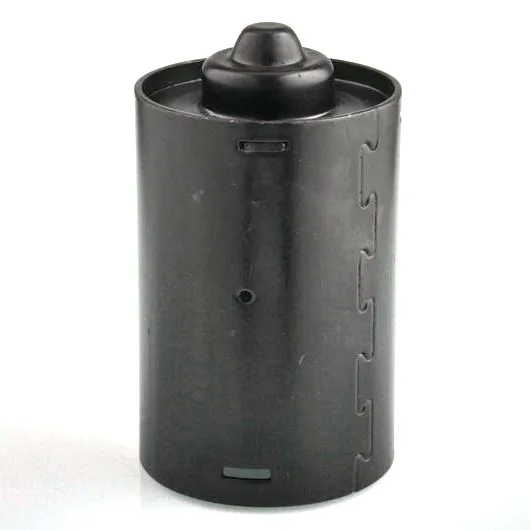
The deep drawn wiper motor housing: a magnetic part before it is a mechanical one
A wiper motor housing looks like a simple steel cup – one flanged end, one open end, a couple of pierced holes. What makes it one of the more demanding deep drawn parts in a vehicle is invisible: the housing wall is part of the magnetic circuit. The permanent-magnet field in a wiper motor returns through that steel shell, which means the wall thickness, the material’s magnetic properties, and even residual stress from forming all influence motor output and noise. A housing that is dimensionally perfect but drawn from the wrong steel – or drawn in a way that work-hardens the yoke region inconsistently – produces motors that fail end-of-line torque tests for reasons no gauge on the housing will reveal.
That is the level this part is engineered at: automotive volumes, magnetic-grade steel, bearing seats with real runout commitments, and a quality system your customer’s auditors can walk through.
Housing construction and what the drawing must achieve
The classic wiper motor housing is a cup of 1.2-2.0 mm low-carbon steel, 45-70 mm in diameter, 60-110 mm deep, drawn in two or three stations:
- The barrel carries the ferrite magnets against its inner wall. Wall thickness variation matters here twice over – mechanically for strength, magnetically because a thin spot changes the air-gap flux. We hold wall variation under 5% in the magnet zone and check it by ultrasonic sampling on every batch.
- The closed end carries the output-side bearing seat: typically a drawn bore finished by sizing or a light machining pass to H7-class tolerance with runout commitment against the flange face. Bearing noise in the finished motor usually traces to this seat, so the tolerance is a contractual line, not a target.
- The open-end flange mates to the gearbox housing. It is coined flat for gasket or O-ring sealing and pierced for the brush-card access, through-bolts and drain. Piercing after drawing keeps positions true; slot windows for the brush gear are lanced and formed in a dedicated station.
- Magnet-zone surface stays as-drawn – no plating build where the magnets bond; bonding adhesive specifications are confirmed at RFQ so the surface energy and cleanliness match the glue.
Steel selection: magnetic grade first, formability second
The yoke function wants low-carbon steel with good permeability – typically a drawing-quality DC01/DC03-class grade with certified chemistry; silicon and carbon ceilings matter more here than in ordinary stampings, and we buy against agreed internal standards with mill certs per heat. Formability is comfortable at these depths (the shell is about 1.5:1 depth-to-diameter), so the magnetic requirement, not the draw ratio, drives the material decision. Where a customer’s motor design needs higher flux return, a slightly thicker wall in the same grade usually beats a exotic grade – wall is a design variable we can adjust without touching the magnetic source.
Corrosion protection without disturbing the magnetic path
Wiper housings live behind the cowl: water spray, salt, and heat soak. The standard system is zinc or zinc-alloy plating with passivation, or e-coat for extra cycles – with one rule: coating thickness in the magnet zone is capped so the bonding gap does not drift, and the plating bath chemistry is chosen so hydrogen embrittlement risk on the drawn, work-hardened shell stays controlled (baking after plating is standard). Coating thickness maps are part of first-article and periodic batch checks.
Automotive quality system
This part ships under automotive discipline: PPAP level 3 documentation on request (PFMEA, control plan, MSA, capability studies on the key characteristics), IATF-16949-aligned process control, SPC on bearing-seat diameter and runout, flange flatness, and wall thickness in the magnet zone. Traceability runs from steel heat number to the shipping label. End-of-line motor makers audit us against these documents, not against promises – the data is kept because the part class demands it.
Tolerances we commit to on wiper motor housings
- Bearing seat: H7-class bore, ±0.02 mm with runout to flange face ≤0.05 mm (sized in-die plus finish machining in-house).
- Flange OD ±0.3 mm; flange face flatness 0.15 mm coined.
- Overall depth ±0.5 mm; pierce positions ±0.15 mm to datums.
- Wall in magnet zone: nominal per print, variation <5%, ultrasonic-verified per batch.
Volumes and program economics
Wiper motor programs run from 50,000 to over a million housings a year per part number. Transfer dies on 110-250 T mechanical presses cycle at 15-30 strokes per minute; at those rates the housing cost is dominated by steel and plating, which is why the drawing sequence is optimised for material utilisation (nested strip layouts, offal reuse) and why the quotation shows material yield explicitly. Tooling is hard transfer tooling under your part number, maintained on a stroke-count schedule so housing 900,000 matches housing 100.
Questions wiper motor engineers ask us
Can you help if our motor fails torque on some units only?
The failure pattern often points at yoke wall variation or bearing-seat runout. Send us the failing units and the end-of-line data; we will measure wall distribution and seat runout against the print and tell you whether the housing is the culprit before you chase the motor design.
Do you supply the housing with magnets bonded?
Bonding is possible in-house; more commonly we supply the housing prepared to the adhesive supplier’s surface specification and bond-free, because motor makers prefer to own magnet assembly. Both routes are quoted.
What is needed to quote a derivative housing (longer barrel, extra hole)?
A derivative usually reuses the base die with an added piercing station or a barrel extension insert – quoted in days, with the change shown as a line item so the cost of the variant is visible.
What we need before we can quote a motor housing
Send the housing print (or the motor design if the housing is not finalised), annual volume, magnet bonding method, and plating specification. The quotation comes back with the die sequence, magnetic-grade steel certificate terms, key characteristics for SPC, and the PPAP plan – the automotive package, ready for your program review.
Automotive Motor Components is the parent range for parts like this one; the overview page gathers the tooling logic, finishing options and tolerance notes that apply across the family.
Specifications
| Item | Deep Drawn Wiper Motor Housing |
|---|---|
| Brand | AUNOV |
| Designing | Made to your 2D/3D drawings (PDF, DWG, STEP, IGS) – unusual walls, threads or tolerances are feasibility-checked first; the same drawing is used for every repeat order. |
| Tooling | Die design and toolmaking stay in house, so a die can be re-cut against the approved drawing, and the charge is refundable against agreed volumes. |
| Samples | Samples are issued for approval before the run, so the sample is retained as the master, and later batches are gauged back to the signed sample. |
| Materials | Carbon steel (SPCC / DC01), 304 / 316 stainless steel, aluminium, brass and copper – the grade is matched to the duty of this housing. |
| Surface finish | Zinc / nickel / chrome plating or e-coat, chosen for the environment this housing sees; salt-spray tested to drawing. |
| Processing | Coil blanking, progressive drawing through 3-5 stages with anneals between, trim and pierce, then deburr and finish. |
| Equipment | 5-250 T mechanical presses and 250-500 T hydraulic presses, in-line annealing furnace, CNC turning for secondary work. |
| Tolerance | +/-0.1 mm on formed features and +/-0.2 mm on overall lengths; tighter bands confirmed against the die before quoting. |
| Delivery terms | FOB, CIF or DDP per Incoterms 2020, T/T or L/C, with D/P accepted on repeat business; repeat orders reuse the approved first article. |
Related Products


Request a Quote for This Part
Send a drawing or sketch — get material advice, tooling cost and a per-piece price within 24 hours (working days).