
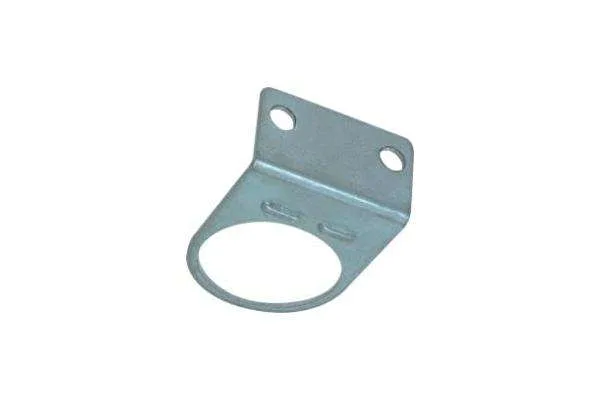
Aluminium housings are mostly thermal decisions, and the drawing usually does not say so
A custom aluminium CNC machined housing or bracket is usually described by what it is rather than by what it does, and on a housing specifically the most important function is almost never stated: it dissipates heat. An aluminium housing around electronics, a power module, a sensor, or a light is a heat sink before it is a structure, and the design decisions that follow – the wall thickness, the material section, the contact area, the surface treatment – are thermal decisions that are frequently made as if they were structural ones. On a part machined from aluminium this matters more than on almost any other part in this family, because the material’s whole reason for being here is its thermal conductivity.
We progressive die stamp these, trimmed and formed in one pass, and first articles verify the whole flow before the run is released, on mechanical presses 5-250 T with progressive dies, and first articles and batch samples are checked on the CMM. Formed features to +/-0.05 mm and blank outline to +/-0.1 mm, with finer bands confirmed from capability data before quoting. Standard stock is carbon steel in SPCC and DC01 grades, 304 and 316 stainless steel, aluminium and brass, with material substitutes proposed only with your written approval. Finish is selected from the drawing – plating, coating, anodising or passivation – with finish thickness and adhesion checked on the first article. This page is about the thermal requirement, the structural one it competes with, and the four things that decide which of them wins.
Why aluminium, stated as a thermal argument
Aluminium’s thermal conductivity is roughly twenty times that of stainless steel and around four times that of mild steel, and that is the whole reason it is specified on a housing. It is worth being clear about the four mechanisms involved, because a housing design is really a design of these four paths:
- Conduction through the housing wall. Heat generated inside flows to the housing’s wall and through it. This path is governed by the wall’s thickness and by the material’s conductivity – and a thicker wall conducts better but pulls material away from the source and adds mass.
- Conduction into a mounting surface. Where the housing bolts to something – a chassis, a heat sink, a cold plate, another housing – that interface is often a far better heat path than the housing’s own outer surface, because the interface is a solid conduction path rather than convection. On a housing designed to be bolted to a heat sink, the mounting interface is the design and the rest of the housing is a shell.
- Convection from the outer surface. The least effective path, and the one most often relied on. A housing in still air dissipates far less than the same housing bolted to a plate. So a housing that is described as “a heat sink” and then mounted in free air is a part that is not doing what its material was chosen for.
- Radiation. A small but real contribution, and it is affected by the surface’s emissivity. A bright, polished aluminium surface is a poor radiator; a matte or oxidised one is better. This is a rare case where a less attractive finish is the better thermal choice.
So the first question on any aluminium housing is where the heat goes. If the answer is nowhere in particular, the aluminium is being chosen for its lightness rather than its conductivity, and the design should be honest about that – because the thermal design is then a different and much easier problem.
Mass versus stiffness, which is the real trade
Aluminium’s second great property is that it is light, and that is genuinely why it is specified on a portable or a weight-sensitive product. But mass and stiffness are in direct conflict on a housing, and the trade is worth understanding rather than resolving by default:
- Stiffness scales with thickness cubed, so halving a wall’s thickness reduces its stiffness to roughly an eighth. On an aluminium part that is already thin for mass reasons, the part becomes a shell that flexes under load and rings when struck.
- Aluminium’s modulus is a third of steel’s, so a section in aluminium has to be roughly 1.4 times deeper than the same section in steel for the same stiffness. A design that was drawn in steel and changed to aluminium without changing the section is much less stiff than it was.
- Thin aluminium also relaxes. A bolted aluminium joint at elevated temperature loses preload over time as the metal creeps, and a long housing bolted at many points can develop a click. Where a housing is bolted along its length, this is a real consideration and it can argue for a thicker section or for a different joint.
So the honest question on an aluminium housing is whether the thermal or the structural requirement governs, and the answer changes the design in opposite ways: thermal favours a thin wall with a good conduction path to a heat sink, while structural favours a thicker or deeper section that conducts more slowly.
The housing’s other jobs, and how they interact
A housing is never only a heat sink. Four other functions, and each interacts with the thermal one:
- EMI shielding. A housing is very often an enclosure, and a conductive enclosure is an excellent shield. Anodising preserves this – the anodic layer is conductive – while some coatings and platings are less good. A grounded metallic enclosure’s shielding and its thermal role reinforce each other.
- Ingress protection. A sealed housing cannot convect, so its entire thermal path is by conduction. A sealed IP-rated housing needs a designed thermal interface to something outside it – a mounting pad, a thermal pad, or a heatsink – and if that is not designed, the sealed housing will cook what it contains.
- Structural mounting. Where the housing carries a load or mounts something heavy, the mounting features need local reinforcement. On a stamped aluminium housing this is a drawn boss or a thicker local section, and the reinforcement is also a thermal improvement because it puts more metal where the heat is.
- Appearance. On a visible housing the finish is an appearance requirement, and it competes with the thermal one: a bright polished finish is a poor radiator, a matte dark finish is a better one, and a powder coat is an insulator. The trade between a good-looking housing and a good-radiating one is real and is worth deciding explicitly.
Aluminium grades, and where the difference shows
Standard stock is carbon steel in SPCC and DC01 grades, 304 and 316 stainless steel, aluminium and brass, with material substitutes proposed only with your written approval. On an aluminium housing the grade choice is narrower than it looks, because most of the interesting aluminium alloys are not the ones that are easy to form:
- 1050 and 3003 are the general stamping grades. 3003 has a small amount of manganese and is a little stronger and stiffer than 1050. Both form well into a shallow drawn housing and both take an anodised finish well. 3003 is the normal default for a stamped aluminium housing.
- 5052 is substantially stronger with better corrosion resistance and it is worth specifying where the housing is structural or in a marine environment. It draws less cleanly and takes a less even surface, so where appearance matters it is a trade.
- 6061 is the machinability grade and it is the answer where the housing has significant machined features – which on a mixed design, a stamped housing with machined mounting pads or a seal face, is common. Its draw formability is the poorest of the group, so the drawing has to be shallower or the process has to be different.
- 6063 and the extrusion grades are worth mentioning even though they are not in the stock list here: on a housing that is genuinely a heat sink, an extruded profile with a designed fin or a wall geometry is a much better heat sink than anything stamped, because the section can be designed specifically for conduction and convection. That is worth raising at review on any housing whose primary function is thermal.
Finishing, and the thermal trade is explicit
Finish is selected from the drawing – plating, coating, anodising or passivation – with finish thickness and adhesion checked on the first article. On a thermal part, the finishing decision is a thermal decision:
- Anodising is the best-behaved finish on an aluminium housing. It is hard, cleanable, corrosion-resistant, adds negligibly to the dimensions, and it preserves electrical conductivity – so it satisfies the EMI requirement as well as the appearance one. Its thermal effect is thin and its emissivity is moderate, which makes it a good compromise on a part with several functions.
- Powder coating is a thermal insulator. It is the right answer for appearance and for a part in a corrosive environment, and it is the wrong answer for a heat sink. On a thermally critical housing this should be a conscious decision.
- Polishing improves appearance and reduces radiation. A bright polished surface is a poor radiator and a good corrosion-resistant surface. Where appearance dominates, it is the right choice.
- Plating on aluminium is dimensionally awkward because the part is soft and the coating needs a pretreatment, and on a housing with tight features it is a real complication. It is generally a better answer in a machined or folded aluminium part than in a stamped one.
An extrusion costs tooling and buys stiffness
Eight things, and the first two are what a housing drawing normally omits and should not:
- What the housing dissipates, and how much of it – a power figure or a temperature target. Without this, the thermal design is a shape rather than a specification.
- Where the heat is intended to go, and whether the housing is bolted to a thermal path or dissipating to air. This determines whether the mounting interface or the outer surface is the design.
- Whether the thermal or the structural requirement governs, and if both, which one the wall is chosen for.
- Material grade, and where a stamped housing has machined features, the grade’s formability needs to be compatible with the drawing depth.
- Formed features at the stated band, with the functional dimensions flagged – a mounting pad’s flatness, a seal face, a locating feature.
- Wall thickness, and the surface the heat has to reach, – because on a thermal part the wall’s thickness is a thermal specification and the minimum location is usually a feature or a corner.
- Finish, with the thermal and appearance requirements stated separately, so the trade is explicit.
- Where the part is clamped, and the surface the thermal path depends on, protected and its flatness specified.
Would an extruded profile answer this better?
Would an extruded or finned aluminium profile be a better answer than a machined or stamped housing? On a housing whose primary job is dissipating heat, the answer is very often yes – because an extrusion can be given a wall thickness, a section shape, and a fin geometry designed specifically for conduction and convection, and it will dissipate more heat from less material than any stamped shell. A stamped or machined housing is the right answer where the housing’s other functions – mounting features, sealing faces, a precise interface, a complex shape – are what the design needs, and the thermal role is secondary. Establishing which of those two the housing is, at enquiry, is worth more than any refinement of the wall thickness – and on a part that has been described as a heat sink without a stated heat load, it is the first question to ask.
This part belongs to our Custom Metal Stamping Parts range. The custom metal stamping parts pages collect the process notes, common materials and inspection points behind every product in the family.
Specifications
| Item | Custom Aluminum CNC Machined Housings and Brackets |
|---|---|
| Brand | AUNOV |
| Designing | Quotation is built from the drawing: DFM notes come back with the price rather than after tooling. |
| Tooling | Our toolroom covers die design, wire-cut EDM and maintenance, so tooling lead time stays under our control, and the charge is refundable against agreed volumes. |
| Samples | Sample and first article are the same discipline here: measured, reported, then approved. |
| Materials | Standard stock: carbon steel (SPCC / DC01), 304 / 316 stainless steel, aluminium, brass; material substitutes are proposed only with your written approval. |
| Surface finish | Finish selected from the drawing: plating, coating, anodising or passivation; finish thickness and adhesion checked on the first article. |
| Processing | Progressive die stamping, trimmed and formed in one pass; first articles verify the whole flow before the run is released. |
| Equipment | Mechanical presses 5-250 T with progressive dies; first articles and batch samples are checked on the CMM. |
| Tolerance | +/-0.05 mm on bend positions, +/-0.1 mm on blank outline; finer bands confirmed from capability data before quoting. |
| Delivery terms | Delivery is quoted to your location: FOB, CIF or DDP, by sea or air as you prefer. |
Related Products



Frequently Asked Questions
Why specify aluminium instead of steel for a machined housing?
Because on a housing the heat load usually governs before the structural one does. Aluminium conducts roughly twenty times as well as stainless steel and about four times as well as mild steel, so the same wall section moves far more heat, at roughly a third of the mass. Where shedding heat and holding weight down are both live requirements, aluminium satisfies both at once; where neither is a requirement, the honest answer may well be steel.
Can a sealed, IP-rated aluminium housing still dissipate heat?
Only by conduction. A sealed enclosure cannot convect, so the entire thermal path runs through the metal and out through whatever it is bolted to. That makes the mounting interface the design rather than an afterthought: a flat pad against a chassis, cold plate or heat sink, with its flatness called out on the drawing. Without that designed path, a sealed aluminium housing traps the heat it was specified to move.
Which aluminium grade should I specify: 3003, 5052 or 6061?
3003 is the default for a stamped aluminium housing: it forms well into shallow draws and takes an even anodised finish. Move to 5052 where the housing carries load or lives in a marine atmosphere, because it is substantially stronger and more corrosion-resistant, though it draws less cleanly. Choose 6061 when the part has significant machined features such as mounting pads or a seal face, since it is the machinability grade — it has the poorest formability of the three, so the drawn geometry has to stay shallower.
Does the finish affect heat dissipation or EMI shielding?
Yes, and the two requirements pull in different directions. Anodising is the safe choice where the housing has several jobs: the layer is thin enough to be ignored dimensionally, it stays conductive enough to preserve grounding and shielding, and its emissivity is moderate. Powder coating is the opposite case — excellent for appearance and corrosion, but it is a thermal insulator and it interrupts the ground path, which makes it the wrong answer on a part chosen for its thermal conductivity.
Can mounting pads and a seal face be machined after the housing is stamped?
Yes, and for a mixed design it is often the right route. Stamping forms the shell economically; machining then cuts the few features that actually carry tolerance, such as mounting pad flatness, a seal face or threaded holes. Send it as one drawing with the functional features flagged, because the chosen grade has to be formable to the drawn depth before the machined operations are planned. Formed features are held to +/-0.05 mm, blank outline to +/-0.1 mm, and first articles are verified on the CMM.
Request a Quote for This Part
Send a drawing or sketch — get material advice, tooling cost and a per-piece price within 24 hours (working days).