
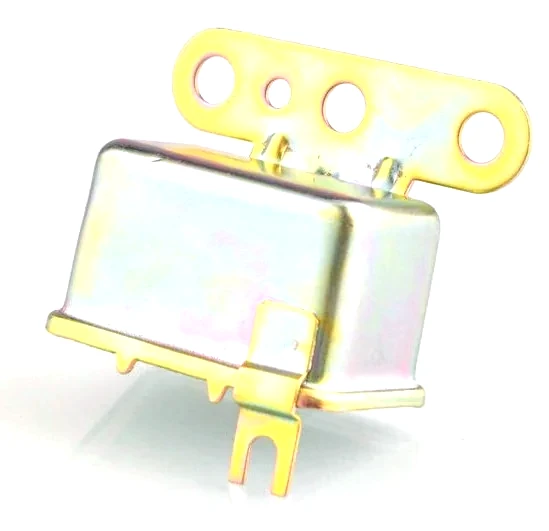
A case with a hinged cover is an IP rating, and an IP rating is a set of holes you cannot avoid
A deep drawn military case with a cover is a two-part drawn box that closes and has to keep water, dust, and sometimes sand out of whatever is inside it. The military or industrial context raises the stakes on a familiar problem: an enclosure rating is a promise about every opening, and a hinged case is almost entirely openings – the hinge line, the latch, the seal groove, the vent, and any cable entry. The engineering is not in the box; it is in the interfaces between the two halves and in the fact that a hinge is a gap that has to seal while it moves.
We multi-stage draw with interstage annealing, trim and pierce in following dies, and batch records are filed so a repeat order starts from approved data, on 5-250 T mechanical presses and 250-500 T hydraulic presses with annealing furnaces in line, backed by CNC turning centres and a climate-controlled inspection room. General tolerance on drawn sections is +/-0.1 mm with +/-0.03 mm on machined seats, and finer bands are confirmed from capability data before quoting. Carbon steel in SPCC and DC01 grades, 304 and 316 stainless steel, aluminium, brass and copper are all held, with the grade matched to the duty of this cover. Finish is selected from the drawing – plating, coating, anodising or passivation – with the finish inspected alongside the dimensional report on the first article. This page is about the seal line, the hinge, and the four things that decide whether an enclosure rating is real.
The seal line is the whole design
An enclosure’s rating is determined at its least-protected joint, and on a hinged case that is the line around the cover. Four requirements, and each is a drawing decision:
- Compression, not gap. A seal works by being compressed between two surfaces, and the compression has to be uniform along the entire line. A flange that is high in one place and low in another produces a seal that leaks in one place and is over-compressed in another. This is why a case’s flange flatness is a functional requirement and not a cosmetic one.
- Parallelism across the line. Two faces that meet at an angle compress the seal unevenly along the line, and on a long rectangular flange that means one end is compressed much more than the other. A slight tilt turns into a taper in compression, and a taper in compression is a leak at the lightly-loaded end.
- The groove’s geometry. A seal groove sets how much of the seal can be compressed. Too deep and the seal bottoms out on the flange before the flange has pulled down; too shallow and the seal is not compressed enough. The groove’s depth, width, and corner radii have to be designed for the specific seal and its compression range, not estimated.
- Corner radii of the groove. A seal has to be able to sit in a corner without buckling. A sharp internal corner in a seal groove forces the seal to kink, and a kinked seal leaks at the corner. This is a well-known design rule and it is a drawing requirement.
The hinge, which is a seal that moves
A hinge on a sealed case is the hardest feature on the part, because the seal has to compress and decompress every time the case is opened. Three approaches, in increasing order of how well they seal:
- A conventional butt hinge with the seal running on the cover’s flange. This works and it is cheap. The seal has to flex repeatedly, and the hinge pin and the leaves have to keep the two halves in a defined relationship. On a case rated for immersion, a butt hinge is a weak point because the leaves move relative to the flange.
- A piano hinge – a continuous knuckle along the full length. Much better sealing, because the seal runs on a continuous line and the hinge has no gaps. It is heavier and it is more expensive, and it is the right answer on a case that has to seal reliably.
- A moulded or formed living hinge in the cover’s own material. Common on lighter cases. It depends on the polymer’s flexibility and it does not usually achieve a high rating, but it is simple and it is serviceable.
Whatever the hinge, three things are requirements: the pin’s material and fit, because a pin that wears will let the leaves move; the leaves’ rigidity, because a leaf that flexes changes the seal’s compression along the hinge; and the hinge’s position relative to the seal line, because a hinge placed too close to the seal will distort the flange when the case is opened.
Vents, because a fully sealed case has its own problem
A case that is completely sealed will not equalise its internal pressure as the temperature changes, and it will not equalise as its contents cool after being warm. Four effects, and they drive a requirement that is the opposite of sealing:
- Condensation. A sealed case in a warm, humid environment – or one brought in from the cold – condenses water inside. This is the classic failure of a well-sealed case: it keeps the water out and then creates its own.
- Pressure differential. A sealed case that is heated in a vehicle or in direct sun develops pressure, and a case with any weakness will show it there. A sealed case that is cooled develops vacuum, and the panels will bow inward.
- Battery gas. If the case carries batteries, those gases have to go somewhere. A sealed case containing a battery is a real hazard, and military cases with batteries almost always have a pressure-equalisation vent.
- The vent’s rating. A vent that lets air out usually lets water in, so a case that is both sealed and vented needs a vent that is hydrophobic – a membrane that passes air and water vapour but rejects liquid water. This is a specific component with a specific specification, and it is a required feature rather than a hole in the case.
Material, and the military context
Carbon steel in SPCC and DC01 grades, 304 and 316 stainless steel, aluminium, brass and copper are all held, with the grade matched to the duty of this cover. The mapping:
- 304 or 316 stainless steel is the standard for a case rated for corrosion, salt, or harsh environments, and it is the usual answer for a military or marine application. 316 for salt spray and marine air. It forms less well and it is heavier, and on a case that is carried, the weight matters.
- Aluminium where weight is the governing requirement, which on a portable case it often is. An aluminium case is light, forms well, and takes an anodised finish that is hard and durable. Where the case carries electronics, an aluminium case is also a heat spreader, which is a benefit or a problem depending on the design.
- Carbon steel with a coating where cost governs and the environment is not severe. It is the heaviest option and it needs coating on the outside and ideally the inside.
- Brass and copper are unusual for a case body and would be specified for a specific reason such as conductivity or a non-magnetic requirement.
Finishing, and the sealing surfaces are the constraint
Finish is selected from the drawing – plating, coating, anodising or passivation – with the finish inspected alongside the dimensional report on the first article. On a sealed case, three finishing requirements are hard requirements rather than preferences:
- Mask the sealing faces. A coating on either flange changes its dimension and adds a compressible layer. On an enclosure that has to hold water, a coating on the seal land is a design decision that should be made deliberately – and where the seal is a bonded seal rather than an elastomer, a coating there is usually a problem.
- Mask the hinge pin’s bore and the latch’s engagement surfaces, where a coating would change the fit.
- Coat the interior too, on a case that will be in a wet environment. A case with a coated exterior and an uncoated interior will corrode from the inside, and it will do so in a place nobody can see until it is too late.
Drop requirements set the wall, not the reverse
Eight things, and the first two are what turn a case into a sealed product:
- The rating required, – IP code, immersion depth and duration, or a military specification – and the standard it is tested to. This determines the seal design, the vent, and the hinge.
- The seal type and its compression range, supplied by the seal’s manufacturer, and the groove’s depth and width designed to the middle of that range.
- Flange flatness and parallelism, against a named surface, for both the cover and the body – because the seal line is a property of the pair.
- Groove corner radii as a stated minimum, so the seal does not kink.
- The hinge type, the pin’s material and fit, and the hinge’s position relative to the seal line.
- The vent, if any, with its type – a hydrophobic membrane, not a hole – and its position.
- Latch geometry and how it compresses the seal, because a latch that pulls the cover down unevenly defeats the whole design.
- Which surfaces are masked, and whether dimensions apply before or after finish.
What is inside, and does it need to survive being dropped?
What is actually inside, and does it need to survive being dropped? A case’s design effort should be proportionate to its contents. A case carrying a fibre-optic connector needs elastomer seals, careful flange flatness, and probably a desiccant. A case carrying a spare filter and some paperwork needs a gasket and a reasonably tight fit, and nothing more. Establishing what the case protects – and what the cost of getting it wrong is – determines how much of this page is actually required, and it is a much better question to ask at enquiry than to answer by over-engineering a box and then discovering the specification did not need most of it.
Drawing a cover like this is a chain of decisions — draw ratio, wall thinning, radii and trim. Our deep drawn covers design guide works through each of them with worked numbers.
Specifications
| Item | Deep Drawn Military Case with Cover |
|---|---|
| Brand | AUNOV |
| Designing | Your drawing sets the part – unusual walls, threads or tolerances are feasibility-checked first; changes are priced before they are made. |
| Tooling | Our toolroom covers die design, wire-cut EDM and maintenance, so no tooling step is outsourced, and the charge is refundable against agreed volumes. |
| Samples | Pre-production samples come with a full inspection report, so the part is proven before it is made in volume, and later batches are gauged back to the signed sample. |
| Materials | Carbon steel (SPCC / DC01), 304 / 316 stainless steel, aluminium, brass and copper – the grade is matched to the duty of this cover. |
| Surface finish | Zinc, nickel or chrome plating, anodising, passivation or e-coat; the finish is inspected with the dimensional report on the first article. |
| Processing | Multi-stage deep drawing with interstage annealing, trimmed and pierced in following dies; batch records are filed so a repeat order starts from approved data. |
| Equipment | 5-250 T mechanical presses, 250-500 T hydraulic presses and annealing furnaces in line, backed by CNC turning centres and a climate-controlled inspection room. |
| Tolerance | +/-0.1 mm general on drawn sections, +/-0.03 mm on machined seats; finer bands confirmed from capability data before quoting. |
| Delivery terms | FOB Ningbo or Shanghai, T/T with deposit and L/C for larger runs; price breaks tie to annual volume. |
Frequently Asked Questions
Why is the seal line the whole design of a hinged case?
An enclosure rating is a promise about every opening, and a hinged case is almost entirely openings – hinge, latch, seal groove, vent and cable entry. The engineering is in the interfaces between the two halves, not in the box itself.
How does a hinge stay sealed while it moves?
The hinge is a gap that has to seal in motion, so the seal profile and hinge geometry are designed together; a gasket sits in a groove the moving leaf compresses without pinching. Drop requirements set the wall, which is why the case is heavier than a plain box.
Which materials suit a military or industrial case?
Carbon steel, 304 and 316 stainless steel, aluminium, brass and copper are held, with the grade matched to the duty. Drawn sections are held to +/-0.1 mm and machined seats to +/-0.03 mm, with plating, coating, anodising or passivation per the print.
How is a covered case quoted and inspected?
Multi-stage drawing with interstage annealing and pierced features is used, with batch records filed for repeats and CMM inspection in a climate-controlled room. The typical minimum order is 1,000 pieces with a 24-hour quotation.
Related Products



Request a Quote for This Part
Send a drawing or sketch — get material advice, tooling cost and a per-piece price within 24 hours (working days).