
Deep drawn enclosures, junction boxes, hydraulic and pneumatic chambers, pressure vessels and dip-brazed assemblies for industrial equipment — bigger draws, thicker walls and finishes built for the factory floor and the outdoors.
Industrial metal parts work harder than consumer enclosures. A junction box sits in the weather for twenty years; a hydraulic chamber holds fluid under pressure; an arming box has to be pressure-tight and vibration-proof on a moving machine. These are not the small, thin shells of the electronics world — they are larger draws in thicker stock, often closed by brazing or welding, and finished to survive UV, salt, oil and impact. Deep drawing produces them as a single, seamless body instead of a welded-up box.
We draw junction boxes and covers, enclosure bodies, pressure vessels, hydraulic and pneumatic chambers and the shells that become dip-brazed assemblies, in steel, galvanized steel, stainless steel and aluminium. Where a part is more than one drawn piece, we assemble it by dip brazing into a leak-tight unit — an arming box or a three-port hydraulic chamber, for example — and finish it for the environment it will actually live in.
How We Draw for Industrial Applications
Larger blanks, deeper draws. Industrial shells are bigger and often deeper than electronics parts. We size the press and the die to the blank and the draw ratio, controlling wall thickness and springback on heavier stock so the body stays true and the flange stays flat for the lid to seal against.
Formed features, not bolted-on. Mounting ears, handles, bosses, drain holes and vent slots are formed or pierced in the die where possible, so the enclosure arrives with its features already in place instead of waiting on secondary fabrication. Fewer operations, fewer joints, less to go wrong in the field.
Brazed and assembled bodies. When a part is more than one drawn piece — a chamber with ports, an arming box — we join them by dip brazing into a single leak-tight assembly. The brazed joint is strong, clean and pressure-capable, and it turns two drawn shells into one functional unit.
Ironed walls, finished in the press.
Industrial chambers and vessels are where ironing earns its place. An ironing pass squeezes the drawn wall through a ring die — 20%–35% reduction on steel, 30%–50% on aluminium and copper — setting inside diameter, outside diameter and wall thickness in one operation and leaving a bright finish (Ra 0.4–0.8 µm) with no longitudinal tooling witness. The wall comes out at ±0.05 mm, ±0.02 mm on fine-drawn parts, against ±10% of nominal for a plain draw, and the press lines behind it are rated from 5 to 500 T with draw depths to 150 mm. Ironing pays for itself at volume; for small batches a machined body can be the cheaper route, and we will say so when it is.
Industrial Enclosures & Vessels We Make
Junction boxes and covers, enclosure bodies, hydraulic and pneumatic chambers, pressure vessels, canisters and dip-brazed assemblies — drawn in steel, galvanized steel, stainless steel and aluminium for industrial service.
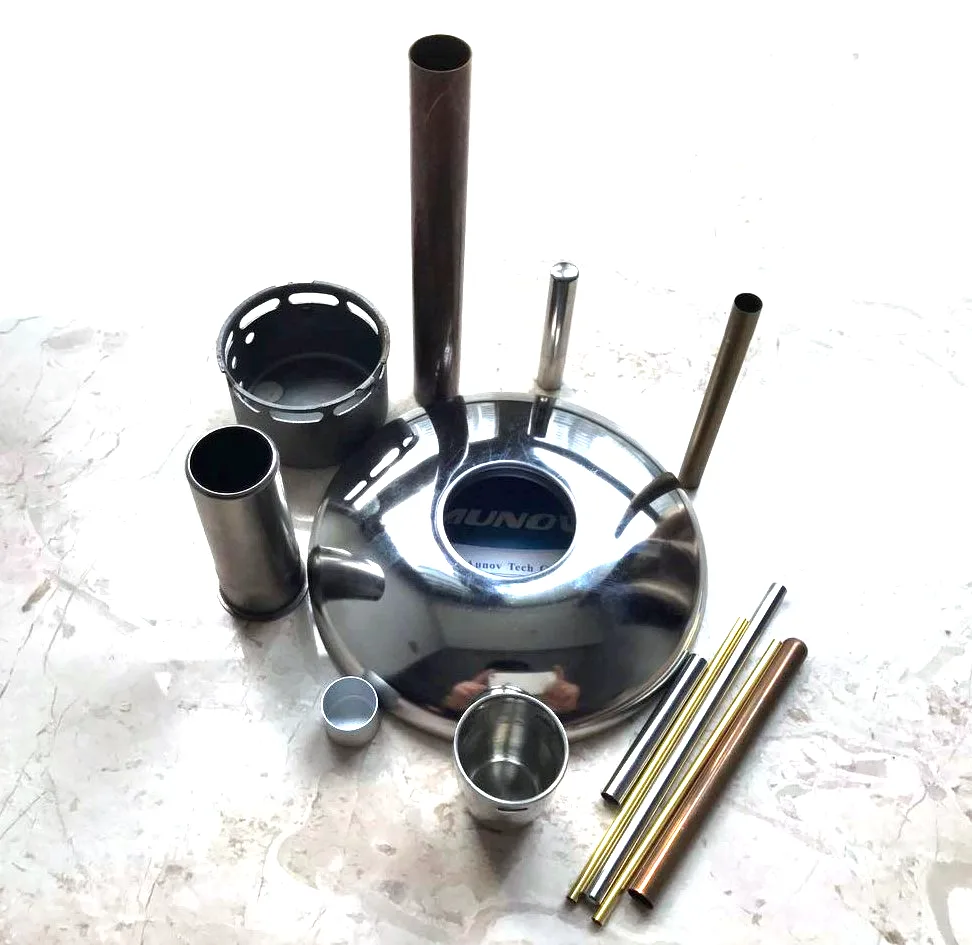 Dip Brazed Aluminum Arming Box AssemblyView details →
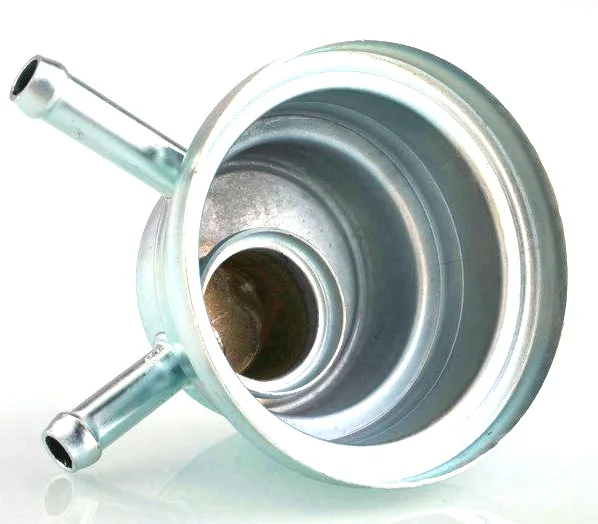 Dip Brazed Aluminum Hydraulic Chamber, 3-PortView details →
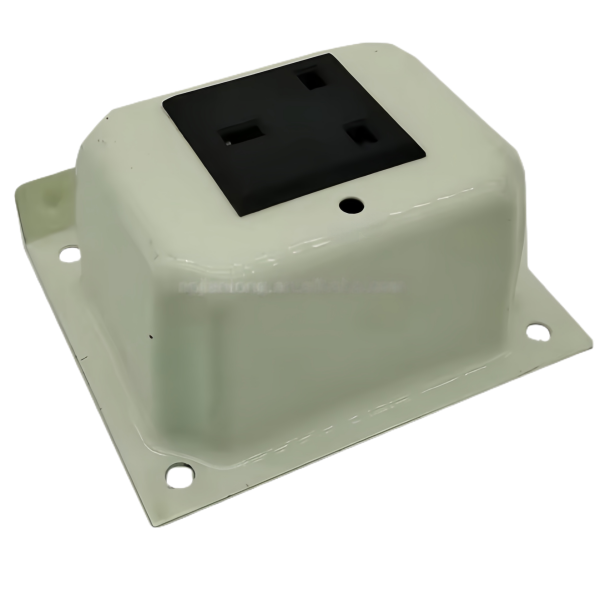 Deep Drawn Steel Junction Box Enclosure with Socket PanelView details →
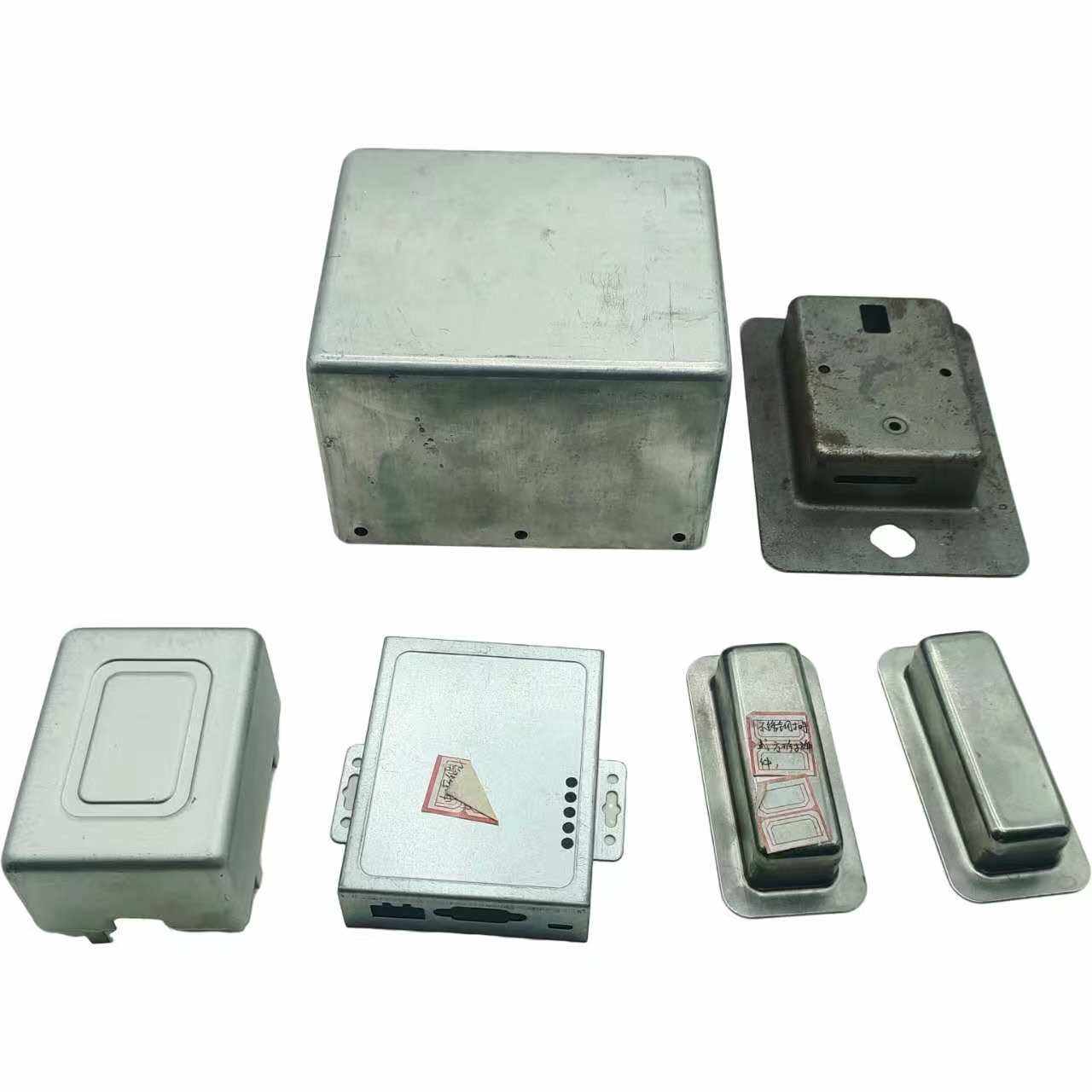 Galvanized Steel Deep Drawn Junction Box CoversView details →
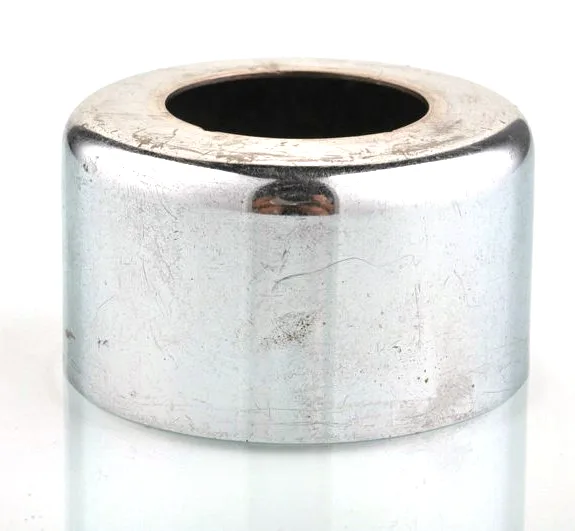 Nickel-Plated Deep Drawn Pressure Vessel CanView details →
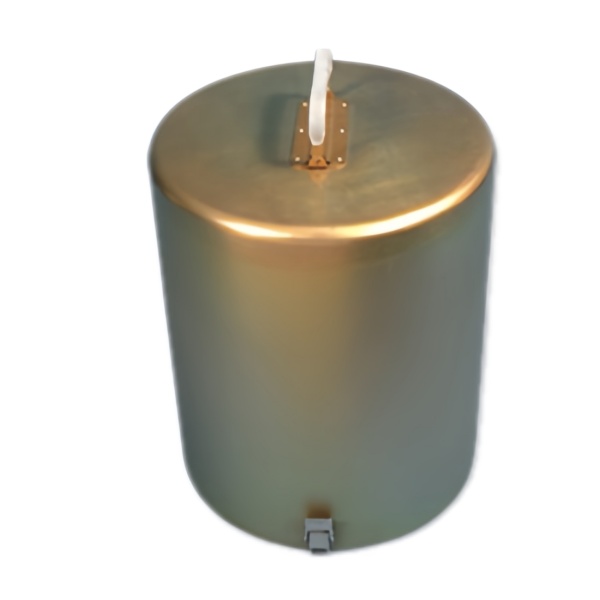 Steel Deep Drawn Canister Shell with Wick TubeView details →
Materials & Outdoor Finishes
Steel and galvanized steel. The backbone of junction boxes, covers and enclosure bodies. Low-cost, strong and easy to draw in heavier stock, and galvanizing gives the corrosion protection an outdoor or damp-location box needs. Where the part sees salt or chemicals we step up the coating.
Stainless steel 304 and 316. For chambers, vessels and enclosures in washdown, marine or chemical service. 304 covers most industrial exposure; 316 steps in where chloride or aggressive media would pit a lesser grade. We draw the full grade, never a bare abbreviation.
Aluminium 5xxx — EN AW-5052 and 5754. Where weight matters on a moving machine or a hand-carried case, 5xxx gives a light, corrosion-resistant shell that still draws into the larger industrial forms, at a single-draw ratio up to about 1.95. 6xxx is reserved for shallow forms or hydroforming, or for parts aged to T6 after forming — 6061-T6 is too low in elongation to deep-draw.
Field finishes. Zinc and galvanizing for corrosion, e-coat and powder for thicker UV-stable films on outdoor boxes, and powder in the colour and gloss the equipment calls for. We prep the surface and radii so the coating covers evenly and does not foul a sealing flange.
Pressure Vessels, Hydraulic Chambers and Brazed Assemblies
The parts that set industrial work apart from electronics enclosures are the ones that hold fluid or pressure. A hydraulic or pneumatic chamber has ports, an internal volume and a seal that cannot weep; a pressure vessel can has to hold its rating through thermal cycling. We draw the bodies, form or pierce the ports, and where the part is more than one shell we join them by dip brazing into a single leak-tight assembly — strong, clean and pressure-capable, with no fastener line to leak along.
Leak integrity and pressure capability are verified, not assumed. On request we pressure-test or leak-check sample parts and first-articles, and we hold in-process gauging on wall thickness and flange geometry so the body and the braze land stay within tolerance run after run. An arming box that draws and brazes correctly on the first unit behaves the same on the five-hundredth.
What to Send Us for an Industrial Part
The drawing and the critical dimensions. Body size, depth, wall thickness, port locations and the tolerance that carries the seal or the pressure rating. A 3D model helps us confirm the draw and the brazing plan before tooling.
Pressure, fluid and environment. Working pressure, the fluid or gas inside, and whether the box lives outdoors, in washdown or in a chemical area. That sets the material, the wall and the finish.
How it closes and seals. Bolted lid, gasket, brazed or welded — and the ingress rating or leak rate. We match the flange and the joint method from the start.
Volume and finish. Run rate and the field finish — galvanized, e-coat or powder — so we sequence forming, brazing and coating in the right order.
Frequently Asked Questions
Can a deep drawn enclosure hold a pressure rating?
Yes. The seamless wall and controlled thickness give a drawn body good pressure behaviour, and we can pressure-test or leak-check sample parts to the rating you specify. For a true pressure vessel we draw and validate to the working pressure and thermal profile you provide.
What is dip brazing and when do you use it?
Dip brazing joins two or more drawn aluminium pieces with a filler metal in a controlled bath, producing a strong, clean, leak-tight joint. We use it when a part is more than one shell — a hydraulic chamber with ports or an arming box, for example — and you need one sealed assembly rather than a bolted-together box.
Which finish is best for an outdoor junction box?
Galvanized steel for baseline corrosion protection, with e-coat or powder over it for a thicker, UV-stable film in harsh weather. Where the box sees salt or chemicals we move to stainless steel 316 and match the coating to the exposure.
Can you draw larger and deeper industrial shells?
Yes. We size the press and the die to the blank and the draw ratio, controlling wall thickness and springback on heavier stock. Tell us the body size and depth and we confirm the draw before quoting tooling.
How do you keep a brazed chamber from leaking?
By controlling the joint before and after. We hold the flange and braze-land geometry in the die, then leak-check or pressure-test sample parts and first-articles so a weeping joint is caught before volume, not in the field.
Is a drawn box better than a fabricated one for industrial use?
For the body, usually yes — a drawn enclosure removes the corner welds a fabricated box carries, cutting leak paths and collapsing several fabrication steps into one press hit. Features like handles, bosses and ports are formed or pierced in the die, so the box arrives closer to finished.
Explore More
See how we draw for other industries: defense & optics · battery & energy · electrical enclosures · automotive. Back to all deep drawn parts, or read about secondary operations and quality control.
Drawing an industrial enclosure or vessel? Send us the drawing.