

A digital thermometer’s drawn stainless steel housing is the one sensor housing on this site where the user touches the product, and that changes what the part has to do. It is not only holding a sensor – it is holding a display, a button or two, a battery, and an enclosure that has to survive being dropped, pocketed, and gripped in wet hands. The process environment is on the inside; the human environment is on the outside.
So this part has two completely different requirement sets on its two surfaces, and they do not have anything to do with each other. Getting that split right is most of the design.
The outside is a human interface, not a process
Deep drawing on hydraulic presses, CNC-finished where tolerances tighten, at +/-0.01 mm on sealing faces and +/-0.05 mm on drawn profiles. The tight band is on the sealing faces – and on this part that is inside. Everything on the outside carries a general band, because nothing outside has to seal.
- Appearance and tactility. A pocket thermometer is looked at and touched. So the exterior’s finish is an appearance and feel specification – the texture, the gloss level, the sharpness of the formed corners – and it should be judged against an approved sample rather than a number. On a drawn stainless steel part, the forming marks and the grain direction are visible and they read as manufacturing rather than as product, so where that matters the surface treatment matters more than the tolerance.
- Grip and drop survival. A device that is dropped onto a hard floor has a shock path through the housing, and the housing’s weakest points are the corners and the drawn transitions. This is a structural requirement and it is a geometry requirement: generous radii, a wall that is not thinned at the corners, and a battery compartment that does not create a thin section where it meets the wall.
- The interface the user touches. A button, a switch, a display window, a bezel. Each is an opening or a feature in the housing, and each one is a compromise between the enclosure’s integrity and the human’s access. A display window is a hole in a sealed enclosure, which is the same problem as a vent on a sealed sensor and is worth naming as one.
- And the sealing, which is inside. The housing’s job of keeping the process out is an interior job; the exterior’s job is keeping the user in contact with the device and keeping the device dry from the outside. Two different seals, two different requirements, and they are frequently confused on a drawing.
Why stainless steel, on a consumer device
Carbon steel, 304 and 316 stainless steel, aluminium and brass, with special grades sourced to the drawing when volumes justify. On a device housing the material choice has three arguments and the third is usually the one that decides it.
- Corrosion and cleaning. A device that gets wiped, splashed, and pocketed needs to survive cleaning agents, and stainless steel takes them better than a coated steel.
- Perceived quality. A stainless steel housing reads as a better product than a painted steel one, and for a device whose entire value proposition is its readout, that is a real consideration.
- And the one that is usually unstated: the drawn process. Stainless Steel draws well and it holds its shape, and a thin stainless steel housing draws with less springback than a mild steel one – which on a housing with tight corner radii and visible surfaces is a real advantage, because the springback is what makes a drawn corner look out of shape.
- 316L rather than 304 is worth considering not for the process but for the human: a device that will be held in a sweaty hand for an hour, in a bathroom, repeatedly, is a mildly chloride-bearing environment, and 316L will not pit where 304 would. On a product that is going to be judged partly on whether it looks new after a year of use, this is worth more than it sounds.
- Aluminium is a good alternative where weight matters, and it draws beautifully – but it dents permanently, and a device that is dropped will show it. On a consumer product that is a visible quality failure.
The display, which is the feature the whole product exists for
The display opening is the part’s most demanding feature and it is always under-specified. Four things have to be stated.
- Whether the window is a separate part or a cut-out in the housing. A separate window in a machined or drawn bezel is a seal and a fit. A cut-out with a display bonded or potted into it is a seal only if it is bonded, and the bond’s quality is the enclosure’s quality.
- The window’s overhang and its retention. Whether the window is captured by the housing’s geometry, by an adhesive, or by a bezel – and whether it can be pushed out.
- The seal, if there is one. A gasket in a window groove has a compression requirement, and a window that is bonded has an adhesive requirement, and neither of them is the same as the housing’s own flatness requirement.
- And the optical consequence of the opening. A cut-out in a metal housing is an aperture into the enclosure, and it changes the enclosure’s shielding and its ingress rating. On a device with a radio, the display window is a hole in the antenna’s ground plane, and that is a design consideration rather than a mechanical one – and it means the window’s frame geometry matters electrically.
The battery, which is the most overlooked feature on the part
A device with a battery has a compartment, and the compartment creates four problems that are worth naming because they are not visible on a dimensioned drawing.
- The compartment walls thin the housing. A battery bay pressed into a drawn shell leaves a local section that is thinner than the rest, and that section is where a drop shock will crack. The bay’s depth relative to the shell’s wall is a design parameter and it needs to leave enough wall.
- The contacts and their spring pressure. Battery contacts require a defined contact force, and a contact force depends on the cell’s diameter tolerance, the bay’s dimensions and the contact’s material stiffness. A cell that is 1 mm oversize will not fit a bay drawn for the nominal, and a bay drawn loose will not make contact. This is a real tolerance stack and it belongs on the drawing as a fit to the cell’s maximum dimension, not as the nominal.
- The bay’s seal. A battery compartment that is open to the enclosure lets a leaking cell damage the electronics. On a device where that matters, the bay needs its own seal and the enclosure’s sealing is separate.
- And the bay’s access. A slide-off or a captive screw changes the device’s serviceability and its seal, because a sliding lid is not a hermetic closure.
On a consumer device the exterior finish is the product’s finish
Zinc, nickel or chrome plating, anodising, passivation or e-coat, with masking and laser marking available. On a consumer device the exterior finish is the product’s finish, and there are three specific cases.
- Anodising is the usual answer on aluminium and on a stainless steel part passivation is the equivalent – both are about appearance and corrosion rather than wear.
- Laser marking is the right identification method on a device that will be held: it does not add thickness, it does not wear off in a pocket, and it does not change any fit. On a consumer device a stamped or printed mark will be gone in a year and the product will look used.
- The masking list is where the engineering is. The button’s aperture, the display’s frame, the seam between the housing and a cover, any antenna window or ground reference, and the mounting faces – all of these are functional surfaces and all of them need to be named by location.
The instinct to tighten everything visible is wrong on a consumer device
+/-0.01 mm on sealing faces and +/-0.05 mm on drawn profiles, with finer bands confirmed from capability data. On this part the tight band’s destination is worth stating explicitly, because on a consumer device the instinct is to tighten everything visible – which is both expensive and ineffective.
- Tight band: the interior sealing faces, the display window’s seating, the battery bay’s fit to the cell’s maximum dimension, and any feature that locates something.
- General band: the exterior’s geometry, the drawn walls, the outline, and the corner radii – which are appearance, not function, and where a general band is entirely adequate.
- And a set of features that are neither: the wall thickness at the corners, the shock path, and the seam. Those are functional and they are not dimensions, and they are the three things that decide whether this product survives a year of being carried.
This sleeve is judged on appearance and assembly, not on pressure
In-process checks between stages rather than only at the end, with dies and fixtures maintained in house. On this part the inspection items are about appearance and assembly rather than about pressure.
- Flatness of the interior sealing face, on every part, because that is what the interior seal depends on.
- The battery bay’s fit to a maximum-dimension cell, verified with a gauge cell rather than a nominal one.
- The display window’s seating and retention, and the seal if there is one.
- Appearance against the approved sample, under a stated light source, because on a visible product that is the acceptance criterion.
- Corner and edge condition on the drawn corners – both because of the drop-shock requirement and because sharp corners on a stainless steel housing cut.
- A functional assembly and disassembly check, because the buttons, the window and the bay are all assembly features and a part that does not assemble is a reject.
Splash-rated or sealed, and which one is the enclosure actually?
Does the enclosure have to be sealed against water or dust, and if so to what rating? It sounds like a simple question and it decides most of this part. A device that is splash-rated only does not need a gasket at the display window, does not need a sealed battery bay, and does not need a lapped joint between the housing and its cover – which removes three features and their tolerances. A device that has to survive a washdown needs all three, and the design has to be a joint design rather than a shell design. And there is a second question worth asking on this part because it changes the process route completely: is the enclosure a drawn shell with a separate cover, or is it a two-piece clamshell? A clamshell needs a parting line, a draft angle on every wall, and a joint that is visible and that will be seen; a drawn shell with a separate lid has a lip, a gasket groove and a concealed joint. Both are valid, they look similar on a dimensioned drawing, and they are different products. Those two questions decide the material’s finish, the tolerance priorities, the masking list and the number of parts.
Sensor Housings is the range this part sits under; the overview page pulls together the tooling logic, finishing options and tolerance notes that apply across the family.
Specifications
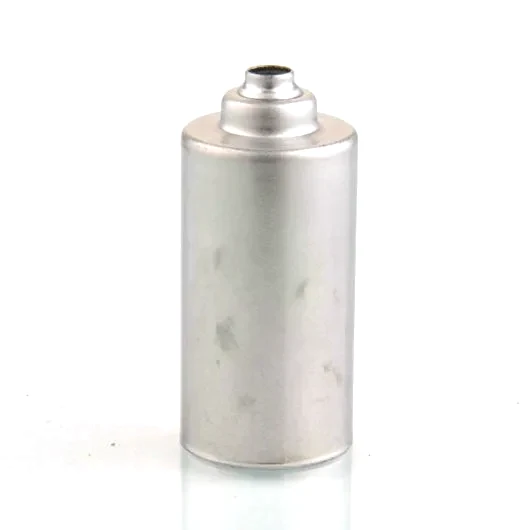
| Item | Precision Deep Drawn Stainless Steel Metal Stamping Digital Thermometer |
|---|---|
| Brand | AUNOV |
| Designing | Made to your 2D/3D drawings (PDF, DWG, STEP, IGS) – DFM notes are returned before any tooling is cut; revisions are re-quoted once rather than silently absorbed. |
| Tooling | Progressive and drawing dies are designed and built in house, so the die charge appears as its own quotation line, and ownership is confirmed on the quotation. |
| Samples | Sample parts are measured and reported before submission, so any deviation is corrected at sample stage. |
| Materials | Stock runs to carbon steel, 304 / 316 stainless steel, aluminium and brass; special grades are sourced to the drawing when volumes justify. |
| Surface finish | Zinc, nickel or chrome plating, anodising, passivation or e-coat; masking and laser marking available where needed. |
| Processing | Deep drawing on hydraulic presses, CNC-finished where tolerances tighten; in-process checks sit between stages, not only at the end. |
| Equipment | Deep drawing presses plus CNC turning centres for machined faces, with in-house toolmaking to keep dies and fixtures maintained. |
| Tolerance | +/-0.01 mm on sealing faces, +/-0.05 mm on drawn profiles; finer bands confirmed from capability data before quoting. |
| Delivery terms | FOB Ningbo or Shanghai, payment by T/T or L/C, quoted in USD or EUR; call-off schedules are supported. |
Related Products



Frequently Asked Questions
Why does a thermometer housing have two separate requirement sets?
One surface faces the process and the other faces the user who drops, pockets and grips it in wet hands, so the inside is a seal and the outside is a human interface, and the two do not interact.
Can the housing be made in 304 and 316 stainless steel?
Yes – 304 is the default and 316 is specified where the service is more aggressive, both drawn from sheet and finished on the critical faces.
How are the sealing faces held on this housing?
Critical faces are CNC finished to +/-0.01 mm with the drawn profile at +/-0.05 mm, and the tight band sits on the faces the display and battery seal against.
Does AUNOV tool the housing in-house?
Tooling is made in-house, so the draw and the button and battery features are developed together rather than handed between shops.
Request a Quote for This Part
Send a drawing or sketch — get material advice, tooling cost and a per-piece price within 24 hours (working days).