
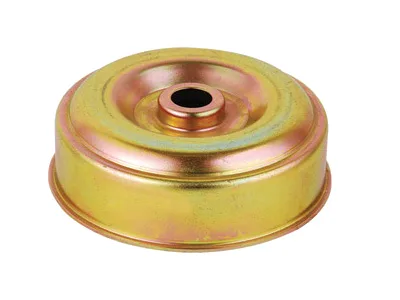
The casing that decides how loud the cabin is
Ask a driver what they notice about their heating and ventilation and the answer is rarely “the airflow” – it is the noise. A blower motor’s casing sits inside the HVAC module with a direct path into the cabin, and its acoustic behaviour, along with the fan’s, sets the sound a passenger hears at every fan setting. An electric warm wind motor casing is therefore an acoustic component as much as a structural one, and this page covers the casing’s noise engineering – modes, clearances, and the brush-dust and airflow details that affect what the passenger hears.
Why a blower is the cabin’s loudest accessory
Blower noise has three components and the casing influences all three. Aerodynamic noise comes from the fan and its tip clearance to the casing – an uneven or oversized clearance produces a tonal howl that rises with speed. Structural noise comes from the casing’s own resonances, excited by the motor’s torque ripple and by the airflow’s pressure fluctuations, radiated into the HVAC module’s plastic walls which then act as loudspeakers into the cabin. And mechanical noise – brush friction, bearing rumble – travels through the casing to the module. A casing designed without regard to these radiates them all; a casing engineered for them controls each in turn. The acoustic target is usually expressed as a sound pressure level at defined fan settings and microphone positions, and the honest way to meet it is to design the casing’s modes away from the tonal frequencies and to hold the fan’s clearance uniformly, rather than relying on the module’s insulation to hide the problem.
Modal placement: the quietest change you can make
The casing’s wall thickness, form and material determine its modes – its natural frequencies – and any mode sitting near a tonal excitation (fan blade passing, motor torque ripple) will ring audibly. Where a programme has a noise spec, we run a modal tap test on first articles, compare the modes against the excitation frequencies in the customer’s data, and shift any problematic mode by adjusting wall thickness or adding a formed feature. Because a formed casing can vary its thickness through blank design, this is achievable without a geometry redesign, and a shift of a few hundred hertz often moves a mode out of the audible band of concern. This step costs an afternoon at design time and prevents the much more expensive version of the conversation, which happens after the module is built and the vehicle is being signed off.
Clearance and the fan’s fit
If the casing forms part of the fan’s shroud, its clearance to the blade tips is a direct acoustic and performance variable. Too tight and the fan fouls as the motor’s alignment shifts with heat; too loose and the fan loses pressure while gaining noise. We hold the clearance band to the customer’s fan design, tying the casing’s shroud geometry to the same datum as the bearing seats so the fan’s running position is set by tooling. This shared-datum approach is what keeps the clearance consistent from casing to casing, which matters because a clearance that varies within a production population produces blowers that sound different at the same setting – a complaint that is hard to diagnose and easy to prevent.
Brush dust and the motor’s internal environment
Brushed blower motors generate carbon dust that circulates inside the casing and can deposit on bearings, brush surfaces and the commutator. The casing’s geometry can help or hinder: formed features that trap dust away from the bearing, a design that avoids flat ledges where dust accumulates and re-entrains, and, where the architecture allows, a venting arrangement that lets dust escape without letting debris in. For brushless blowers this concern disappears, and casing designs for them can spend their geometry budget on acoustics and thermal path instead – a trade worth noting when a programme’s motor architecture is still open.
Clearance and modes both contribute
The casing drawing with the shroud geometry and fan clearance (if the casing shrouds the fan), the motor architecture (brushed or brushless), the noise target and excitation frequencies, the thermal duty, the corrosion spec, and volume. First articles in four to five weeks after die approval, with modal testing and clearance metrology included where the programme carries a noise budget.
Blowers are loud at high setting – fan or casing?
Our blowers are loud at high setting – is it the fan or the casing? Often both, but the casing’s clearance and modes are the parts you can fix without touching the fan. Send the module data and the casings; the modal test and clearance measurement separate the contributions.
Can you make a steel casing quieter than plastic? With modal placement and damping, yes – and steel also carries the magnetic return, which a plastic casing cannot. Where a plastic design has succeeded, the reason is usually the module’s insulation, which is a different engineering choice.
How do you control dust deposition inside the casing? Geometry: traps that keep dust away from bearings, sloped surfaces that shed rather than collect, and venting where the design allows. We will review the casing’s internals for dust behaviour at design stage.
Draw ratio, wall thinning, radii and trim — the design decisions behind a part like this are worked through with numbers in our deep drawn covers guide, and the Precision Deep Drawn Parts pages collect the rest of the family.
Specifications
| Item | Electric Warm Wind Motor Casing |
|---|---|
| Brand | AUNOV |
| Designing | Driven by your drawing or a physical sample – a manufacturability review comes back with the quotation; changes are priced before they are made. |
| Tooling | Dies, fixtures and gauges are made in our own toolroom, so die cost stays transparent, and ownership is confirmed on the quotation. |
| Samples | Samples are produced on the production tooling, so what you approve is what you get. |
| Materials | Carbon steel (SPCC / DC01), 304 / 316 stainless steel, aluminium, brass and copper – the grade is matched to the duty of this casing. |
| Surface finish | Surface treatment matched to the duty: plating, coating or polishing; finish thickness and adhesion checked on the first article. |
| Processing | Coil blanking and progressive drawing, coining on the final station where the print calls for it; in-process checks sit between stages, not only at the end. |
| Equipment | Mechanical presses 5-250 T plus 250-500 T hydraulics, with in-line annealing; secondary ops run on CNC turning centres, inspection on the CMM. |
| Tolerance | +/-0.05 mm on formed features, with capability data on critical dimensions; GD&T per drawing, PPAP-style reports on request. |
| Delivery terms | FOB, with DDP offered for EU and US addresses, T/T or L/C, with D/P accepted on repeat business; repeat orders reuse the approved first article. |
Frequently Asked Questions
Why does a blower turn into the loudest accessory in the cabin?
Three reasons compound: it sits close to the occupants, it runs for long periods rather than intermittently, and it moves air, which generates broadband noise no amount of isolation fully removes. Together those mean the casing, rather than the motor inside it, often decides what the driver actually hears.
What does modal placement mean, and why is it the cheapest quietening change?
It means arranging the casing’s stiffness so its natural frequencies sit away from the frequencies it is excited at. Done in tooling it adds no parts and no operations, which is unusual in noise control. The cost of getting it wrong is symmetrical: the same tool that avoids the problem can also concentrate it.
How do clearance and fan fit enter the noise picture?
Uneven clearance converts rotation into a tone rather than a hiss, because the fan passes something once every revolution rather than merely pushing air past it. Clearance therefore has to be consistent around the circumference, not just adequate on average, which is why this is a roundness and concentricity problem as much as a dimension problem.
What does accumulated brush dust do inside the casing?
More than untidiness. It changes balance over time, it interferes with cooling where it settles, and it is conductive, so where it goes electrically matters as well. Providing a path for it to leave rather than merely accumulate is a design decision, and one that is usually cheaper to make than to retrofit.
Related Products


Request a Quote for This Part
Send a drawing or sketch — get material advice, tooling cost and a per-piece price within 24 hours (working days).