
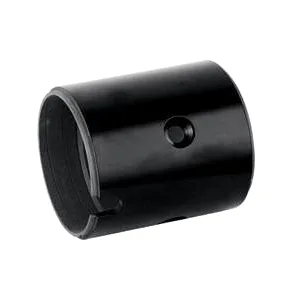
A shield is a shell with an electrical job
An auto starter electric motor shield housing is the drawn cover that surrounds part of a starter motor to do one or both of two jobs: shield the surrounding electronics from the starter’s electromagnetic emissions, and shield the starter from radiant heat. It looks like a simple shell, but its performance is measured in decibels and degrees, not millimetres, and that changes how it must be designed and made.
We draw these shields from low-carbon steel – the material of choice for magnetic shielding – and, where heat shielding is the priority, from stainless steel or aluminised steel. Which material wins depends on which of the two jobs dominates, and getting that wrong produces a shield that is either ineffective or needlessly expensive.
EMI shielding: why steel, and why the joints matter
A starter motor switches hundreds of amperes and generates broadband electromagnetic noise. To attenuate that noise you need a conductive enclosure that reflects and absorbs the field, and the attenuation rises with the material’s conductivity and permeability and with the enclosure’s completeness:
- Low-carbon steel is the standard EMI shield material – it is both conductive and moderately permeable, so it handles both electric and magnetic coupling better than aluminium or copper alone for these frequencies.
- Aluminium is lighter and highly conductive, good for high-frequency electric-field shielding but poorer for low-frequency magnetic fields.
- The enclosure must be electrically continuous. A shield with a gap, an insulated lap, or a painted joint has almost no attenuation at the gap; the aperture, not the metal, sets the performance.
This is the crux of shield housing design: the seams and the bonding are as important as the metal. A drawn shield with an unbroken wall is inherently better than a fabricated one with overlapping panels, which is a strong argument for deep drawing the shield as a single piece wherever the geometry allows.
Gaps, apertures, and grounding: the design rules
- Minimise apertures. Any opening – a ventilation slot, a terminal cut-out – leaks. We keep openings small, and where ventilation is unavoidable, we form a shielded grating or offset the slots so the shield has no direct line of sight to the source.
- Overlap generously and bond tightly. Where two parts must join, the overlap is long and the surfaces are bare or plated metal, fastened at close intervals, not painted or anodised where they meet.
- Provide a defined ground path. The shield only works if it is tied to the vehicle’s reference potential with a low-impedance bond. That bond is part of the housing design – a formed tab, a stud seat, or a defined mating surface – not an afterthought.
A shield with perfect metal and a poor bond radiates almost as much as no shield, which is why we treat the bonding features as controlled characteristics and document them.
Heat shielding: a different material problem
When the shield’s job is thermal – protecting a starter from exhaust radiant heat, or protecting nearby components from the starter – the material logic flips:
| Low-carbon steel | Good for EMI, adequate for moderate heat; absorbs and re-radiates heat slowly. |
|---|---|
| Stainless Steel 1.4301 / 1.4404 | Resists scaling and oxidation at high temperature; the usual choice where the shield sees exhaust radiant heat. |
| Aluminised steel | Reflects radiant heat well and is cheaper than stainless steel; the aluminium layer must survive the thermal cycling without spalling. |
| Insulating liner | Where radiant heat is extreme, a metal shield plus a fibrous or foil liner outperforms a metal-only part; we can form the shield to accept the liner. |
A shield that is expected to do both jobs – EMI and heat – needs a compromise, and we will say so rather than pretend one material is optimal for both. Often the answer is stainless steel for the hot zone with attention to bonding, or a two-layer construction.
Forming the shield: single-piece advantage
Because electrical continuity is the whole point, a deep drawn shield has a real advantage over a fabricated one: fewer joints, fewer gaps, and a continuous ground path around the circumference. Deep drawing a shield with a closed end, a flange, and a small number of formed features is well within our envelope, and the drawn part is stiffer for its weight than a folded one. Where the geometry demands openings, we form them in the same die so the shield stays a single continuous piece except at the apertures we choose.
A starter shield is drawn thin, from 30 to 90 mm
- Diameter: 30-90 mm.
- Length: 20-90 mm.
- Wall: 0.5-1.2 mm; thin for weight, thicker where stiffness or shielding mass is needed.
- Features: bonding tab, flange, terminal cut-out, ventilation slots with shielding offsets, mounting feet.
A painted shield works only if the bonding surfaces stay bare
Will a painted shield still work as an EMI shield? Only if the bonding surfaces are left bare and the paint is on non-critical surfaces. Paint on a mating surface breaks the ground path and can render the shield ineffective.
Can you hold a tight aperture tolerance for shielding? Yes – aperture size is a controlled feature; we hold it to the customer’s limit because a wrongly sized slot or hole leaks disproportionately.
Do you test shielding effectiveness? We do not run an EMC chamber; the customer typically validates shielding in the vehicle or on a bench. We supply the metal, the continuity, and the dimensional features that make their validation repeatable, and can report bond resistance if specified.
What if the shield must also conduct heat? Then the material and thickness change; we will model both the shielding and thermal requirements with the customer rather than optimising one and ignoring the other.
Specifying a starter shield housing
Tell us which job dominates (EMI, heat, or both), the frequency and field strength if EMI is specified, the bond location and resistance target, the temperature and radiant load if thermal, the apertures that are functionally required, and the mounting interface. Those inputs decide the material, the thickness, the aperture scheme, and the bonding features – which is what turns a shield from a metal cover into a component that actually keeps the noise and the heat where they belong.
Our deep drawn covers guide puts numbers to the design decisions behind a part like this — draw ratio, wall thinning, radii and trim; the Precision Deep Drawn Parts pages collect the rest of the family.
Specifications
| Item | Auto starter electric motor shield housing |
|---|---|
| Brand | AUNOV |
| Designing | Send drawings, or send a sample to be measured – a manufacturability review comes back with the quotation; the agreed version governs every later batch. |
| Tooling | Tooling is built and held under your part number, so tooling lead time stays under our control, and first-article timing is measured from the tooling start date. |
| Samples | Sample parts are measured and reported before submission, so the approved first article becomes the gauge reference, and later batches are gauged back to the signed sample. |
| Materials | Materials held include carbon steel, 304 / 316 stainless steel, aluminium and brass; material substitutes are proposed only with your written approval. |
| Surface finish | Zinc, nickel or chrome plating, anodising, passivation or e-coat; finish thickness and adhesion checked on the first article. |
| Processing | Multi-stage deep drawing with interstage annealing, trimmed and pierced in following dies; first articles verify the whole flow before the run is released. |
| Equipment | Mechanical presses from 5 to 250 T and hydraulic presses 250-500 T, with in-line annealing furnaces, backed by CNC turning centres and a climate-controlled inspection room. |
| Tolerance | +/-0.05 mm to +/-0.1 mm across the part, wall thickness held to print; capability is checked on the first article before the run continues. |
| Delivery terms | Shipping terms are set with the order: FOB, CIF or DDP, T/T or L/C, door delivery quoted. |
Frequently Asked Questions
EMI or heat shielding: how is the material actually chosen?
It follows whichever job dominates. Low-carbon steel is the choice for magnetic shielding, while stainless steel or aluminised steel takes over where heat is the priority, and picking wrongly gives a shield that does one job well and the other barely at all. Say which failure you are protecting against and the material tends to follow.
Why are gaps and joints talked about more than the material?
Because shielding is a continuity problem. An aperture or an ungrounded seam leaks regardless of how good the steel is, so the design rules that matter most are the ones controlling openings and how the shield is bonded back to the structure.
What is the advantage of drawing the shield as one piece?
A single drawn shell has no longitudinal seam, so there is no seam for fields to pass through and nothing to work loose under vibration. It also removes the assembly step that would otherwise decide whether the joint is as good as the material.
Will painting cause a problem?
Only if the surfaces that have to conduct are painted too. A coated shield works when the bonding faces and contact surfaces stay bare, which means the masking has to be specified rather than left to the finisher.
Related Products


Request a Quote for This Part
Send a drawing or sketch — get material advice, tooling cost and a per-piece price within 24 hours (working days).