
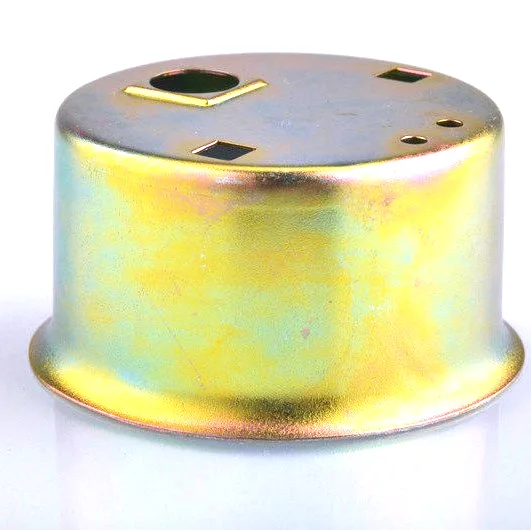
Second-generation housing: what a redesign should actually change
When a wiper platform rolls over to its next generation, the housing usually comes back to suppliers with two contradictory instructions: carry over everything that works, and take cost out. A second-generation wiper motor housing programme lives or dies on how that contradiction is resolved. Done well, a redesign removes real money without touching reliability; done lazily, it thins the wrong walls and buys a warranty curve nobody priced. Having run both versions of this conversation, here is where the honest savings hide.
Start with what the first generation taught you
The most valuable input to a redesign is the first generation’s field data: which failure modes actually occurred, which tolerances actually mattered at assembly, which features nobody ever touched. A housing whose bore concentricity drove zero field failures does not need tightening; a housing whose gasket flange generated every leak complaint needs its sealing land engineered, whatever the original print said. We ask for three years of warranty and assembly-line data before proposing a single change. Programmes that supply it get redesigns that measurably drop their cost and their complaint rate together; programmes that skip it get geometrically similar parts with geometrically similar problems.
Where the real cost sits in a drawn housing
Breaking down a first-generation housing’s cost tells you where to aim. Material dominates – typically 45-60% of piece price at volume – so blank development is the first lever: re-optimizing the blank outline for the die’s actual flow pattern routinely recovers 3-6% of blank area, which flows almost dollar-for-dollar into piece price. Second is the operation count: a feature added late in generation one (an extra tab, a service hole) may force a die station that generation two can eliminate by relocating the feature. Third is finishing: moving from two-side plating to a masked critical-face spec, or consolidating the coating with a sister programme, takes real money out with zero engineering risk. Wall thinning – the instinctive first move – is actually fourth or fifth on the honest list, because it stresses the draw window to save pennies.
What should carry over unchanged
Three things we protect from redesign pressure. The functional datums: if generation one’s interfaces align with the vehicle and the assembly line, changing them costs the customer more than they save. The draw window: a housing whose process runs with margin and low scrap has an invisible asset in its die settings – a “lighter” redesign that moves the process to the edge of its window converts margin into scrap rate, which is a bad trade at any volume. And the traceability architecture: keeping the same lot-coding and retention scheme means the new generation inherits the old one’s field-response machinery, which is worth more than any single feature.
The migration plan that avoids a quality cliff
Generation transitions fail at the cutover, not the design. Our standard sequence: redesign die built and sampled against generation-one gauges first (so dimensional continuity is proven, not assumed); a short overlap run where both generations ship from controlled stock; and the field introduction phased through one plant or market before full cutover. The overlap costs a little inventory and buys the ability to catch a migration issue in weeks instead of across a continent. Motor makers who skip the overlap invariably rediscover why it existed.
Feature changes are the constraint, not the die
Generation-one field and assembly data if available, the new drawing (or the old drawing with change flags), target piece price if the redesign has one, and volume. We return a change-by-change assessment – which requested changes are free, which cost tooling, which cost reliability – before quoting, because the cheapest redesign conversation is the one that happens on paper.
Can you reuse our generation-one die and modify it?
Can you reuse our generation-one die and just modify it?
Sometimes – feature changes in-strip are insert-level work. But a wall-thickness or depth change is a new draw station’s worth of geometry, and forcing an old die to a new shape produces a part with the old die’s weaknesses and the new design’s risks. We assess honestly; the answer is usually “modify for features, re-cut for shape.”
How much cost-out is realistic without touching reliability?
On a typical first-generation drawn housing, 6-12% of piece price, from blank development, operation consolidation and finishing scope. Claims beyond that should be examined with a warranty curve in hand.
Should generation two switch material grades?
Only with the magnetic and corrosion review repeated – grade changes ripple into motor performance in ways the housing drawing cannot show. We run the check as part of the quote rather than discovering it at motor validation.
Automotive Motor Components is the parent range for parts like this one; the overview page gathers the tooling logic, finishing options and tolerance notes that apply across the family.
Specifications
| Item | Wiper Motor Housing 2 |
|---|---|
| Brand | AUNOV |
| Designing | Quotation follows the print, not a catalogue – unusual walls, threads or tolerances are feasibility-checked first; the approved drawing is kept as the controlled master. |
| Tooling | Progressive and drawing dies are designed and built in house, so the die charge appears as its own quotation line, and ownership is confirmed on the quotation. |
| Samples | Samples are issued for approval before the run, so any deviation is corrected at sample stage, and production starts only after your written sign-off. |
| Materials | We hold carbon steel, 304 / 316 stainless steel, aluminium and brass, and the drawing review settles the final grade. |
| Surface finish | Phosphating first for coating adhesion, then powder coating, e-coating or zinc plating; chrome and nickel are reserved for visible faces. |
| Processing | Deep drawing from coil or blank, with in-process annealing so walls thin evenly; trim, pierce, form and finish. |
| Equipment | Mechanical presses from 5 to 250 T, hydraulic presses 250-500 T, annealing ovens, plus CNC turning and machining centres. |
| Tolerance | +/-0.1 mm to +/-0.2 mm general; critical features held to the drawing and verified on the first article. |
| Delivery terms | CIF or DDP, with FOB available, T/T or L/C, with D/P accepted on repeat business; repeat orders reuse the approved first article. |
Related Products


Request a Quote for This Part
Send a drawing or sketch — get material advice, tooling cost and a per-piece price within 24 hours (working days).