

What makes an oil pump motor housing different from a fuel pump housing
An oil pump electric motor housing sits in a very different environment from its fuel-pump cousin. Instead of ambient-temperature gasoline, it lives in hot engine or transmission oil – 120-150 °C in a transmission, higher in some engine applications – and it often runs continuously rather than intermittently. The oil is both the lubricant and the coolant, and the housing must live with the oil’s chemistry, its temperature, and the pressure the pump develops.
The consequences for the housing design are specific: the material must resist hot-oil oxidation and the additives that attack certain coatings and elastomers, the wall must shed heat or at least not trap it, and the sealing and bearing features must hold at temperature when clearances have changed from their cold values.
Hot oil is a different chemical environment
Engine and transmission oils at temperature are mildly acidic and carry oxidation products and additive packages – anti-wear, detergent, dispersant. Over a long service life these interact with the housing surface:
| 1.4301 (304) | Good baseline resistance to hot oil; used widely for wet-side housings. |
|---|---|
| 1.4404 (316L) | Better resistance to acidic oxidation products and to the water that can enter a transmission; preferred where oil life is extended. |
| Aluminium 3003 / 5754 | Light and thermally conductive, good for heat shedding; needs a coating or a compatible pairing to avoid corrosion with steel internals. |
| Coated steel | Cost option; the coating must resist hot oil, which rules out many low-temperature coatings. |
The failure mode we watch for is under-deposit corrosion: an oil varnish forms on a hot spot, the metal under it corrodes, and the varnish hides the damage until the deposit flakes and takes the housing wall with it. A smoother internal surface reduces deposit adhesion and slows this.
Temperature and the altered-fit problem
At 150 °C the housing has expanded and the stator and bearing have expanded by different amounts. A fit that is a light interference at 20 °C can become a clearance at temperature, letting the stator shift and the rotor air gap close – which shows up as noise, then as wear.
- We size the stator bore for the hot-state fit, taking the customer’s stator thermal expansion into account, not the cold fit.
- We choose the wall thickness partly for its thermal behaviour – a very thin stainless steel wall tracks the stator temperature quickly, which is good for the fit but bad for heat rejection; aluminium sheds heat better but expands more.
- We keep the bearing seat round at temperature, because an out-of-round seat under heat loads the bearing unevenly and shortens its life.
The housing as part of the pressure circuit
In a pump, the housing is frequently part of the pressurised boundary or forms one wall of the pump chamber. That gives it two jobs beyond being a motor enclosure:
- Holding pressure without distorting. A housing that bows under pressure changes the pump’s internal clearances and its volumetric efficiency. We design the wall and any ribs so pressure-induced deflection stays within the customer’s limit.
- Defining the sealing lands. The face where the housing meets the pump cover or the end plate is a sealing surface with its own flatness and finish spec; we hold flatness to keep the joint from weeping.
Dry-run and cold-start tolerance
The worst case for a hot-oil housing is not hot – it is cold. On a cold start, the oil is thick, the pump sees high suction resistance, and a dry run after an oil change can leave the pump briefly unlubricated. The housing must not gall, seize, or deform during those events. We keep internal clearances generous enough to tolerate a momentary dry condition and specify surface finishes on sliding interfaces that resist scuffing.
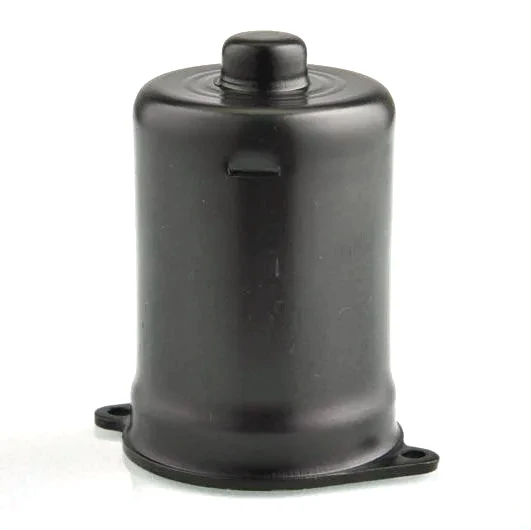
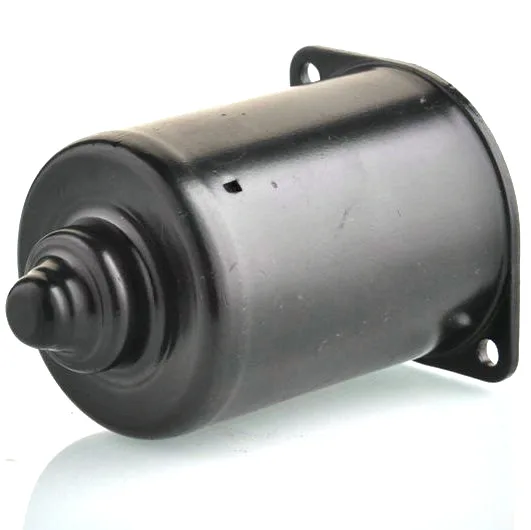
Transmission and engine oil pump housings reach 70 mm
- Diameter: 30-70 mm, matching common transmission and engine pump motors.
- Length: 40-140 mm; long housings use a two-stroke draw with an intermediate anneal where the ratio demands it.
- Wall: 0.8-2.0 mm stainless steel; thicker where the housing is a pressure boundary.
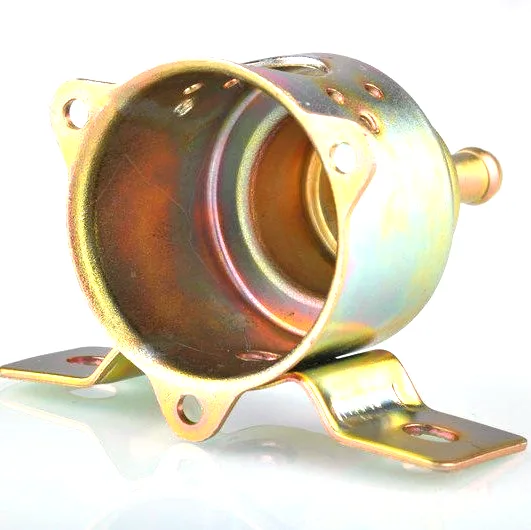
- Features: bearing seat, pump chamber wall, sealing faces, mounting flanges, oil ports – formed, coined, or pierced in-die.
Aluminium for weight and heat, with an expansion caveat
Can the housing be made from aluminium to save weight and shed heat?
Yes, with a caveat: aluminium against steel internals is a galvanic pair risk in a wet oil environment, so the interface needs to be managed. We will walk through the pairing rather than quote aluminium blindly.
How do you hold the stator bore at temperature?
The die controls the cold dimension; we then design the interference so the hot fit still holds, using the customer’s thermal data. It is a calculation, not a guess.
Do you supply the housing with an integral pump chamber?
Where the design allows, yes – forming the chamber in the same part removes a joint and a leak path. Where the chamber needs a precision bore, we leave a machining allowance.
What is the limiting hot-oil temperature?
Depends on the grade and on the elastomers; the steel itself is fine well above the oil’s degradation point. The limit is usually the seal and the varnish behaviour, not the metal.
Specifying an oil pump motor housing
Send the oil type and its maximum continuous temperature, the pressure the housing sees, the stator and bearing interfaces with their thermal data, the sealing faces, and the mounting arrangement. Those inputs let us pick the material for hot-oil service, size the fit for temperature, and hold the pressure boundary flat – which is what separates a housing that lasts the life of the transmission from one that becomes a warranty statistic.
Automotive Motor Components is the parent range for parts like this one; the overview page gathers the tooling logic, finishing options and tolerance notes that apply across the family.
Specifications
| Item | Oil pump electric motor housing |
|---|---|
| Brand | AUNOV |
| Designing | Your drawing sets the part – DFM notes are returned before any tooling is cut; changes are priced before they are made. |
| Tooling | Tooling is built and held under your part number, so no tooling step is outsourced, and first-article timing is measured from the tooling start date. |
| Samples | Prototype and pre-production samples are provided against the drawing, so any deviation is corrected at sample stage, and mass production is gated on that approval. |
| Materials | Carbon steel (SPCC / DC01), 304 / 316 stainless steel, aluminium, brass and copper – the grade is matched to the duty of this housing. |
| Surface finish | Zinc / nickel / chrome plating or e-coat, chosen for the environment this housing sees; salt-spray tested to drawing. |
| Processing | Blanking, multi-stage deep drawing with interstage annealing, trimming and piercing, coining, then finishing. |
| Equipment | Mechanical presses from 5 to 250 T, hydraulic presses 250-500 T, annealing ovens, plus CNC turning and machining centres. |
| Tolerance | +/-0.1 mm to +/-0.2 mm general; critical features held to the drawing and verified on the first article. |
| Delivery terms | CIF or DDP, with FOB available, payment by T/T or L/C, quoted in USD or EUR; price breaks tie to annual volume. |
Related Products

Request a Quote for This Part
Send a drawing or sketch — get material advice, tooling cost and a per-piece price within 24 hours (working days).