
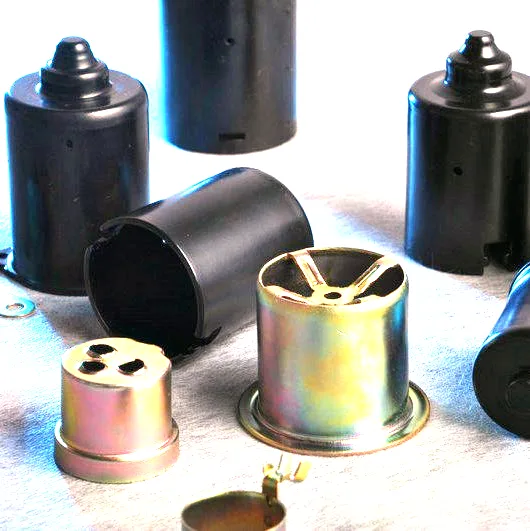
When the cap is the visible part: cosmetic engineering for wiper motor covers
Most wiper parts are judged by instruments. The wiper motor cover is judged by eyes – it is the one component visible at the dealership handover, in a fleet inspection, or through the cowl gap of a premium vehicle. That changes the engineering emphasis: appearance grades, coating aesthetics and surface texture become first-class requirements alongside the corrosion and fit specs, and the drawing language changes with them. This page covers how we treat covers as appearance parts without letting cosmetics compromise function.
Defining “good appearance” so both sides can test it
The failure mode of cosmetic specs is vagueness. “No visible defects at 0.5 m” invites dispute; a defined viewing condition does not. Our standard appearance zone scheme, borrowed from automotive practice: the cover’s surfaces are graded by visibility – A-surfaces (directly seen in normal installation), B-surfaces (seen at angle or on inspection), C-surfaces (functional, never seen). Each zone gets its own defect limit: A-surfaces hold to a defined standard panel with limits on dent depth, scratch length and coating orange peel; B-surfaces allow the same class of defect at larger size; C-surfaces carry only functional requirements. The scheme is agreed at RFQ with photo panels signed by both parties, and it converts a decade of potential arguments into a two-minute gauge check.
Sheet surface: the base the coating shows
A painted or plated cover displays its substrate. Orange peel in the steel (coarse grain), stretcher strains (aging), and draw marks all telegraph through the coating, so cosmetic covers start with skin-passed, fine-grain, non-aging sheet – a mill certificate line item that costs a little and prevents most coating complaints before the paint line. Draw radii on A-surfaces get extra polish on the die, and the draw bead layout keeps restraint marks off visible zones – a die-design decision, made once, that no amount of downstream polishing can replicate. Where a cover’s geometry forces a bead mark across an A-surface, the honest answer is to re-orient the draw, not to promise the paint line will hide it. It never fully does.
Coating systems for visible steel
Cosmetic covers typically run one of three routes. Powder coating gives the most forgiving finish – it levelling-hides minor substrate texture and offers colour matching to the wiper linkage; its weakness is chip resistance at edges, which we manage with a defined edge radius on A-surface trim lines. Liquid paint over e-coat is the automotive standard for body-colour covers, with the e-coat providing the corrosion base and the topcoat the appearance. And plated-with-clear versions – bright zinc-nickel with a trivalent chrome-look passivate – serve the chrome-effect aftermarket and classic-vehicle segments at a fraction of decorative-plating cost. Each route has a salt-spray and appearance dual spec, because a cover that passes corrosion but fails appearance (blistering, dull patches) is still a return.
Handling: the cosmetic part’s real production challenge
Functionally, a scratched cover still works; commercially, it is scrap. The production system around an appearance part matters as much as the die: interleave soft separation in packing (not bare-on-bare stacking), gloves-and-sleeves discipline at inspection, and a packing design that survives the last mile of a mixed-freight journey. The most common cosmetic return we see is transit abrasion on the outer face – a packing problem masquerading as a manufacturing one – and the fix lives in the packing drawing, which is why our cosmetic programmes ship one with first articles.
To a physical colour reference, and only
Cover drawing with A/B/C zones marked (or a photo of the installed view so we can propose the zoning), coating system and colour reference, the corrosion spec, and volume. If an appearance standard panel exists from the vehicle maker, reference it – aligning to an existing standard is cheaper than creating one. First articles in three to four weeks after die approval, including the signed appearance panel and a packing-drawing proposal.
Can you match our linkage’s powder coat colour exactly?
Can you match our linkage’s powder coat colour exactly?
Yes, to a physical colour chip – spectral data alone is not enough for textured powders, so we work from the chip and run a first-shot colour panel for sign-off before production.
Our previous supplier’s covers showed draw marks on the visible face – fixable?
Yes, and the root cause is die layout: bead or restraint marks crossing an A-surface. We re-orient the draw so the visible zones are formed under favourable flow; it may add a station, which the quote shows honestly.
Is stainless steel worthwhile for a visible cover?
For unpainted brushed-look covers, yes – 1.4016 with a defined surface finish (our standard is a 180-grit directional brush) skips the coating system entirely and survives stone chipping that would expose bare steel on a painted part.
Drawing a cover like this is a chain of decisions — draw ratio, wall thinning, radii and trim. Our deep drawn covers design guide works through each of them with worked numbers.
Specifications
| Item | Wiper motor cover |
|---|---|
| Brand | AUNOV |
| Designing | Send drawings, or send a sample to be measured – a manufacturability review comes back with the quotation; the same drawing is used for every repeat order. |
| Tooling | Our toolroom covers die design, wire-cut EDM and maintenance, so no tooling step is outsourced, and maintenance is tracked against the part number. |
| Samples | Pre-production samples come with a full inspection report, so the sample is retained as the master, and later batches are gauged back to the signed sample. |
| Materials | Carbon steel (SPCC / DC01), 304 / 316 stainless steel, aluminium, brass and copper – the grade is matched to the duty of this cover. |
| Surface finish | Corrosion protection comes from zinc or nickel plating, housings additionally take powder coating or electrophoresis, and laser etching can be added on request. |
| Processing | Blanking, multi-stage deep drawing with interstage annealing, trimming and piercing, coining, then finishing. |
| Equipment | Mechanical presses from 5 to 250 T, hydraulic presses 250-500 T, annealing ovens, plus CNC turning and machining centres. |
| Tolerance | +/-0.15 mm typical on formed parts, +/-0.3 mm on large covers; the die decides the achievable band. |
| Delivery terms | CIF or DDP, with FOB available, payment by T/T or L/C, quoted in USD or EUR; price breaks tie to annual volume. |
Related Products


Request a Quote for This Part
Send a drawing or sketch — get material advice, tooling cost and a per-piece price within 24 hours (working days).