
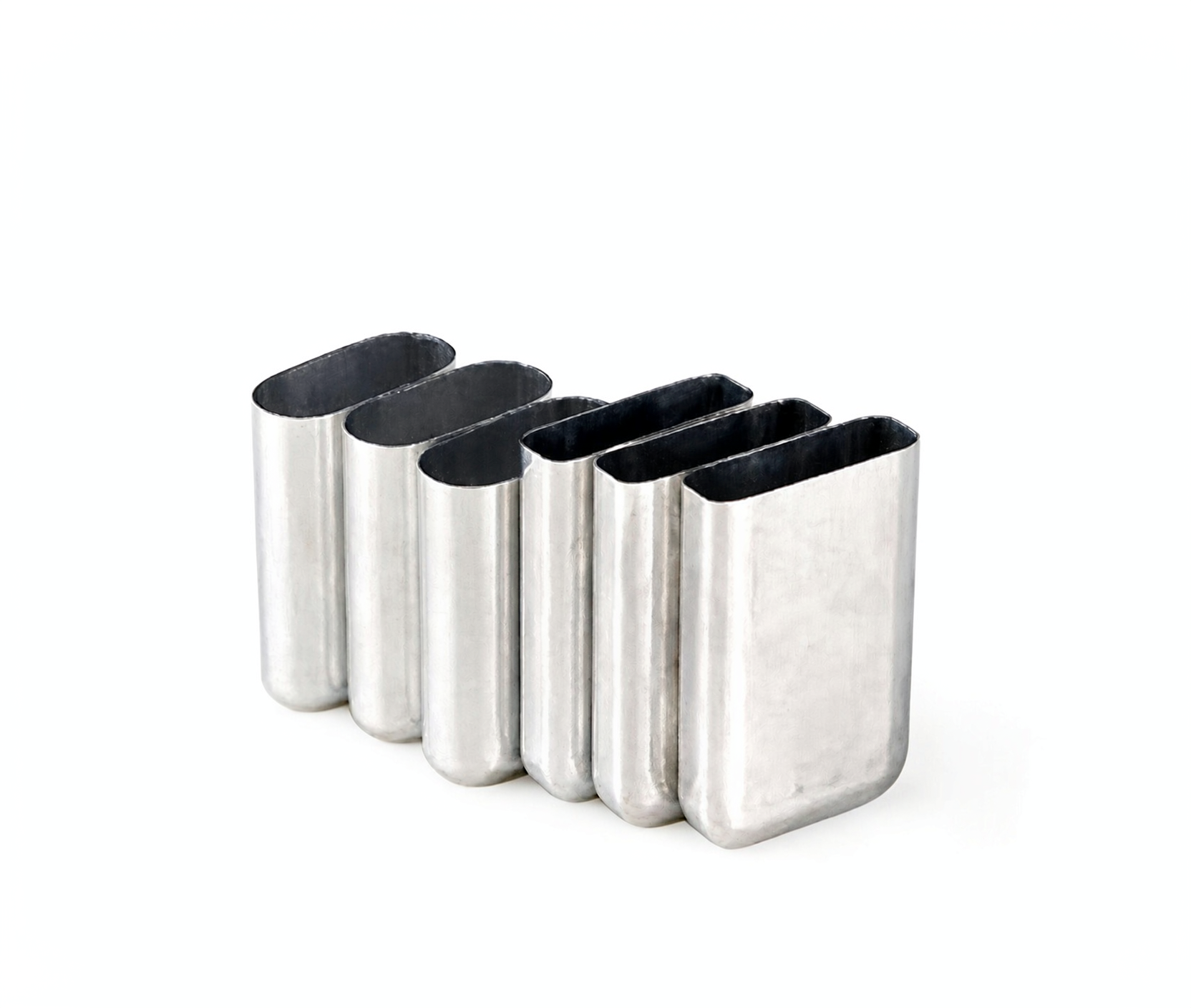
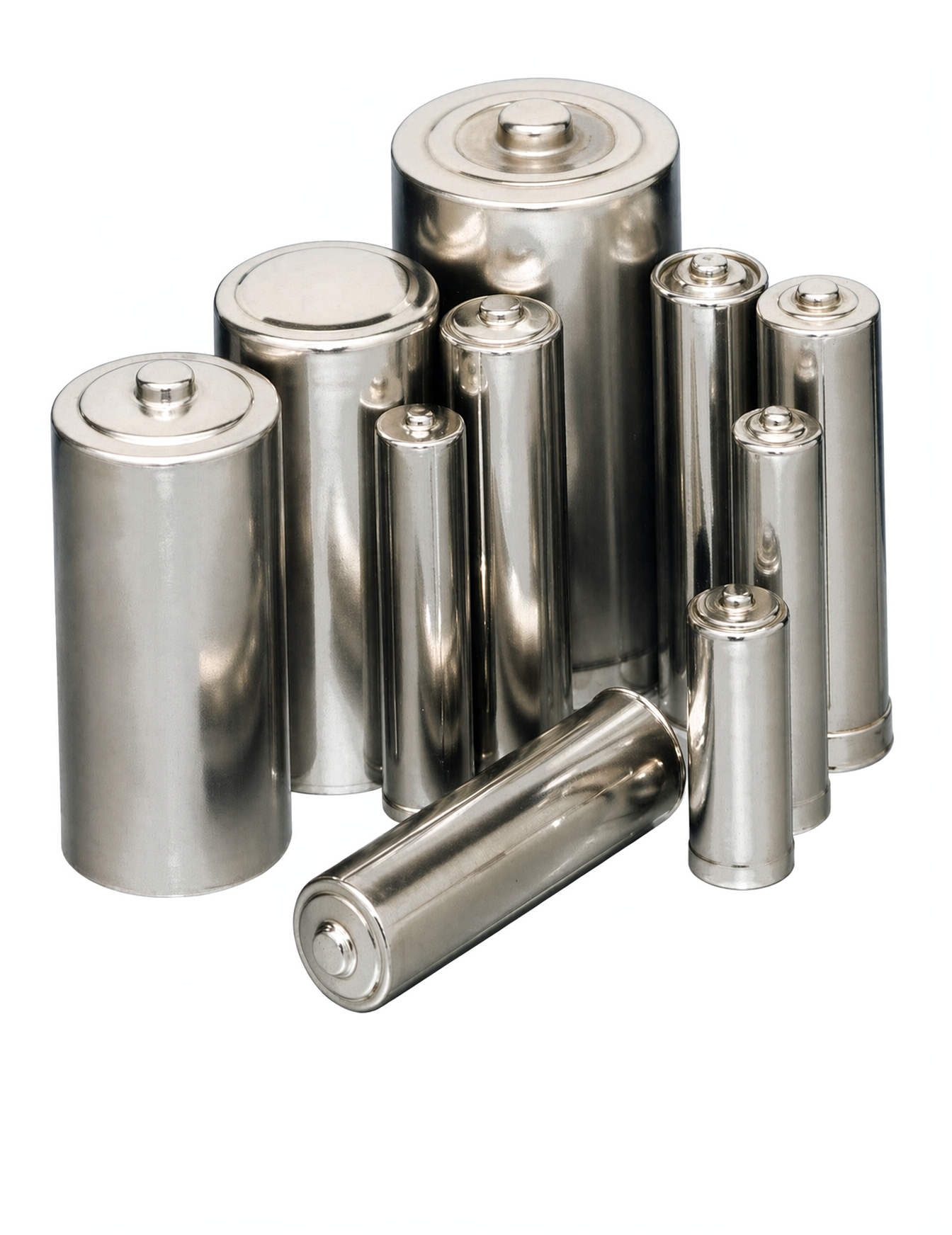
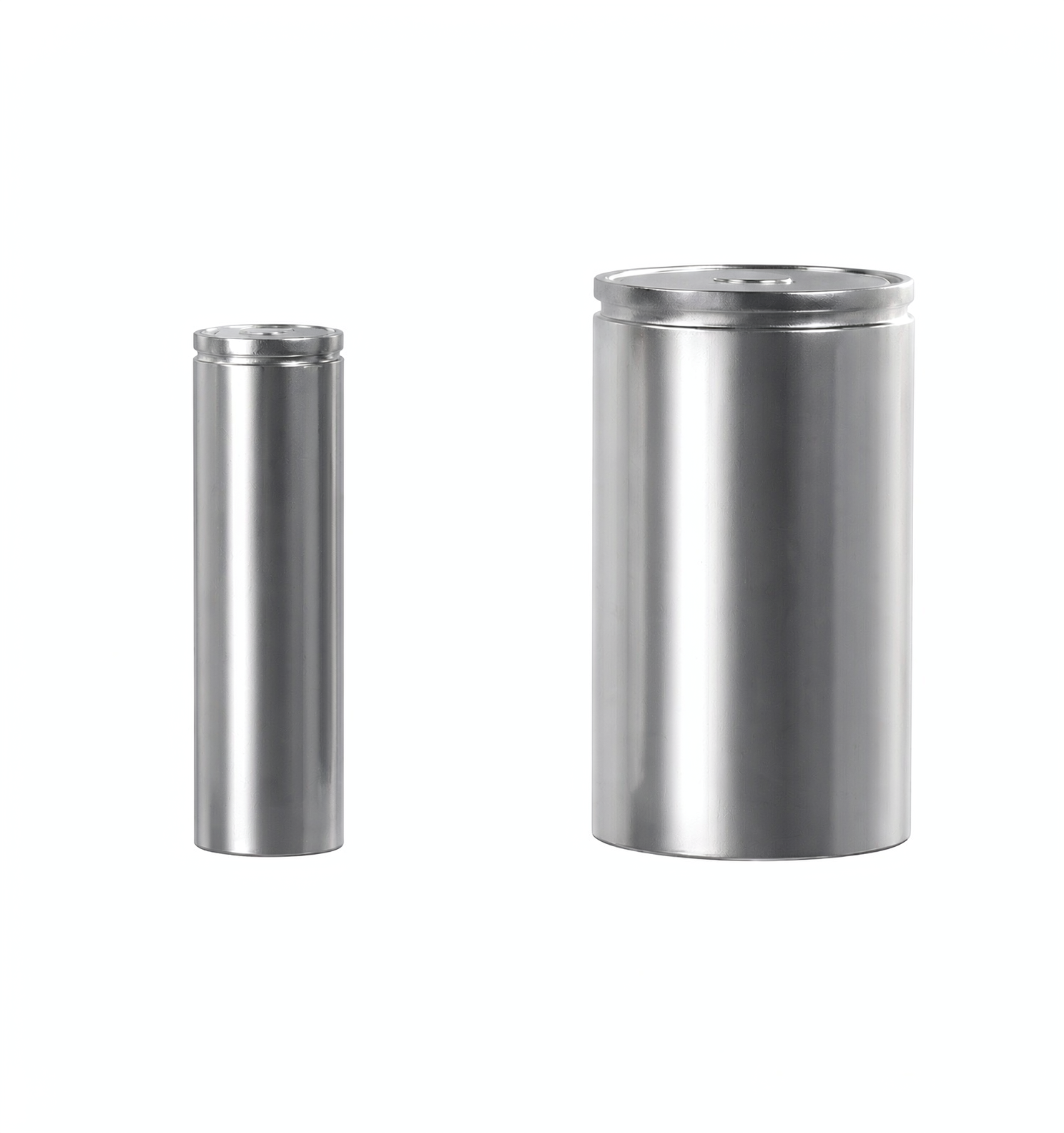
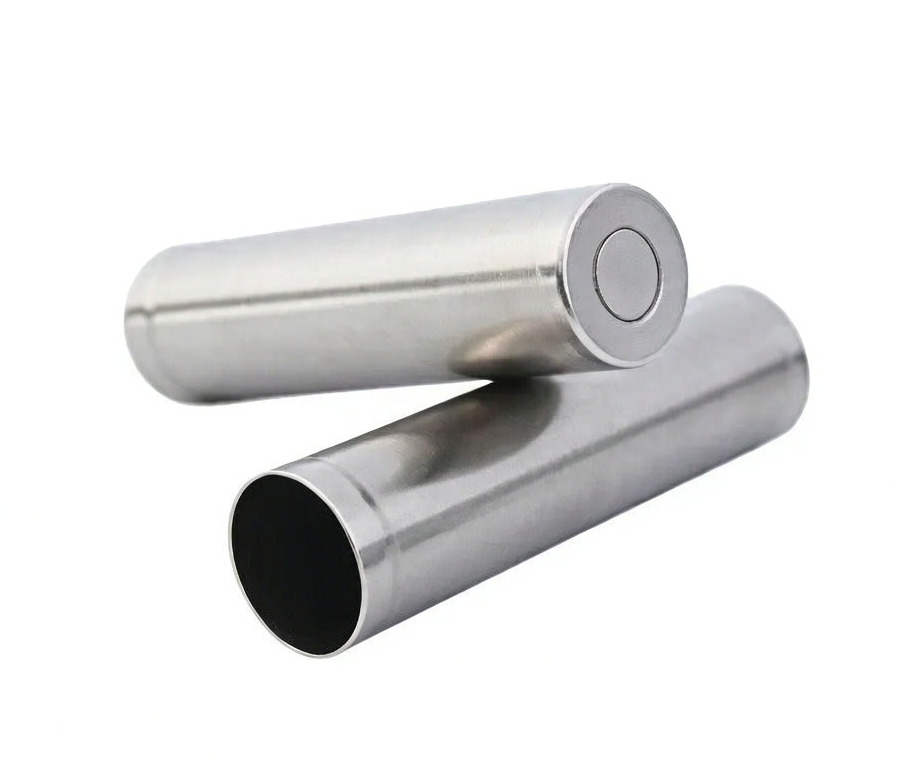
A battery can is a pressure vessel with a chemistry inside
A stainless steel deep drawn battery can is not simply a container. It holds an electrochemical system – electrolyte, electrodes, and the gas that chemistry can generate – and it has to do so for years without leaking, without corroding from the inside, and without releasing its contents if the cell goes into abuse. Those requirements turn a drawn shell into a precision, sealing, and sometimes safety-related part.
We draw battery cans from stainless steel grades chosen for electrolyte compatibility, and this page covers what the can must do beyond simply being the right size.
Electrolyte compatibility is the material driver
Battery electrolytes are aggressive: alkaline electrolytes attack aluminium and many coatings; lithium-ion electrolytes are organic solvents with a lithium salt that attacks residual moisture and certain surface contaminants. The material and surface rules follow:
- Stainless Steel 1.4301 / 1.4404 resist alkaline electrolyte well and are the common choice for cells where the can is the positive or negative terminal; 1.4404 adds pitting resistance for the more aggressive formulations.
- Surface cleanliness is a functional requirement, not a finish detail: residual drawing lubricant or smeared iron can react with the electrolyte, generate gas, or form a high-resistance layer. We clean and, where specified, passivate and document contamination levels.
- No incompatible linings or coatings inside – a coating that is fine for atmospheric corrosion may be attacked by the electrolyte and become a contaminant. We match coatings to the chemistry with the customer, and often the answer is bare, passivated stainless steel.
Sealing: the can is only half the vessel
A can is closed by a cap, a lid, or a header, and the joint is where a battery leaks. The can’s contribution to sealing:
- A defined crimp or weld lip – a controlled wall thickness and a clean, square edge so the crimp or weld is repeatable and gas-tight. A lip that is thin or burred makes a joint that passes a short leak test and fails in service.
- A controlled diameter at the joint – the cap or header is tooled to a diameter, so the can’s joint diameter must be held to match within a tight band; a can that is a few hundredths off ruins the seal tooling’s setting.
- Concentricity of the joint to the can axis – an oval joint seals unevenly and is a leak path around the circumference.
Because batteries are leak-tested (often by helium or by a pressure/decay method), the can’s dimensional consistency is directly tied to the test yield. We hold the joint diameter and roundness as controlled characteristics and can supply the sectioned and dimensional data the customer’s seal tooling needs.
Safety features and abuse behaviour
Some cells require the can to participate in a safety strategy – a vent, a weakened region, or a designed failure mode if internal pressure rises. Where the can carries such a feature:
- A formed vent or score is produced in-die or in a secondary operation to a controlled remaining-wall thickness, so it opens at the intended pressure rather than at a random one.
- Consistency of the feature across the production lot is the whole point – a vent that opens at a wide spread of pressures is not a safety feature.
- Geometry that does not concentrate stress at the wrong place, so the can does not rupture elsewhere first.
Dimensional precision for cell assembly
The can has to accept the electrode assembly, so its inside diameter, straightness, and roundness matter to the cell line:
- Inside diameter within a band that lets the jelly-roll or the electrode stack slide in without damage, and holds it without rattling.
- Wall uniformity so the can’s internal volume and its mechanical support are consistent.
- Base flatness and thickness where the base is a terminal or seats against a current-collector tab.
These are precision requirements on a drawn part, and they are met by die control plus, where necessary, a sizing operation. We will be explicit about which dimensions the draw can hold and which need a secondary step.
Battery cans are drawn thin, from 0.2 mm upward
- Diameter: 10-60 mm for typical cylindrical cells; larger for prismatic housings.
- Length: 20-150 mm; longer cans use a two-stroke draw.
- Wall: 0.2-0.8 mm; thin for weight and internal volume, thicker where the can is structural or carries a thread.
- Features: crimp or weld lip, vent or score, terminal boss, base features, sizing for the bore.
Cleanliness and traceability
Battery manufacturing is unforgiving of contamination and demands traceability. Standard supply for a battery can includes lot traceability to the material heat, a cleanliness specification (residue level, often verified by a wipe or a rinse test), and dimensional reports including the joint diameter and the vent dimension where applicable. For a program entering production, PPAP-level documentation is normal.
Thin enough for internal volume, down to where it stops
Can you draw a can thin enough for good internal volume? Yes, down to about 0.2 mm for small diameters, with the understanding that the can must still survive handling and the cell line.
How do you control the vent opening pressure? By controlling the remaining wall thickness at the score, which is a die or a secondary feature, and by inspecting it as a lot characteristic rather than leaving it to chance.
Do you passivate and clean for electrolyte contact? Yes, with a documented cleanliness level; the customer’s chemistry and lifetime determine how far we go.
Can you hold the joint diameter tight enough for a laser weld? Yes, and for a weld we also keep the lip edge clean and square, because fit-up is what makes a laser weld repeatable.
Specifying a battery can
Send the cell chemistry, the can’s role (terminal, structural, or both), the inside diameter and length with their tolerance bands, the closure method (crimp, weld, header), any vent or safety feature, the cleanliness requirement, and the annual volume. With those we can choose the grade, set the draw and any sizing route, and hold the joint and the safety features to the consistency the cell line and the safety case require – which is what a battery can is actually judged on.
If you are weighing drawing against machining or welding for this geometry, the guide to deep drawn covers sets out where each route wins; the full Precision Deep Drawn Parts range is linked from the overview page.
Specifications
| Item | Precision sheet metal deep draw stainless steel battery can |
|---|---|
| Brand | AUNOV |
| Designing | Driven by your drawing or a physical sample – samples are reverse-measured into a controlled drawing; revisions are re-quoted once rather than silently absorbed. |
| Tooling | Progressive and forming dies are designed, built and maintained on site. |
| Samples | First-article samples ship with a dimensional report and material certificate, so the part is proven before it is made in volume, and the signed sample is kept for future reorders. |
| Materials | Standard stock: carbon steel (SPCC / DC01), 304 / 316 stainless steel, aluminium, brass; material substitutes are proposed only with your written approval. |
| Surface finish | Zinc, nickel or chrome plating, anodising, passivation or e-coat; finish thickness and adhesion checked on the first article. |
| Processing | Coil blanking and progressive drawing, coining on the final station where the print calls for it; in-process checks sit between stages, not only at the end. |
| Equipment | Mechanical presses 5-250 T plus 250-500 T hydraulics, with in-line annealing, with in-house toolmaking to keep dies and fixtures maintained. |
| Tolerance | +/-0.05 mm on formed features, with capability data on critical dimensions; capability is checked on the first article before the run continues. |
| Delivery terms | CIF or DDP, with FOB available, T/T with deposit and L/C for larger runs; each volume tier carries its own quoted price. |
Frequently Asked Questions
Why is a battery can described as a pressure vessel?
Because that is what it becomes under abuse rather than in normal use. Its job is to contain both pressure and chemistry, so the wall has to be thin enough to leave internal volume and strong enough to behave predictably when something else has already gone wrong.
What drives material choice more than the drawing does?
Electrolyte compatibility, followed by cleanliness. The can sits in contact with an aggressive chemistry for the life of the cell, and the grade that survives that contact decides itself rather than being interchangeable.
Is the can the whole sealing system?
No, it is only half of it, and this is the most common assumption that causes trouble later. The closure is the other half, and specifying one without knowing how the other seals leaves the boundary that matters least well defined.
How thin can the wall go?
Thin enough to be worth doing and then it stops being worth doing. Below a certain gauge the can stops gaining useful internal volume and starts losing robustness and handling tolerance, so the practical floor is set by what still assembles and survives rather than by what can physically be drawn.
Related Products


Request a Quote for This Part
Send a drawing or sketch — get material advice, tooling cost and a per-piece price within 24 hours (working days).