

Coolant is the most chemically active fluid in the vehicle
An electric coolant pump motor casing lives in a fluid that is easy to underestimate. Engine coolant – ethylene-glycol or propylene-glycol based, diluted with water, dosed with corrosion inhibitors, and used across a temperature range from below freezing to over 100 °C under pressure – is aggressive in ways gasoline is not. It conducts electricity, it carries dissolved oxygen and ionic additives, and it changes chemistry as the inhibitors deplete over the vehicle’s life. A casing that is merely “stainless steel and waterproof” will not necessarily last.
We draw these casings from stainless steel, and the engineering is dominated not by the drawing but by corrosion resistance, electrical isolation, and the sealing that keeps coolant away from the motor and the electronics.
The three corrosion mechanisms that actually bite
- General and pitting corrosion from depleted inhibitors. New coolant protects the metal; aged coolant does not. A casing that relies on the inhibitor package will corrode once it is spent. We choose a grade whose intrinsic resistance covers the end-of-life chemistry, not just the fresh-fill chemistry.
- Galvanic corrosion from mixed metals. Coolant loops contain aluminium radiators, steel, brass, and often the pump’s own internals. When the casing’s material differs from a neighbour and the coolant provides the electrolyte, the less noble metal corrodes. This is a system-level pairing problem and we address it with material choice and, where needed, isolating interfaces.
- Stray-current and electrolytic corrosion. Because coolant conducts, any electrical fault – a leaking motor winding, a poor ground – can drive current through the casing and dissolve it at a rate far above chemical corrosion. This is why the casing’s electrical isolation and grounding design matters as much as its material.
A coolant pump casing that fails in the field usually fails by one of these, and the third is the one that surprises people: an electrically isolated motor can be the thing that saves the casing from electrolytic attack.
Material and surface: what we specify
| 1.4301 (304) | Adequate for many coolant loops with well-maintained inhibitor chemistry. |
|---|---|
| 1.4404 (316L) | Preferred where the loop is mixed-metal or the service life is long; molybdenum content improves pitting resistance. |
| Passivation | Standard after forming – removes free iron and drawing residue that would otherwise become corrosion initiation sites. |
| Insulating coating | Applied selectively where electrolytic isolation is required, on the external or internal surface as the design dictates. |
Passivation is not optional on a coolant part. A drawn casing carries embedded drawing lubricant and smeared iron on its surface; left in place, those are exactly the points where corrosion starts.
Sealing: dry on one side, wet on the other
A coolant pump casing usually separates the wet pumping chamber from the dry motor and electronics compartment. The seals that make that separation work:
- Shaft seal or a canned arrangement. A rotating shaft passing from the wet to the dry side needs a mechanical seal; a canned (wet-rotor) design avoids the dynamic seal entirely and is often more robust, at the cost of the rotor running in coolant, which then requires a rotor and bearing material compatible with the fluid.
- Static seals at the casing joints. O-rings or gaskets at the casing-to-cover joint; the sealing land must be smooth and flat, and the O-ring groove sized so the elastomer is compressed correctly, not pinched.
- Terminal and sensor ports. The motor leads and any position sensor must exit without a coolant path; the casing provides the seat for a moulded or bonded feed-through.
We hold the sealing lands to tight flatness and finish because a casing leak on a coolant pump usually drips onto electronics or belts, escalating a small leak into a large failure.
Cavitation, dry-run and pressure cycling
A coolant pump sees two harsh conditions beyond steady operation. First, cavitation at the impeller when flow is restricted or the loop has air; the collapsing bubbles erode surfaces, so the wetted surfaces need to resist erosion as well as corrosion. Second, a dry run when the system is drained or air-locked, which spikes temperature and removes the coolant’s cooling effect. The casing must not warp or crack under either. We design the wall and the joints so a momentary dry run does not permanently distort the sealing geometry.
Auxiliary coolant pump casings start at 30 mm and go to 70
- Diameter: 30-70 mm typical for auxiliary coolant pumps; larger for main circulation pumps.
- Length: 30-100 mm.
- Wall: 0.8-1.6 mm stainless steel, thicker where the casing carries bearing loads.
- Features: sealing lands, ports, mounting flanges, bearing seats, and isolation features, formed or coined in-die.
316L or 304, decided by the loop not the generic rule
Do I need 316L or is 304 enough? It depends on the loop: a mixed-metal loop with extended service life points to 316L; a clean, well-inhibited loop can use 304. We will ask about your loop rather than defaulting.
How do you prevent electrolytic corrosion? By design of the electrical path – isolating the casing where appropriate, bonding it correctly where required, so no stray current drives metal into solution. The casing material alone cannot fix a grounding fault.
Can the casing be a structural part carrying the bearing load? Yes, with adequate wall thickness and a bearing seat held round; a casing that is purely a cover and one that carries bearing load are different parts with different stiffness requirements.
What finish do you recommend? Passivated bare stainless steel for most loops; a selective insulating coating where electrolytic isolation is specified. We match the finish to your electrical design, not to a generic standard.
Specifying a coolant pump motor casing
Send the coolant type and concentration, the loop’s material list, the maximum temperature and pressure, the interface with the wet side and the dry side, the sealing arrangement, and any electrical isolation requirement. Those inputs decide the grade, the passivation and coating, and the sealing features – which is what keeps a coolant casing from becoming the part that floods the electronics and ends the pump’s life early.
Choosing between drawing, machining and welding comes down to the shape of the part: the guide to deep drawn covers sets out where each route wins, and the overview page links through to the full Precision Deep Drawn Parts range.
Specifications
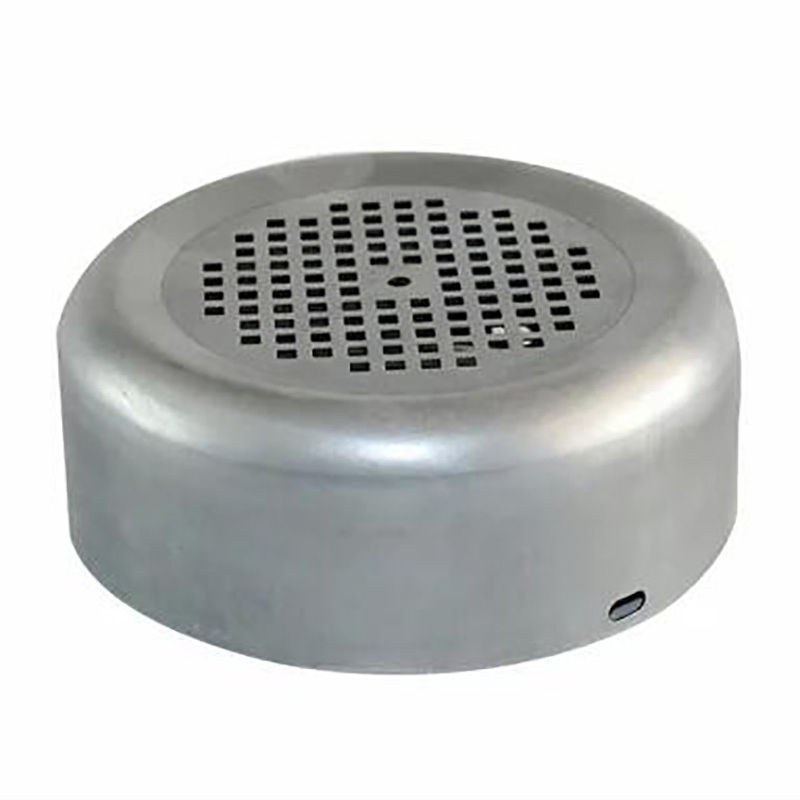
| Item | Cooling pump electric motor casing |
|---|---|
| Brand | AUNOV |
| Designing | Quotation follows the print, not a catalogue – DFM notes are returned before any tooling is cut; changes are priced before they are made. |
| Tooling | Our toolroom covers die design, wire-cut EDM and maintenance, so tooling lead time stays under our control, and first-article timing is measured from the tooling start date. |
| Samples | Pre-production samples come with a full inspection report, so any deviation is corrected at sample stage, and later batches are gauged back to the signed sample. |
| Materials | Materials held include carbon steel, 304 / 316 stainless steel, aluminium and brass; mill certificates and heat numbers accompany the first article. |
| Surface finish | Finish selected from the drawing: plating, coating, anodising or passivation; the agreed finish travels with the part number. |
| Processing | Multi-stage deep drawing with interstage annealing, trimmed and pierced in following dies; in-process checks sit between stages, not only at the end. |
| Equipment | Press shop running 5-250 T mechanical and 250-500 T hydraulic presses, annealing ovens on site, with CNC turning centres for secondary operations and CMM inspection. |
| Tolerance | +/-0.05 mm on formed features, with capability data on critical dimensions; critical dimensions carry CMM data with the shipment. |
| Delivery terms | CIF or DDP, with FOB available, payment by T/T or L/C, quoted in USD or EUR; repeat orders reuse the approved first article. |
Frequently Asked Questions
Why is coolant harder on a casing than almost any other fluid?
It is chemically active, it carries dissimilar metals in solution, and it cycles through temperature extremes while doing it. That combination sets up corrosion mechanisms that a part sitting in oil or air would never see, which is why corrosion rather than formability drives the specification.
Why is sealing described as dry on one side and wet on the other?
Because that is the actual duty. The casing has to keep coolant away from the motor and the electronics while still being part of the fluid circuit, so the seal is doing two different jobs at once and each side has its own requirement.
What ends the life of a casing like this, usually?
Cavitation, dry running and pressure cycling, in that order of frequency. Each imposes a different kind of fatigue, and together they decide whether the failure arrives as a pinhole from erosion or as a crack from cycling.
How is 316L or 304 decided here?
By the loop rather than by a general rule. Inhibitor package, operating temperature and what else sits in the circuit decide whether the extra alloy content earns its cost, so the choice is made against the coolant chemistry rather than against habit.
Related Products


Request a Quote for This Part
Send a drawing or sketch — get material advice, tooling cost and a per-piece price within 24 hours (working days).