

Specifying a deep drawn housing: a buyer’s guide
Most deep drawn housing enquiries that reach us are missing the same three things, and most quotes that disappoint hinge on the same three things. This page is a practical guide to specifying a deep drawn housing so the quote you receive reflects what you actually need, and so the process route the supplier chooses is the one that fits your volume and tolerances. If you are sourcing a housing for a motor, a sensor, an electronics assembly or a fluid device, the framework below applies.
What the three families of housing are
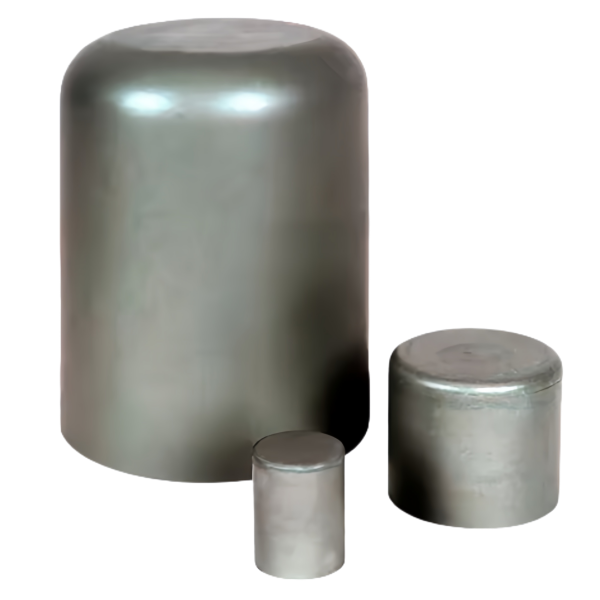
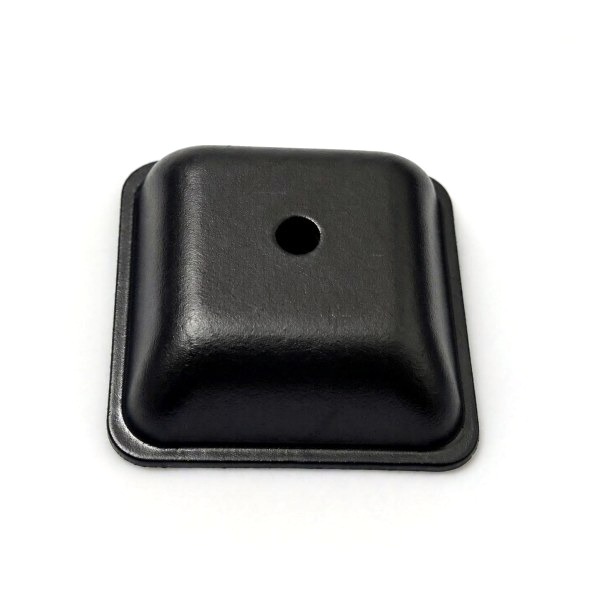
Drawings labelled “deep drawn housing” usually fall into one of three classes, and they cost differently. Closed-end shells: a cylinder with an integral closed end, the classic motor or sensor can, whose closed end carries pressure or magnet function. Open-ended shells with flanges: a tube-like body with a flange for sealing or mounting, often the part that carries the interfaces. And enclosures with complex features: extra formed features – ribs, bosses, cable exits, mounting ears – added in the die. Each class has its own tooling and its own cost drivers, and a supplier who knows which class your part belongs to can quote the process rather than guess at it.
The information a firm quote needs
- Geometry with tolerances that matter. Overall dimensions are easy; the firm quote depends on which few dimensions are functional – a bore, a flange’s flatness, a mounting pattern – because those decide the process route and the finishing operations. Sending a fully toleranced drawing is ideal; sending one with the functional dimensions flagged is even better.
- Material and thickness. A family and grade, not just “steel” or “stainless steel”: low-carbon for the flux-path parts, 1.4016 for corrosion with magnetic function, 304 or 316L for fluid service. Thickness bounds the draw ratio and the press tonnage.
- Annual volume and call-off shape. Volume decides the die architecture – progressive, transfer or single-operation – and therefore the piece price. Call-off shape (steady or spiky) decides inventory and packaging.
- The duty the housing serves. Pressure, magnetic flux, sealing, EMI, thermal – these decide material, coating and geometry in ways that are cheap to design in and expensive to retrofit.
- Finish and its test. The coating route and the standard it must pass (salt-spray hours, cyclic humidity, conductivity) – not a colour reference alone.
The cost drivers you can influence
Draw ratio is the biggest lever: a housing whose depth forces a redraw or an anneal costs more than one whose geometry allows a single stroke, and the difference is usually a design decision – a slightly shallower shell, a slightly larger diameter – rather than a process one. Tolerance distribution is the second: concentrating tight tolerances on the functional faces and freeing the rest is the single most effective cost lever, and it is the subject of the stack-up review we offer before tooling. Feature count and complexity is the third: each added formed or pierced feature is a die station and a failure mode, so consolidating features or moving them to a secondary operation (where volume allows) can cut cost. And volume, always: the same housing at 5,000 pieces a year and at 500,000 are different parts economically, even when dimensionally identical.
The questions to ask before you award
Three questions separate a supplier who will deliver from one who will struggle. What die architecture will you use, and why? The answer shows whether the supplier matched the process to your volume. What finishing operations does the quote include, and what does each buy? The answer shows whether the tolerances are honoured by process or planned to be sorted. And what is the first-article plan – samples in what time, measured how, against which datums? The answer shows whether the supplier intends to prove the part and the process before volume. A supplier who answers these clearly, even when the answers cost more, is worth more than a cheaper quote with vague answers.
What we need from you to quote
The drawing (fully toleranced where possible), material and thickness, annual volume and call-off, the duty the housing serves, and the finish and test standard. If the design is still open, say so – our most useful contribution is often a draw-ratio and stack-up review before the drawing is fixed, because at that point the cost drivers are still decisions rather than consequences. First articles follow die approval in three to five weeks depending on the housing’s size and class.
Quoting from a sample, and how it is measured back
Can you quote from a sample rather than a drawing? Yes – we reverse-engineer from a sample, measure interfaces precisely and rebuild the drawing for your approval, then quote. It is the standard route for replacement and spares parts.
Why do two suppliers quote very different prices for the same drawing? Usually different die architecture (progressive versus transfer versus single), different finishing scope, or different assumptions about volume. Ask both the three questions above and the difference usually explains itself.
How much of my housing’s cost is material? Typically 40-60% at volume, which is why blank development and nesting get attention here. A few percent of blank area recovered is real money across a programme, and it is one of the first things we look for.
If you are weighing drawing against machining or welding for this geometry, the guide to deep drawn covers sets out where each route wins; the full Precision Deep Drawn Parts range is linked from the overview page.
Specifications
| Item | Deep drawn housing |
|---|---|
| Brand | AUNOV |
| Designing | Your drawing sets the part – a manufacturability review comes back with the quotation; the same drawing is used for every repeat order. |
| Tooling | Tooling is built and held under your part number, so the die charge appears as its own quotation line, and the die remains dedicated to your part. |
| Samples | Samples are issued for approval before the run, and production starts only after written sign-off. |
| Materials | Standard stock: carbon steel (SPCC / DC01), 304 / 316 stainless steel, aluminium, brass; special grades are sourced to the drawing when volumes justify. |
| Surface finish | Plating, powder coating, anodising or polishing, per the print; the agreed finish travels with the part number. |
| Processing | Deep drawing from coil or blank, with in-process annealing so walls thin evenly; every stage is logged against your part number. |
| Equipment | Mechanical presses 5-250 T plus 250-500 T hydraulics, with in-line annealing, backed by CNC turning centres and a climate-controlled inspection room. |
| Tolerance | +/-0.05 mm on flange and rim dimensions, wall controlled by the draw; dimensional reports accompany the first article. |
| Delivery terms | CIF or DDP, with FOB available, T/T with deposit and L/C for larger runs; call-off schedules are supported. |
Frequently Asked Questions
Why does it matter which family of drawn housing yours belongs to?
Because the three families have different cost models and different failure habits. A shallow stamped-form shell is mostly a bending problem. A genuinely deep drawn housing is a material-flow problem, priced by draw stages. A hybrid needing machining or joining carries the cost of both routes. Asking one to quote on the assumptions of another produces numbers that move later, in the direction you will like least.
Beyond the drawing, what does a firm quotation actually need?
Four things that almost always arrive incomplete: how many you will buy and in what batch pattern, which surfaces are functional, the material and finish call-outs, and what evidence has to ship with each delivery. Every missing item becomes an assumption, and assumptions are priced conservatively, so incomplete enquiries reliably generate higher numbers than necessary.
Which cost drivers are still in your hands at drawing stage?
Depth, because it buys draw stages. Features that could be formed instead of added later. Whether the material is a stock grade or an unusual one. How tight the non-functional tolerances are. And whether anything in the geometry forces an extra handling step. All five are free to change before tooling and largely fixed afterwards, which makes this the expensive end of the design.
What should be asked before awarding rather than afterwards?
Who owns the tooling and who maintains it, what the first-article submission contains, how traceability is evidenced, which drawing is the controlled master for repeat orders, and what capacity is held for you during busy periods. None of these are difficult to agree in advance, and all of them are uncomfortable to negotiate once a schedule depends on them.
Related Products


Request a Quote for This Part
Send a drawing or sketch — get material advice, tooling cost and a per-piece price within 24 hours (working days).