
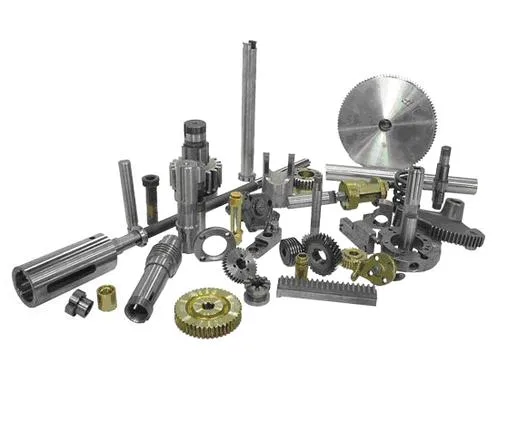
A polished union fitting is a union – two or more parts that join and come apart – with a surface finish requirement that is unusually demanding. And the reason for that demand is not appearance. It is that on a union, the finish is a functional requirement: it is the surface that the seal has to sit on, and it is the surface that has to be able to seal again after the union has been opened.
So this part has two quite different finish requirements in the same component, and confusing them is the most common mistake on a polished fitting.
Which surfaces are polished, and why it matters
- The sealing faces, where the gasket or the sealing element lands. These must be smooth, flat, and clean. This is functional and it is the single most important finish requirement on the part. A polished seal face is not a cosmetic choice – it is what lets the seal conform and reseal.
- The bore and the flow path, which have their own requirement – on a hygienic or a clean application a specific internal finish for cleanability, and on any application a finish that does not create a deposit trap.
- The external surfaces, which are conventional appearance and corrosion requirements, and where the polish is a genuine aesthetic choice made for visibility and for easy cleaning of the exterior.
- The threads, which are almost always left unmasked and unpolished. A polished thread is a functional problem – it changes the friction, it changes the fit, and it will gall differently. This is the same rule that appears on every threaded part on this site and it applies here with more force, because on a union the thread is what the user repeatedly removes and replaces.
Polishing, and the four processes that get confused
“Polished” on a fitting covers four different surface conditions, and they behave differently in a way that matters on a sealing surface and in a crevice.
- Electropolishing. An electrochemical process that removes metal without contact and leaves a clean, oxide-free surface. On stainless steel it is the right answer for a wetted or hygienic part: it does not smear the metal, it leaves a passive surface, and it gives an excellent finish inside a bore where mechanical polishing is impossible.
- Mechanical polishing on the lathe, with abrasives. Gives a bright surface on external and accessible internal surfaces. The risk on this part is that it smears the metal – it pulls a layer across the surface, it can partly close a bore, and it leaves a surface that sheds fine particles. On a bore that is a fluid path or a hygienic surface, this is a real problem.
- Passivation after polishing. Polishing removes the passive film, and passivation restores it. On any stainless steel part in a corrosive or a clean application this is not optional, and the sequence matters: polish first, passivate second.
- Blasting, tumbling, or a satin finish. A uniform non-reflective appearance, chosen for handling rather than for cleanliness, and it traps less of a specular reflection and shows fewer scratches. On a hygienic application it is usually wrong for the wetted surfaces and sometimes right for the external ones.
So the specification needs to say: which process, on which surfaces, and whether passivation follows. On a polished union in a clean or a hygienic service, “polished” alone is a specification that will produce electropolished on one order and abrasively polished on the next, and the two have visibly and functionally different results.
The union’s own requirement, which is different from the polish
The union part of this fitting has its own set of requirements, and they are the ones that decide whether it will still seal after it has been opened three times.
- The sealing face’s flatness, and it must be flat over the whole area and in the finished condition. A coated or plated face will change, so a polished face’s flatness has to be specified post-polish.
- The face’s finish, for the seal, as distinct from the part’s appearance finish. A seal face needs a specific finish rather than the finest available, and specifying “mirror polished” on a seal face is sometimes actively counterproductive because a very smooth hard surface can be harder for a gasket to grip than a slightly textured one.
- The thread’s condition, which on a union is a wear item and which must not be polished. On stainless steel this is where the union fails: a polished thread galling against the mating part is the classic seized-union mechanism.
- The gasket or sealing element, which is a specified component and not an accessory. Its material, its hardness, its dimensions, and whether it is reusable are all requirements, and they are what determines the union’s pressure rating.
Two or three parts, and each joint is separate
A union may have two unions in it – one at each end – or three, if it is a union adapter. Each union is a separate joint with a separate gasket and a separate torque requirement, and a three-piece union has two of them in series, which means:
- Each union has its own preload, and they are not necessarily the same, because the two ends may have different sealing arrangements.
- A three-piece union is the right choice where the fluid or the direction has to be blocked while one end is disconnected – the middle piece closes the line. That is a real functional requirement and it should be stated, because it decides the design and it is not obvious.
- Where a union is used as a changeover – diverting flow from one path to another without losing pressure – that is a different requirement again, with overlap and leakage between the two paths being the specification. A diversion union is not a union; it is a valve, and it should be specified like one.
A polished wetted fitting is not the same decision as a dry one
Materials held include carbon steel, 304 and 316 stainless steel, aluminium and brass, with the final grade fixed at the drawing review. Four specific points.
- 316L is the normal stainless steel answer for a polished wetted fitting, on the chloride logic, and the L grade where there is welding. On a polished fitting the grade matters for a second reason: a cleaner base surface polishes more consistently, so a higher-alloy or a more consistent grade gives a more reproducible appearance.
- The material’s galling behaviour governs the union’s service life. Two austenitic stainless steel parts rubbing on a thread gall, and a union is precisely two parts that are repeatedly separated and re-joined. So on a stainless steel union the design must address galling explicitly – dissimilar grades, a defined lubricant, or a plating on one member that is compatible with the seal.
- Brass takes a polish well and is easy to machine, and its galling against stainless steel is much less severe than stainless steel against stainless steel. On a union where repeated disassembly is expected, a brass union with a stainless steel or plated mating part is often the more serviceable combination.
- Carbon steel with a plating is the conventional choice where appearance and corrosion are the requirements, and the plating is the reason the seat and the threads must be masked.
A polished union’s seal faces are measured in the finished condition
+/-0.01 mm on turned and milled features, GD&T from the print, PPAP-style reports on request. On a polished union the flagged dimensions are the sealing faces and the threads, and they are affected by the finish.
- Sealing face’s flatness, in the finished condition, on each union face in the part.
- Face’s perpendicularity to the bore’s axis, as a separate characteristic.
- Face’s finish for the seal, with a convention, specified separately from the part’s appearance finish.
- Thread class and pitch diameter on each union, gauged, each to its own standard, and stated pre- or post-finish.
- Concentricity of the bore to each union’s axis, where there are two ends of different sizes or standards.
- Bore diameter and its position relative to the sealing faces, because an internal misalignment will produce an uneven seal.
- General dimensions and the wrench flats at a general band, the flats as a fit.
One multi-union part needs one seal-face measurement per face
- Each sealing face’s flatness and perpendicularity, measured in the finished condition, on every part. On a multi-union part this is one inspection item per face and all of them are required.
- Surface finish on the seal faces and separately on the external surfaces, with the process confirmed – not just the roughness.
- Thread gauging on each union, every part.
- Passivation recorded on stainless steel, where specified, as an operation with a date, because it is what makes the polished part corrosion-resistant again.
- Concentricity of the ends, where they differ.
- A functional test that includes opening and re-closing. This is the specific point on this part: a union that leaks only on its second assembly is a normal and serious finding, and it is the only way to find it. Assemble with a representative gasket, torque, leak test, disassemble, reassemble, and leak test again. It takes minutes and it tests exactly what the customer cares about.
- Visual inspection for polish uniformity, against an approved sample where appearance is a requirement – and on a polished part this is a real acceptance criterion, because a polished surface shows tool witness, chatter and swirl patterns clearly, and a customer will notice them.
How often the union is opened, and what the fluid is
How often will this union actually be opened, and what is the fluid? The first question decides whether the polish is appearance or function, and it decides the union’s design more than anything else. A union that is opened once a year can be a conventional raised-face or a gasket-seated design with a standard finish. A union that is opened weekly needs a gasket or sealing element that is genuinely reusable, threads that will not gall, sealing faces that will reseal after being disturbed, and a finish that resists scratching – and honestly, on a frequently-opened union, specifying a polished seal face is often a mistake because a smooth hard surface picks up scratches that become the leak path on the next assembly. A satin or a specified-texture seal face will reseal more reliably than a mirror-polished one. And the fluid decides whether the polish is achievable and whether passivation is required: a highly corrosive or a chloride-bearing fluid will attack any surface defect, a hygienic or a pharmaceutical fluid has its own documented requirements, and an abrasive or a particulate-laden fluid will progressively remove the polish – which is a wear item rather than a specification. Two answers, and they change the finish specification, the gasket choice, the thread treatment, and the inspection plan. On a part whose whole feature is a polished surface, asking whether the polish is the point or an accident of the application is the most useful question on the page.
You will find this part in our CNC Machining Parts range. Process notes, common materials and inspection points for every product in the family are collected across the cnc machining parts pages.
Specifications
| Item | Stainless Steel CNC Polished Union Fitting |
|---|---|
| Brand | AUNOV |
| Designing | Send drawings, or send a sample to be measured – unusual walls, threads or tolerances are feasibility-checked first; changes are priced before they are made. |
| Tooling | Our toolroom covers die design, wire-cut EDM and maintenance, so tooling lead time stays under our control, and ownership is confirmed on the quotation. |
| Samples | Sample parts are measured and reported before submission, so the sample is retained as the master, and production starts only after your written sign-off. |
| Materials | Materials held include carbon steel, 304 / 316 stainless steel, aluminium and brass; the final grade is fixed with the drawing review. |
| Surface finish | Zinc, nickel or chrome plating, anodising, passivation or e-coat; finish thickness and adhesion checked on the first article. |
| Processing | CNC turning from bar or billet, concentricity held across operations; in-process checks sit between stages, not only at the end. |
| Equipment | CNC turning centres with bar feeders and 3-/4-axis machining centres, with CNC turning centres for secondary operations and CMM inspection. |
| Tolerance | +/-0.01 mm on turned and milled features; GD&T per drawing, PPAP-style reports on request. |
| Delivery terms | FOB, with DDP offered for EU and US addresses, T/T or L/C, with D/P accepted on repeat business; each volume tier carries its own quoted price. |
Related Products


Request a Quote for This Part
Send a drawing or sketch — get material advice, tooling cost and a per-piece price within 24 hours (working days).